 Sweep & inspection
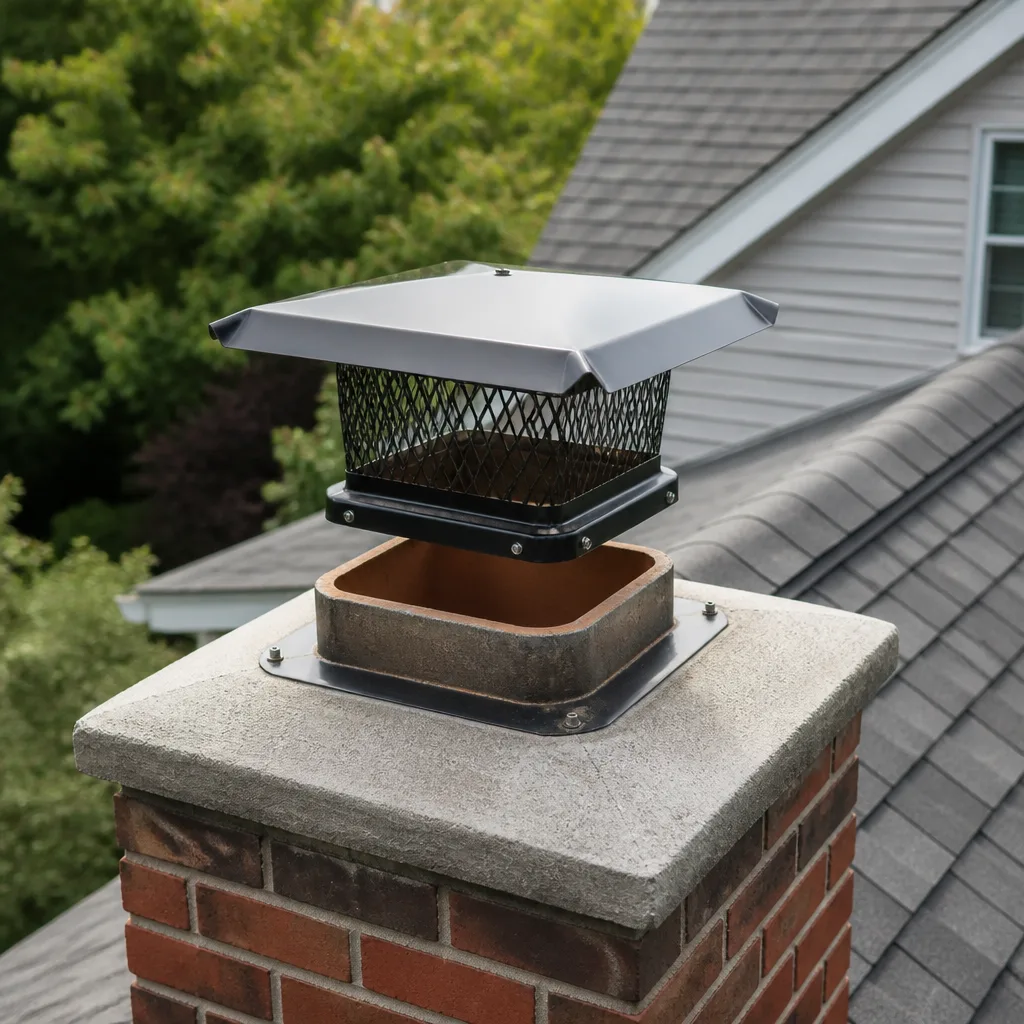
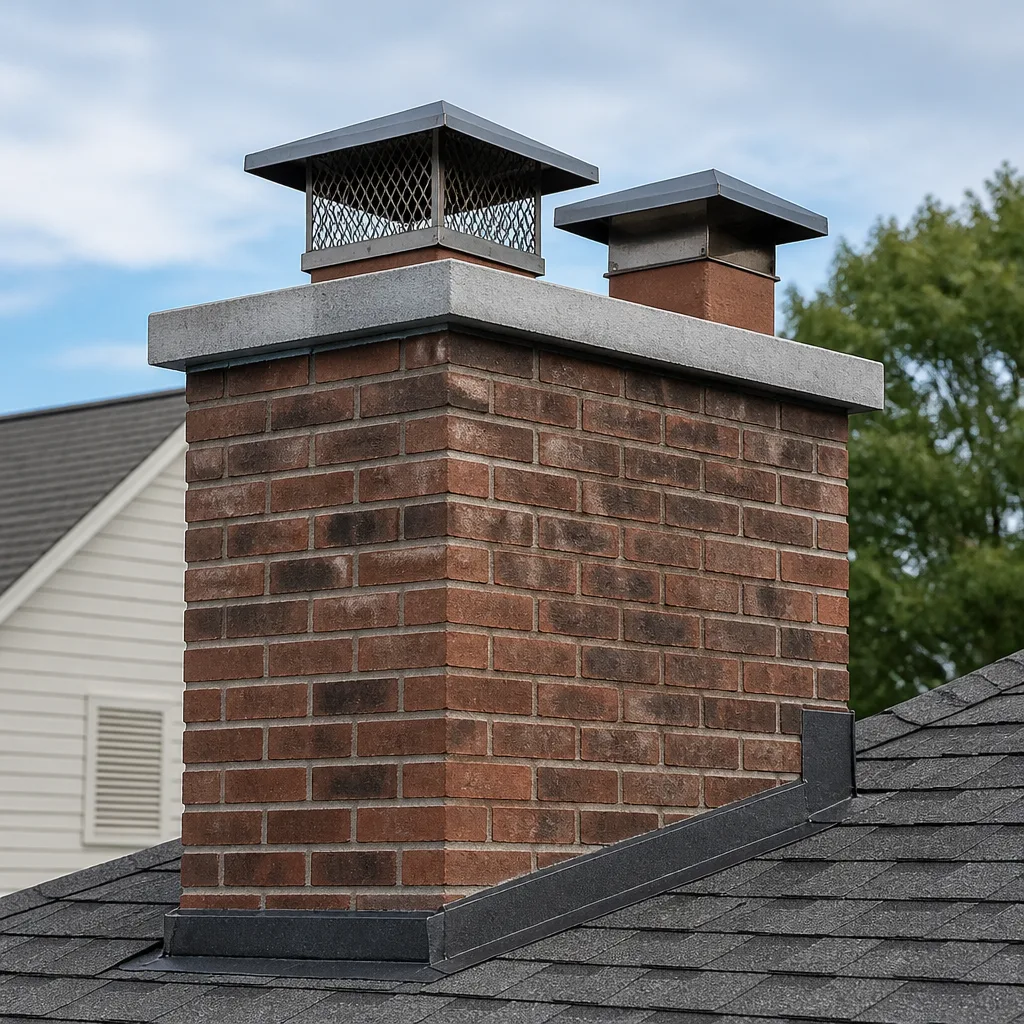 Caps & crowns
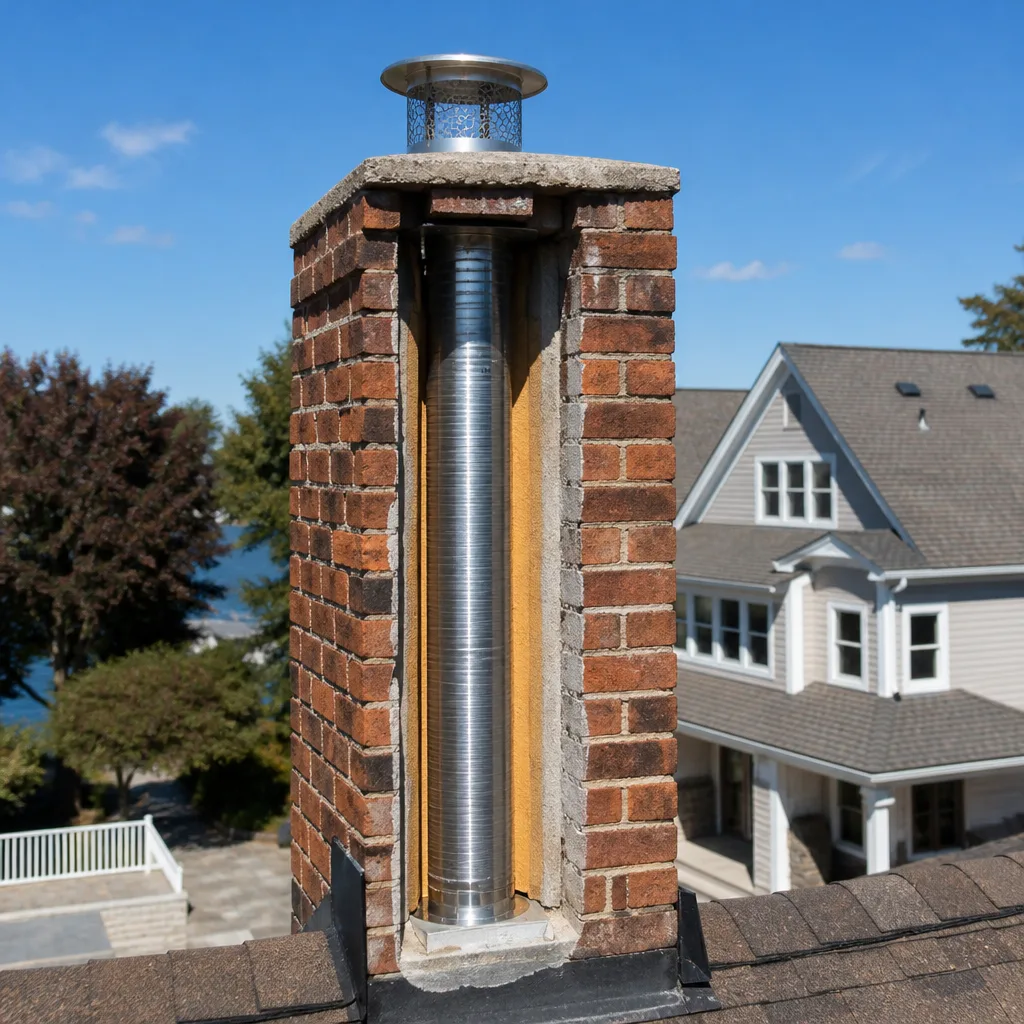 Flue relining
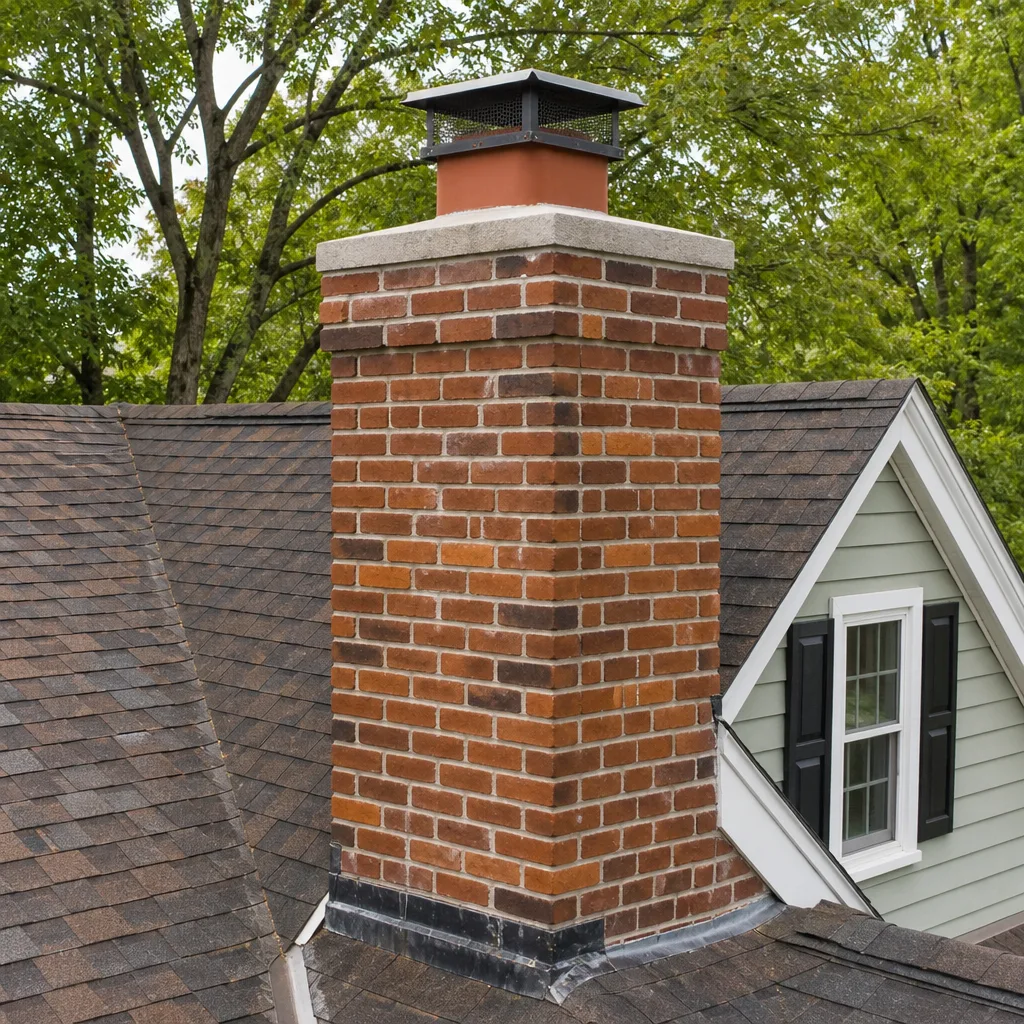 Masonry repair
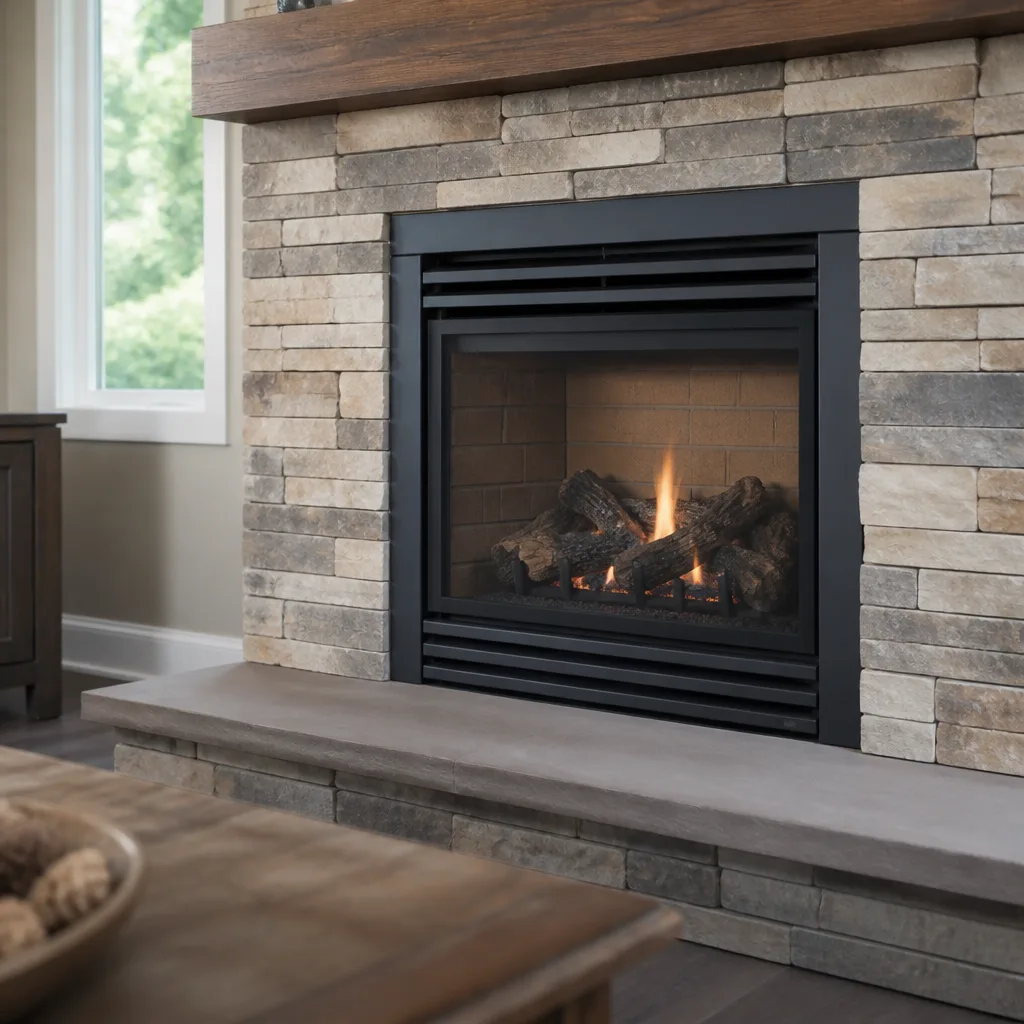 Gas fireplace service
Level 1 sweep and inspection to the NFPA 211 annual standard - flue, crown, cap, and flashing checked and photographed
Chimney sweep logs do not sweep chimneys. They loosen some creosote - which then falls where a brush and vacuum still have to collect it.
Fast, Reliable Chimney Sweep Across Burbank
Chimney sweeping in Burbank costs between $189 and $329 for a standard fireplace or wood stove flue, and we book most appointments within the same week. The work involves removing creosote and soot from the flue liner, smoke chamber, damper, and firebox using rotary brushes sized to your specific flue dimensions. If you live anywhere from Magnolia Park to the Rancho Equestrian district, call (855) 382-6159 and we’ll get you on the schedule before the next inversion layer settles into the Valley.
We know Burbank homes. We know the 1940s bungalow off Burbank Boulevard with the original brick chimney that hasn’t been opened since the last owner switched to a gas log set. We know the ranch house in the 91501 zip code where the flue cap is rusted through and the clay tiles underneath are spalling. And we know that Burbank’s no-burn rules change how often you actually need service, which most national chains and sweep-only crews don’t account for. Our Chimney Sweep team works in Burbank regularly, and we carry parts for the flue configurations this city’s housing stock throws at us.
Why Corona Chimney Sweep Is Burbank’s Preferred Chimney Sweep Company
Most companies that service Burbank will sweep your flue and hand you a report. We repair what we find. That’s the difference, and it matters in a city where so many chimneys have been dormant for years because winter no-burn rules made wood burning impractical or outright prohibited on alert days. When we open a flue that hasn’t been used since the Clinton administration, we’re not surprised to find cracked clay tiles, missing mortar joints, or a damper that hasn’t moved in a decade. What matters to Burbank homeowners is that we fix those problems in-house, using materials from the same contractor-grade lines professionals specify: DuraFlex stainless flexible liners, HeatShield resurfacing systems, Olympia Chimney caps and dampers, and Famco connectors.
Our lead technician, Nolan Ferris, has built the company around a simple idea: one provider handles every venting hazard in the house. Chimney, flue, dryer vent, liner, crown, cap. You shouldn’t have to coordinate three companies because your chimney sweep found a problem they can’t fix and your dryer vent is packed with lint three feet down. We handle all of it, and we do it the same day when the job doesn’t require custom parts.
Burbank’s housing stock is specific. We’re talking 1920s California bungalows in the 91502 corridor, post-war tract ranches from the late 1940s and 1950s across the 91523 and 91526 neighborhoods, and a smaller number of hillside properties off Glen Oaks where the flue runs are longer and the masonry has been exposed to decades of Santa Ana winds. Local knowledge means knowing that a 1948 ranch house likely has a terra cotta flue liner that’s now cracked at the first and second tile joint, and that a hillside home with a stone chimney may have a flue that offsets halfway up. We’ve swept and repaired both configurations in Burbank. That experience is what gets us called back.
Styles & brands we work with
Chimney Cleaning in Burbank
Chimney Cleaning in Burbank is a different job than it is in most of Southern California because the city’s no-burn zone means many fireplaces sit idle for months at a time, but that doesn’t mean the flue stays clean. What’s already baked onto the flue walls stays there. When burn bans lift and the first winter cold snap hits, homeowners light fires in flues that haven’t been inspected or swept in years, and the creosote that accumulated during previous seasons is still there, hardened and ready to ignite. In Burbank, the safe interval is driven by burn history, not by current burn restrictions. We recommend a sweep after every cord of wood burned, full stop, whether that cord was burned over one winter or spread across three.
On a hillside street off Glen Oaks, we opened a firebox and found the flue stuffed with fiberglass insulation from a previous gas conversion. The homeowner had no idea. We pulled the plug, ran a Level 2 inspection with a camera, and swept heavy third-degree creosote from the smoke chamber before recommending a HeatShield liner resurfacing so the chimney could be returned to wood burning legally and safely. That’s a Burbank-specific problem: capped and stuffed flues from old gas conversions hide cracked clay tiles and spalling mortar for years because nobody opens them until they want to burn wood again.
A standard chimney cleaning in Burbank runs $189 to $329 depending on flue height, creosote stage, and how long it’s been since the last service. Here’s what the job covers:
Creosote and Soot Removal
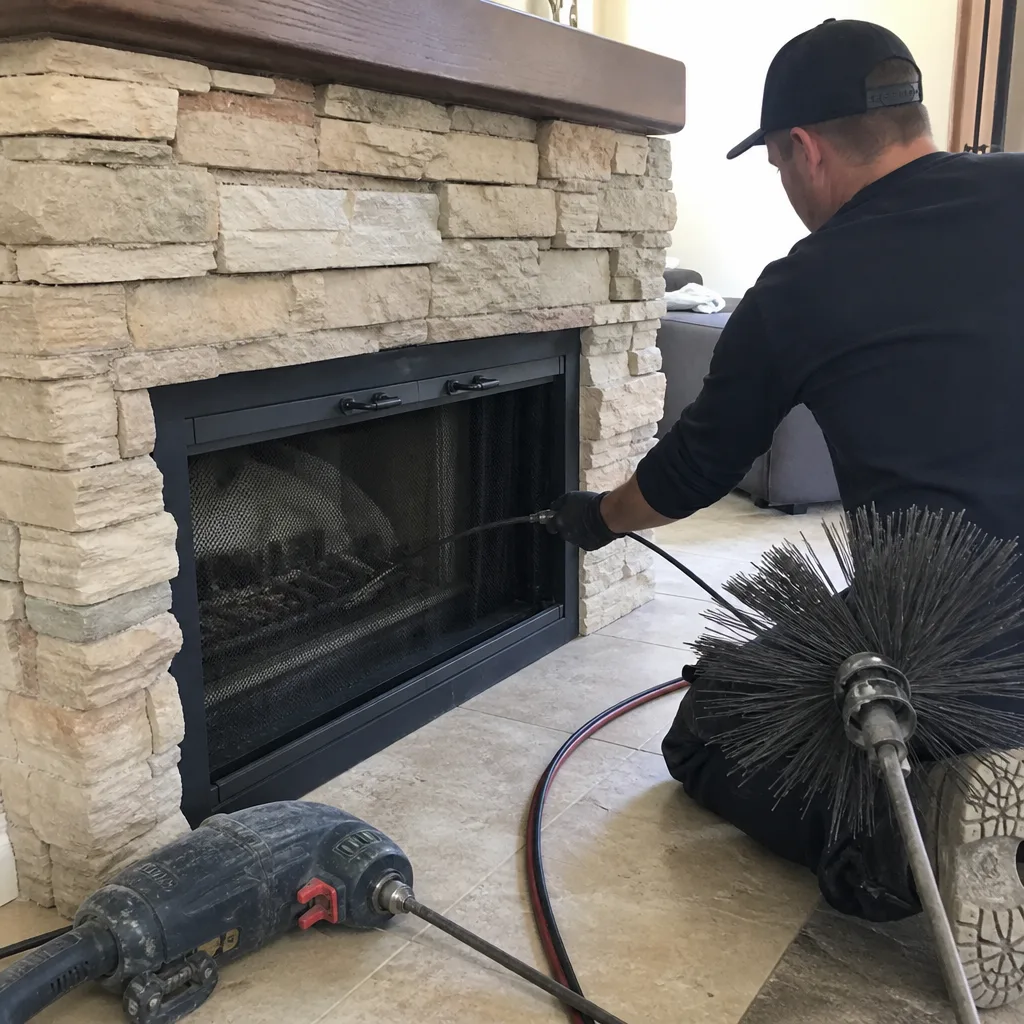
We use rotary whip brushes driven by a drill, not a hand brush you’d buy at a hardware store. The system uses poly or stainless rods depending on the flue, and the whip action removes creosote that’s adhered to the flue liner rather than just knocking loose the fluffy first-degree stuff. For heavier glazed creosote, chemical treatments followed by mechanical cleaning break the bond so the flue actually comes clean.
Level 1 and Level 2 Inspection Options
Every sweep includes the basics, but Burbank homes with gas-conversion history or long dormancy periods typically need a Level 2 inspection. That means a camera run through the flue after cleaning, with a written report showing exactly what the interior looks like. If you’re in a 91523 hillside property or a 1920s bungalow in 91502, we typically recommend this on first service. The camera reveals what a brush can’t.
Fireplace Cleaning in Burbank
Fireplace Cleaning in Burbank means more than just the flue. We remove ash and debris from the firebox, clean the damper assembly so it seals and opens properly, clear the smoke shelf, and check the mortar between firebrick for deterioration. A neglected firebox with cracked refractory panels or missing mortar joints can leak heat into combustible framing around the fireplace opening. That’s a fire hazard that has nothing to do with creosote and everything to do with deferred maintenance.
Burbank’s older bungalows in the 91501 and 91502 neighborhoods often have shallow fireboxes with original firebrick that’s now crumbling after 70 or 80 years. When we clean, we’re looking for exactly that: hairline cracks in the back wall, mortar that crumbles when scraped, and damper frames that have rusted open or seized shut. If the firebox needs repair, we do the masonry work in-house. No referral, no second company, no waiting.
Fireplace cleaning typically adds $60 to $100 to a standard sweep, depending on the amount of buildup and the condition of the firebox. Money well spent, because the firebox is where an otherwise good chimney fails.
Firebox and Damper Service
We scrape and vacuum the firebox, remove built-up ash and soot, and check the damper plate for rust-through and the frame for warping. A damper that won’t close costs you conditioned air year-round. A damper that won’t fully open sends smoke back into the living room. Most Burbank fireplaces from the 1940s and 1950s have cast-iron throat dampers that are now rusted to the point of needing replacement, and we stock common sizes.
Smoke Chamber Parity Check
The smoke chamber above the damper is where turbulence happens. In many Burbank bungalows, the corbeled brick in the smoke chamber was never parged smooth, meaning creosote accumulates in every ledge and recess. We clean it with brushes sized to the chamber and can apply a heat-resistant parge coat when the brick condition warrants it.
Trusted Brands We Service in Burbank
We don’t install whatever’s on sale at the local big-box store. We source from six professional trade lines: DuraFlex, HeatShield, Gelco, Olympia Chimney, Famco, and Copperfield. In practice, most Burbank repair jobs involve a HeatShield resurfacing when the flue liner shows hairline cracks but hasn’t lost structural integrity, or a DuraFlex stainless flexible liner when the old clay tile liner is too far gone or the house has an offset flue that rigid systems can’t navigate. We stock common Gelco and Olympia caps, dampers, and chase covers locally, so a Burbank homeowner with a rusted-out cap on a 1950s ranch can often have it replaced the same visit without waiting a week for a part to ship.
See the difference
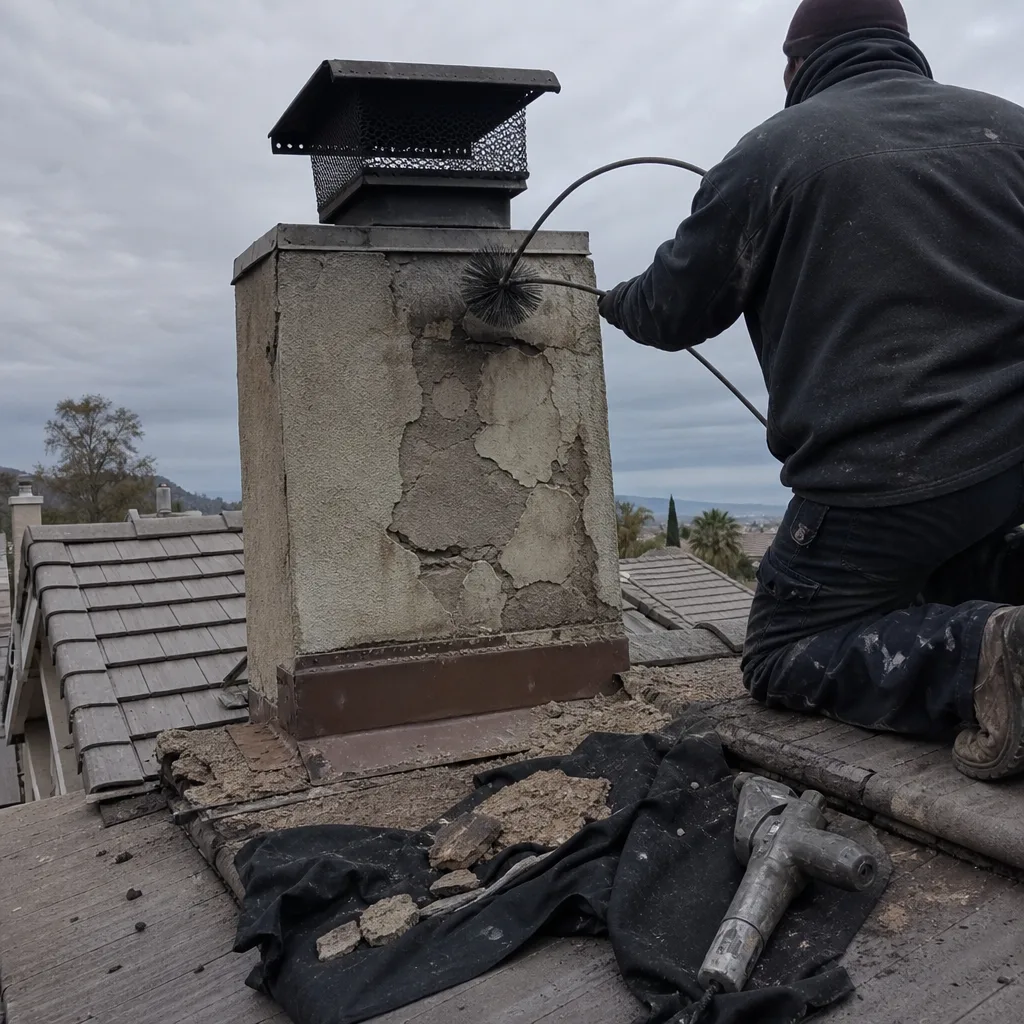 Before
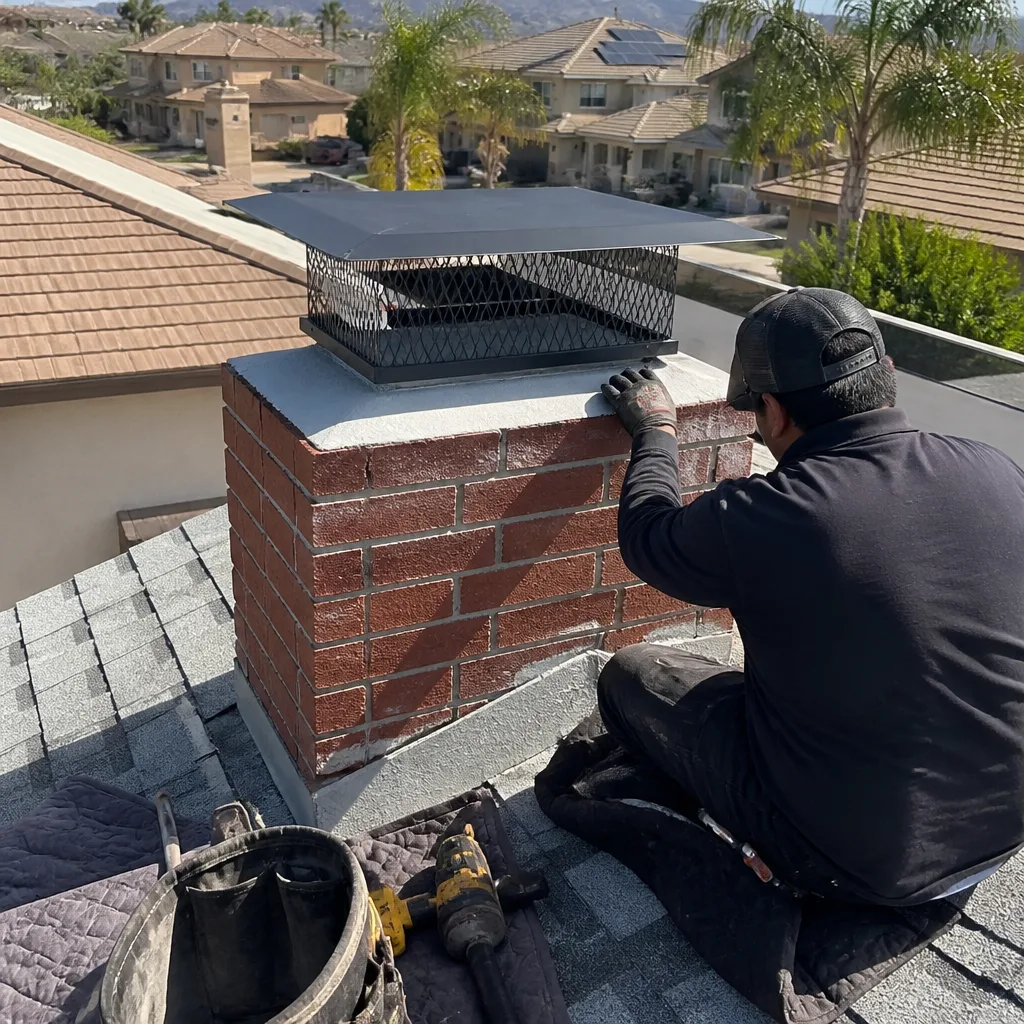 After
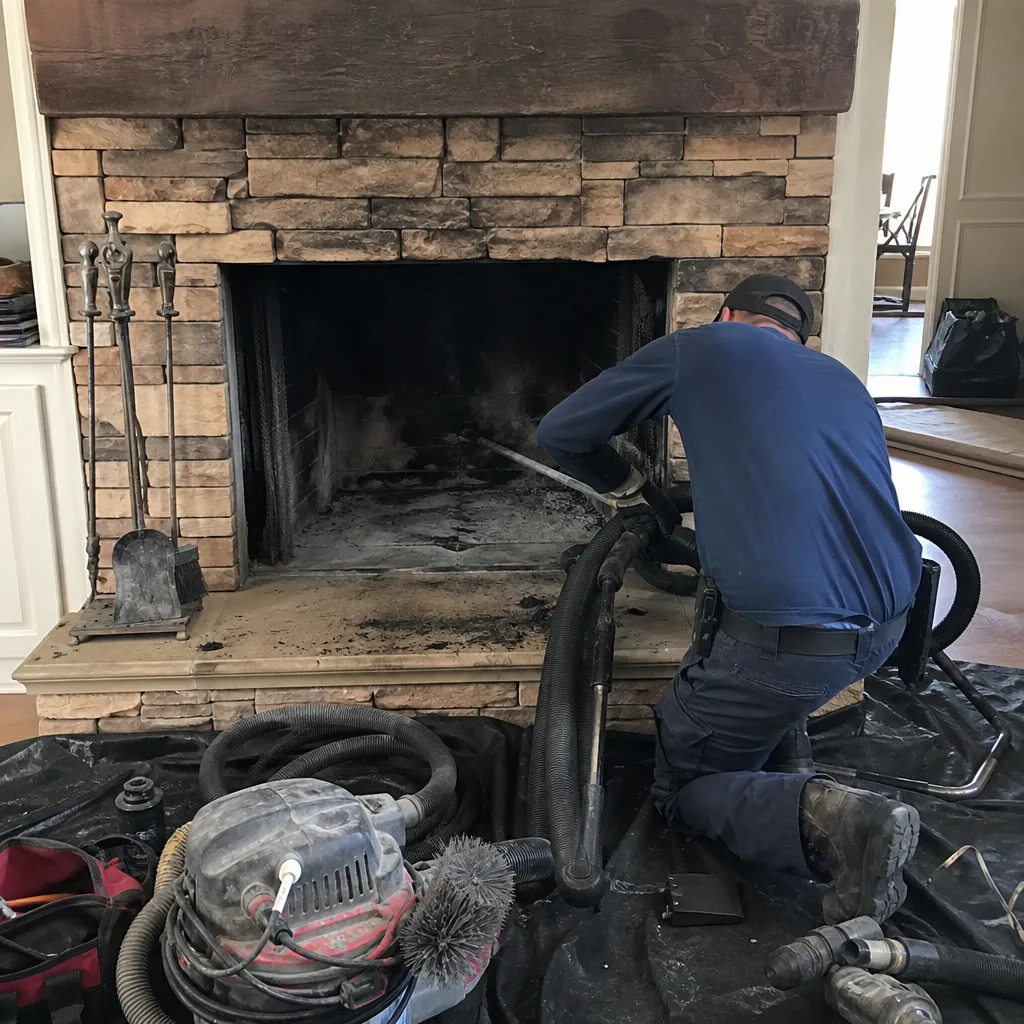 Before
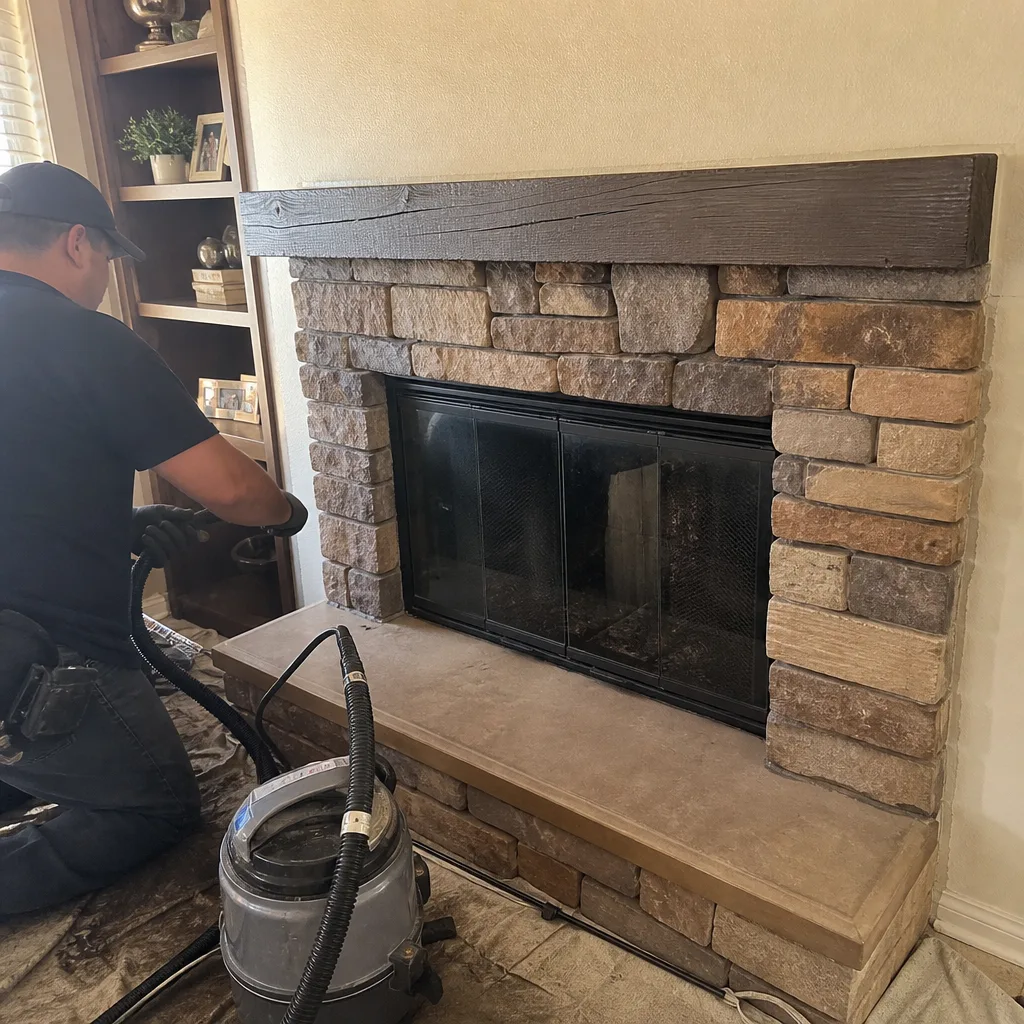 After
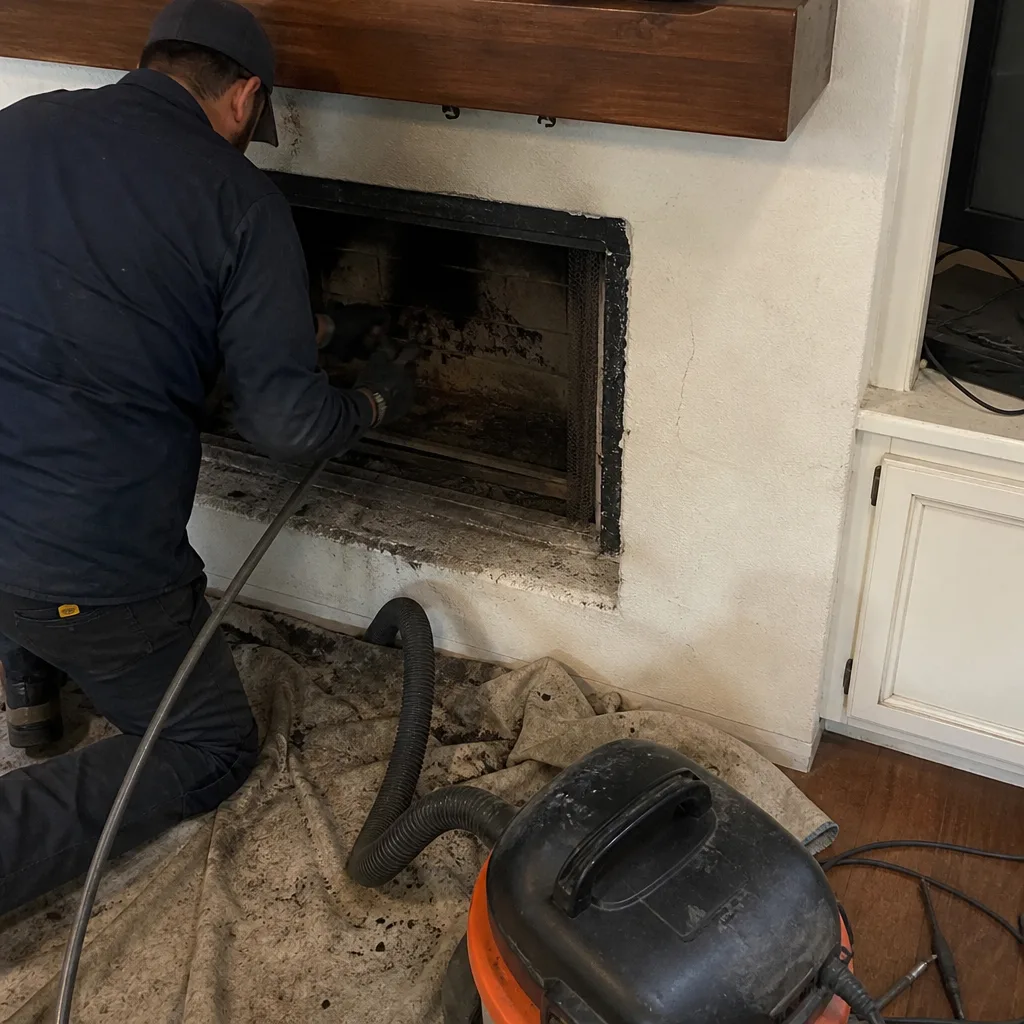 Before
 After
Common Chimney Sweep Problems We See in Burbank Homes
- Capped and insulation-stuffed flues from old gas conversions. Burbank has thousands of homes where the previous owner stopped burning wood, capped the flue, or stuffed insulation down it. When a new homeowner wants to burn again, the flue needs inspection and usually sweeping before the first fire. We’ve found third-degree creosote hiding behind those caps multiple times.
- Cracked clay tile liners in 1920s and 1950s chimneys. Burbank’s older masonry chimneys were built with terra cotta tile liners, and terra cotta does not handle thermal shock well. Decades of heating and cooling cycles produce vertical cracks, and those cracks let heat and gases reach combustible framing. A camera inspection shows it plainly.
- First-degree creosote that’s turned glazed because no-burn rules delayed sweeping. No-burn alerts don’t clean your flue. What was a light, brushable first-degree layer last spring is now a shiny, tarry third-degree glaze that won’t come off with standard sweeping. It needs chemical treatment and multiple passes, which is why we tell Burbank homeowners not to stretch the interval just because the fireplace sat unused.
- Rust-through dampers and caps on post-war ranches. The mild Burbank climate means metal components spend months in a state that accelerates corrosion: warm days, cool damp nights, and occasional rain. Original cast-iron dampers on 1950s ranches in 91523 and 91526 are frequently rusted through, and chase covers on prefab fireplaces are the first thing to go.
Pricing for Chimney Sweep in Burbank, CA
A standard chimney sweep in Burbank runs $189 to $329. That covers the full flue cleaning, firebox cleanout, damper inspection, and a basic Level 1 inspection. Fireplace cleaning adds $60 to $100 when heavy firebox ash or mortar inspection is needed. If we need to run a camera for a Level 2, that’s an additional $75 to $125 depending on flue height, and we provide a written report with images. HeatShield resurfacing typically runs between $2,800 and $4,500 depending on flue length, while a DuraFlex stainless liner install averages $1,900 to $3,400 in Burbank’s housing stock. Estimates are free. Call (855) 382-6159 and we’ll give you a hard number before we touch anything.
We Also Serve Cities Near Burbank
Our Burbank crew regularly works in the surrounding communities, and we’re in Universal City, North Hollywood, Glendale, and Studio City every week. If you’re on the border or searching for Chimney Sweep in Burbank but your house technically sits in one of those adjacent cities, give us a call. We schedule across the same territory and we know the area well.
Serving Burbank, CA — Our Local Coverage Area
We’re based in the Burbank area and know this community well. Use the map below to see our service coverage — if you’re nearby, we can almost certainly help.
FAQs About Chimney Sweep in Burbank
Every cord of wood, no exceptions. If you heat primarily with wood on a rural Burbank property near the Verdugo foothills and you burn two cords a season, that means two sweeps a year. Burbank’s no-burn alerts may force you to stop burning for stretches, but the creosote already deposited in the flue hardens during those dormant weeks and becomes harder to remove, not easier. Primary heat sources also tend to burn greener wood and run cooler overnight smolders, both of which accelerate creosote buildup in the smoke chamber and damper area. Call (855) 382-6159 before burning season starts and get on the schedule. Estimates are free.
No. Do not burn anything until the flue has been inspected. We’ve opened capped flues in Burbank and found fiberglass insulation, abandoned bird nests, decomposing animals, cracked clay tiles, and third-degree creosote that would have ignited on the first use. A cap removal followed immediately by a Level 2 camera inspection is the only safe sequence. If the camera reveals intact clay tiles and only light creosote, a sweep gets you burning. If it reveals cracks or spalling, we’ll show you the footage and explain whether HeatShield resurfacing or a DuraFlex liner is needed. You’ll see the evidence before you spend a dollar on repair.
First-degree creosote is a fine, sooty powder that brushes off easily. Third-degree creosote is a hardened, glossy tar that has been through repeated heating cycles without removal, and it cannot be removed by standard brushing alone. Burbank’s no-burn rules create a specific version of this problem: homeowners burn heavily for a week, then stop for a month when an inversion alert hits. That partial heating of the creosote already in the flue bakes it into a glaze. A flue with third-degree creosote is a chimney fire waiting for a hot fire and a spark. If you haven’t swept in three or more years and you’ve burned at least one cord, assume you have at least second-degree buildup and call (855) 382-6159 for an inspection.
No. A no-burn alert restricts when you can burn wood, but it has nothing to do with the current condition of your flue. Creosote already on the flue walls does not disappear while the fireplace sits idle. In fact, the moisture cycles during the winter months can allow the creosote to absorb water and become more acidic, which accelerates corrosion of metal components and deterioration of mortar joints. If you’re not burning because of Burbank’s air-quality rules, you still need an inspection before the next time you light a fire, whenever that is. Annual inspections are part of the NFPA 211 standard regardless of burn frequency.
Burn seasoned hardwood only, never construction lumber, never treated wood, never wrapping paper. Seasoned oak or almond burns hot and clean; unseasoned wood smolders and deposits creosote at a much faster rate. Avoid overnight smolders by loading less wood and letting the fire run hotter rather than damping it down to stretch it. The single most effective practice for a Burbank hillside wood stove is a daily hot burn: run the stove hot for 20 to 30 minutes every day you use it. That lifts surface creosote before it can glaze. And schedule sweeps by cord-count, not by calendar. Call (855) 382-6159 and we’ll set up a schedule that matches how you actually burn.
We clean chimneys, repair what we find, and service dryer vents with the same level of technical detail. If you’re in Burbank and you want a company that can sweep your chimney, inspect it with a camera, run a liner when the clay tiles are gone, and handle the dryer vent fire hazard in the same visit, call (855) 382-6159 for a free estimate. We’re in Burbank regularly, and we answer the phone.
Written by Nolan Ferris, Owner at Corona Chimney Sweep, serving Burbank and the surrounding San Fernando Valley communities.