Last updated October 30, 2026
 Sweep & inspection
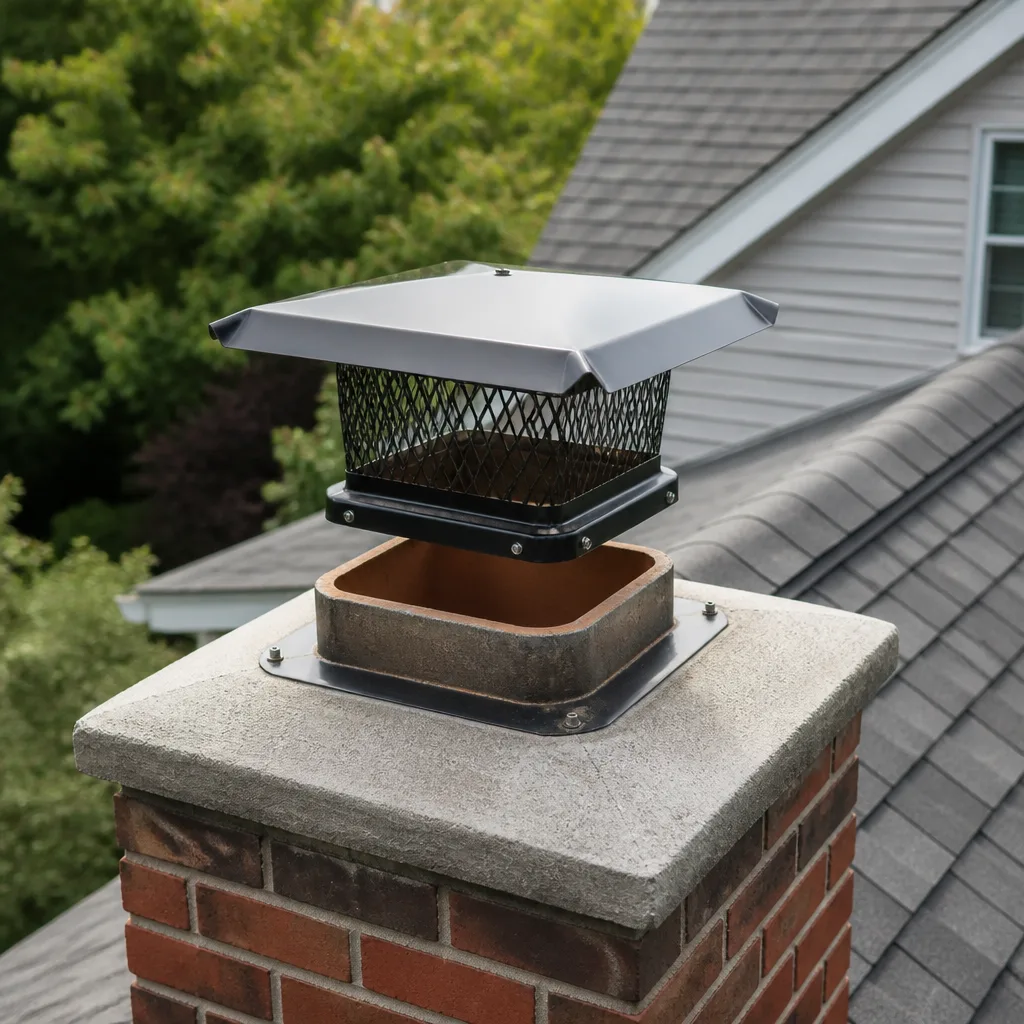
 Caps & crowns
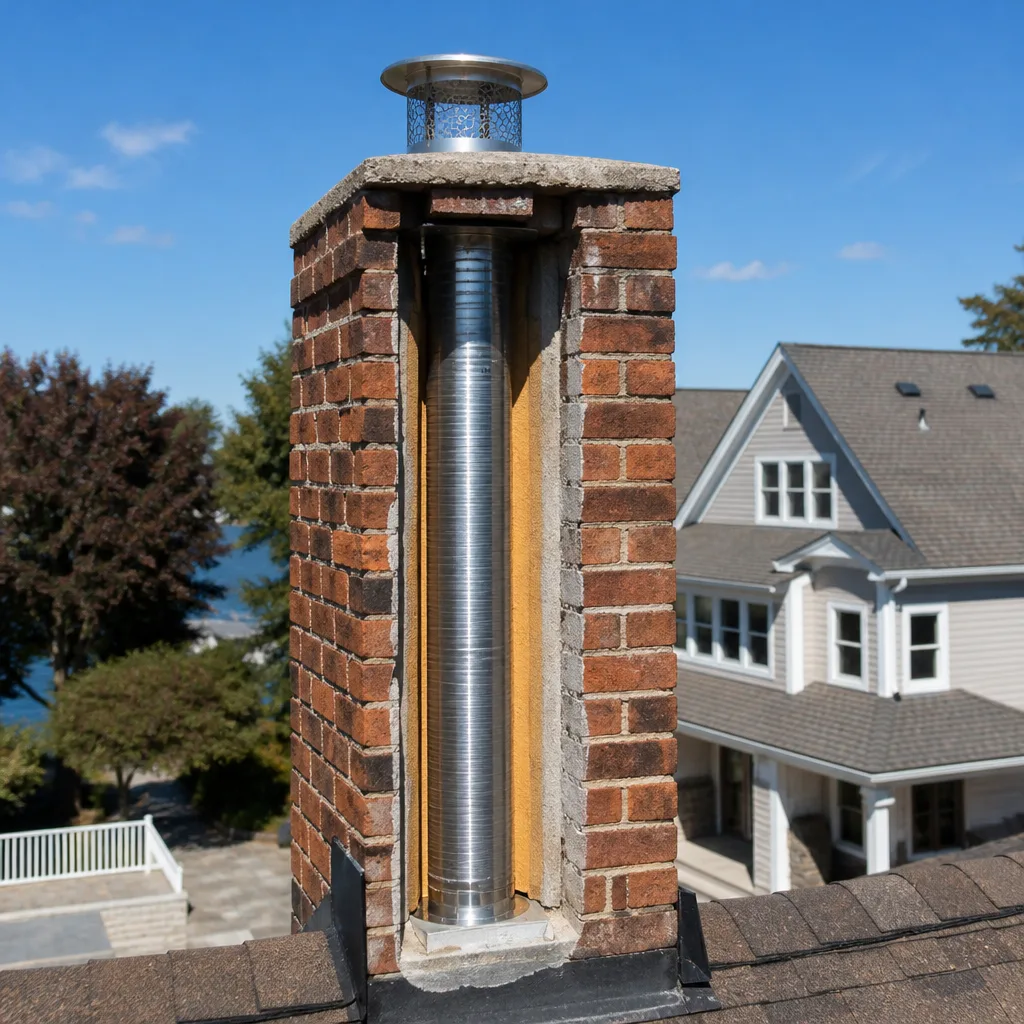 Flue relining
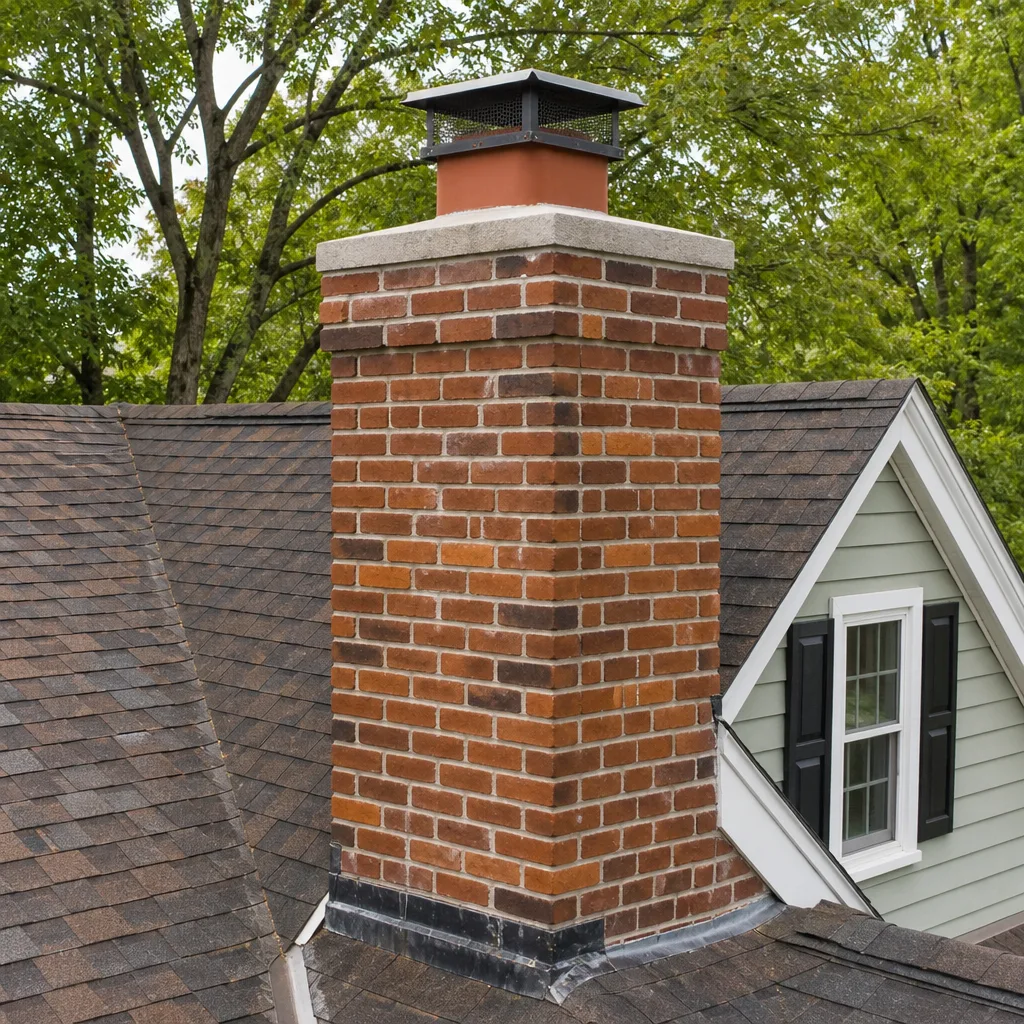 Masonry repair
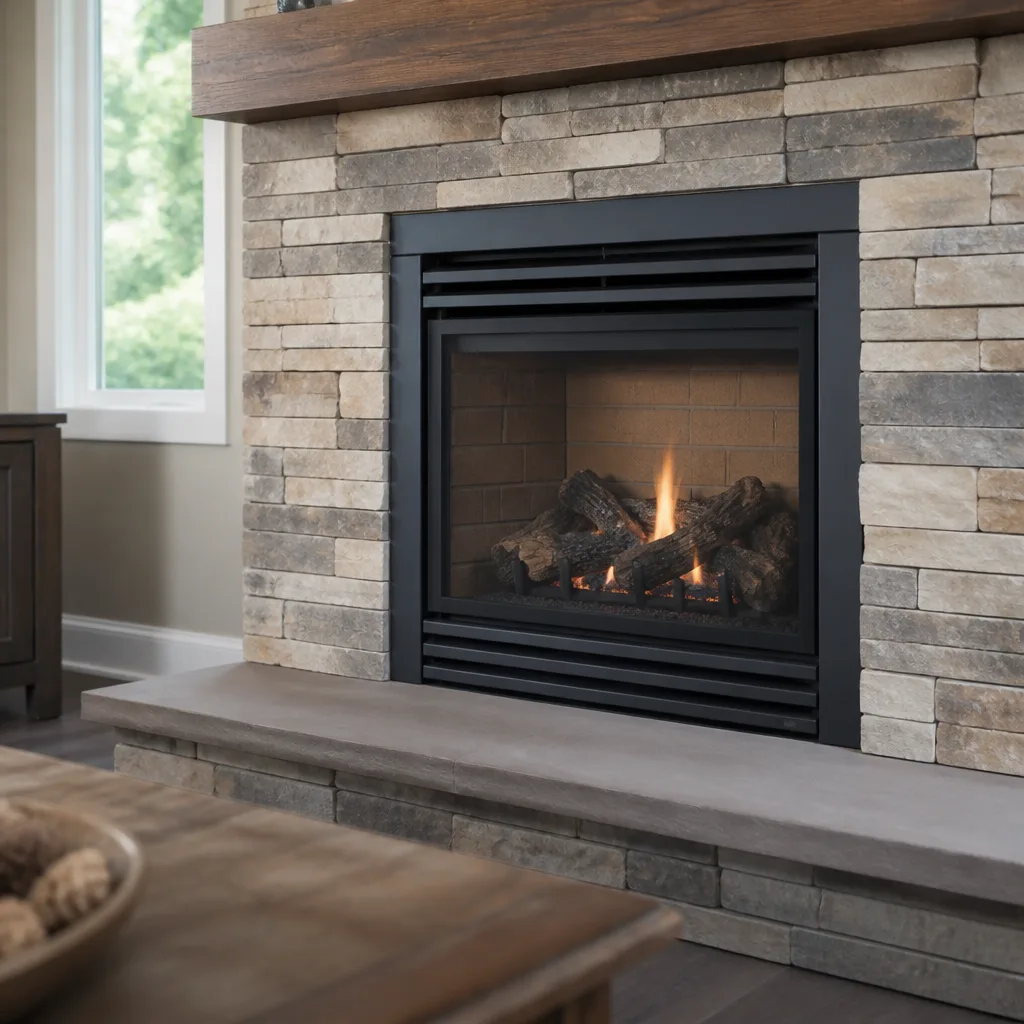 Gas fireplace service
Level 1 sweep and inspection to the NFPA 211 annual standard - flue, crown, cap, and flashing checked and photographed
Chimney sweep logs do not sweep chimneys. They loosen some creosote - which then falls where a brush and vacuum still have to collect it.
The Complete Guide to Chimney Cleaning in Corona
Most chimney fires in California don’t start because a homeowner skipped cleaning. They start because cleaning happened without an inspection that would have caught a cracked flue tile first. In Corona, where Santa Ana winds push downdrafts through single-story tract homes and short, intense burn seasons create hard, glazed creosote that behaves differently than the fluffy soot coastal homeowners deal with, the sequence matters more than most people realize. This guide walks through the full diagnostic chain: what gets inspected, what gets cleaned, what gets found, and what happens next. For seasonal chimney cleaning care for Corona, see our year-round homeowner’s guide. You’ll learn the three levels of chimney inspection under NFPA 211, how Corona’s climate affects creosote formation, what a Level 2 camera inspection actually reveals, and why inspecting before cleaning is the only sequence that protects your money and your house.
Styles & brands we work with
Quick Answer
Chimney cleaning in Corona is a diagnostic sequence, not a single service. The sweep removes creosote and soot, but the inspection that accompanies it determines whether the flue liner, mortar crown, or smoke chamber needs repair. A proper cleaning in Corona starts with an inspection, because sweeping a chimney with a cracked flue tile wastes money on a system that needs relining anyway. Read our DIY vs Professional Chimney Cleaning: The Corona Homeowner’s Decision Guide to understand when expert help matters.
Table of Contents
- What Chimney Cleaning Actually Involves
- The Three-Level NFPA 211 Inspection System
- How Creosote Forms and Why It Burns
- Corona Climate, Draft, and Creosote Grades
- Inspection Before Cleaning: Why the Sequence Matters
- What a Level 2 Camera Inspection Reveals
- Common Mistakes to Avoid
- When to Call a Professional
- Frequently Asked Questions
- The Bottom Line
What Chimney Cleaning Actually Involves
A chimney sweep in Corona is not just running a brush up a flue. The work breaks into four phases, and skipping any one of them leaves a safety gap. We’ll walk through each phase because understanding the sequence helps you evaluate whether a company is doing the job or doing the job halfway.
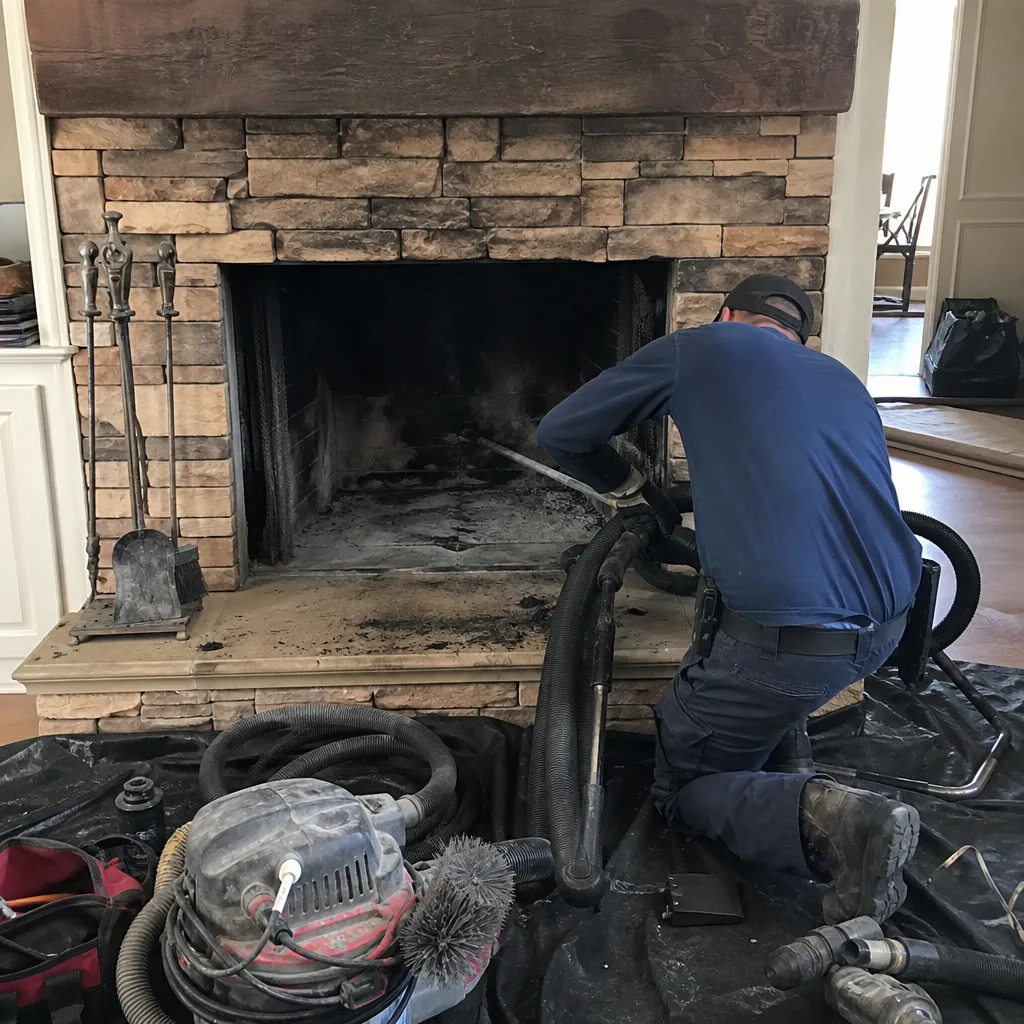
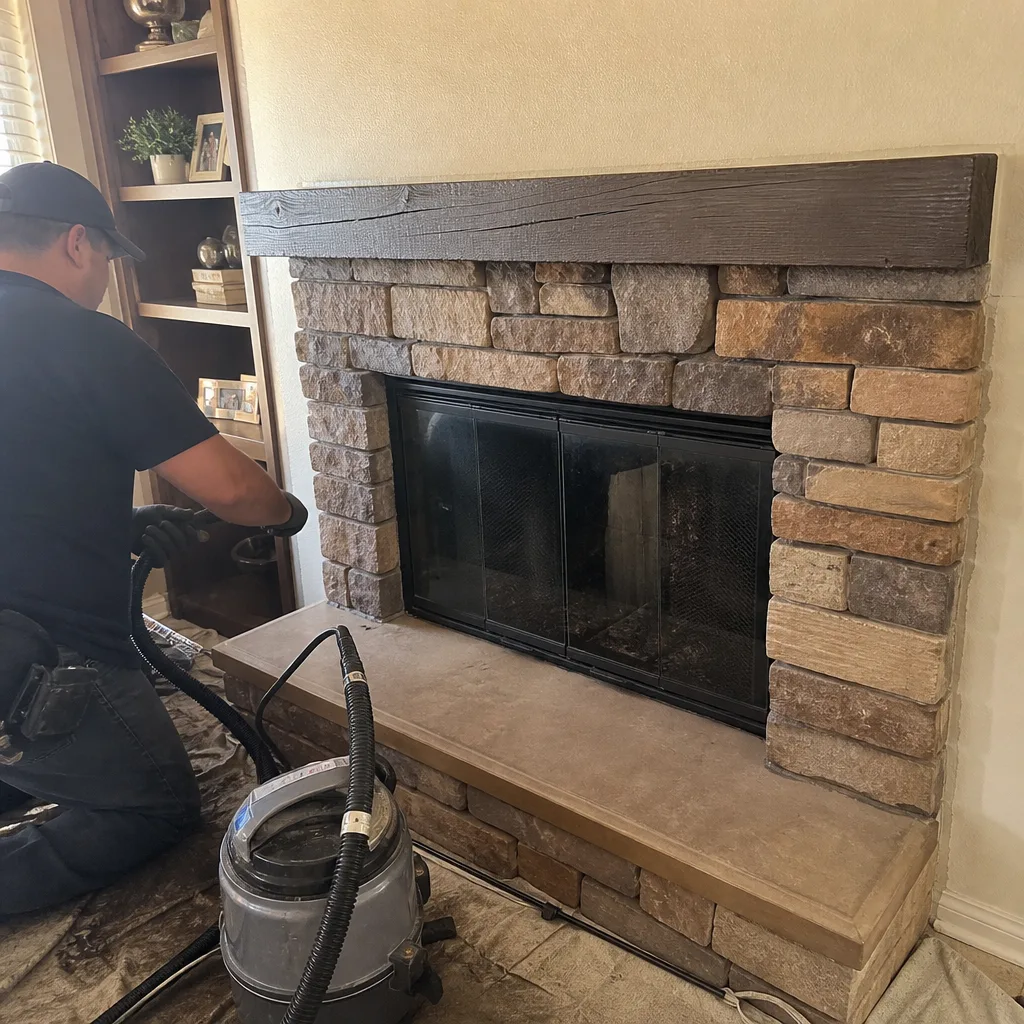
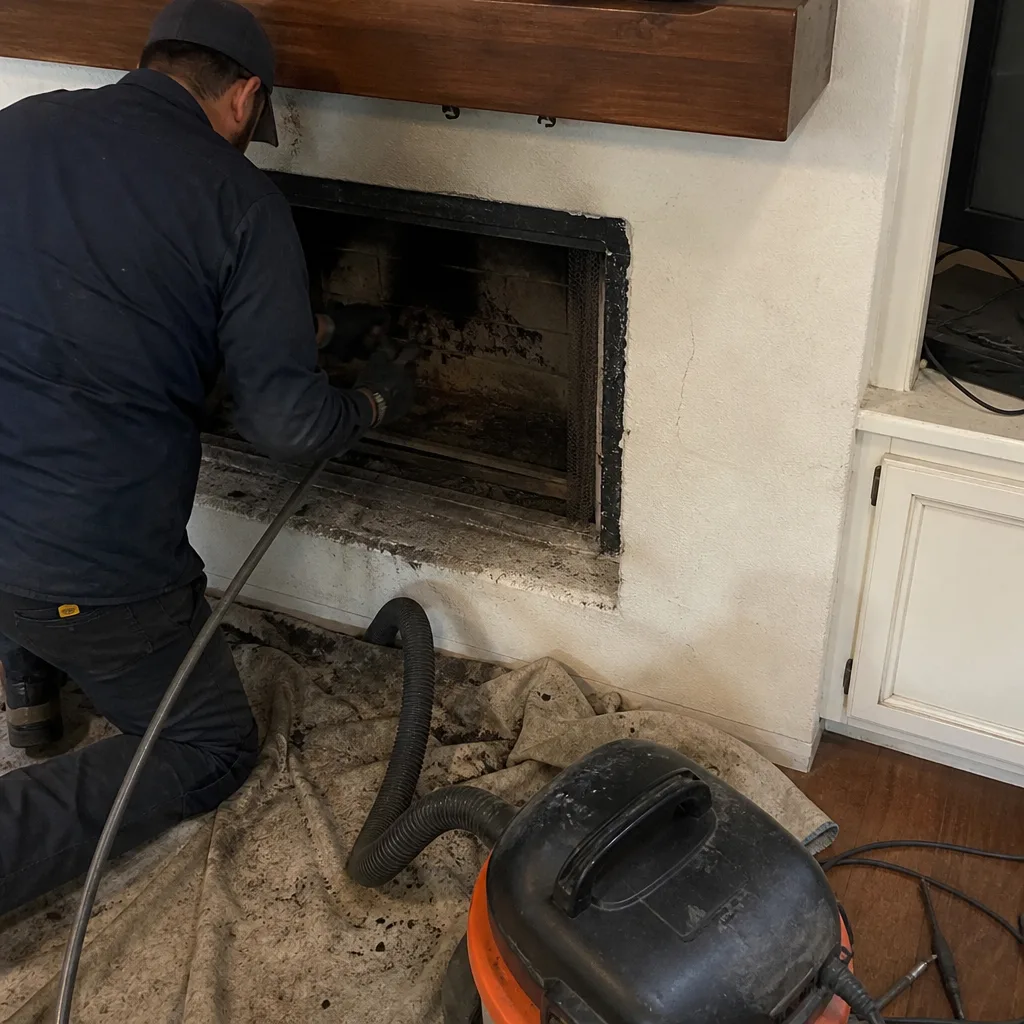
- Containment setup. The technician lays drop cloths around the hearth, runs a vacuum with a HEPA filter, and seals the firebox opening before any brushing starts. This keeps creosote dust out of your living room. In Corona tract homes where fireplaces sit in family rooms with carpet, this step is not optional.
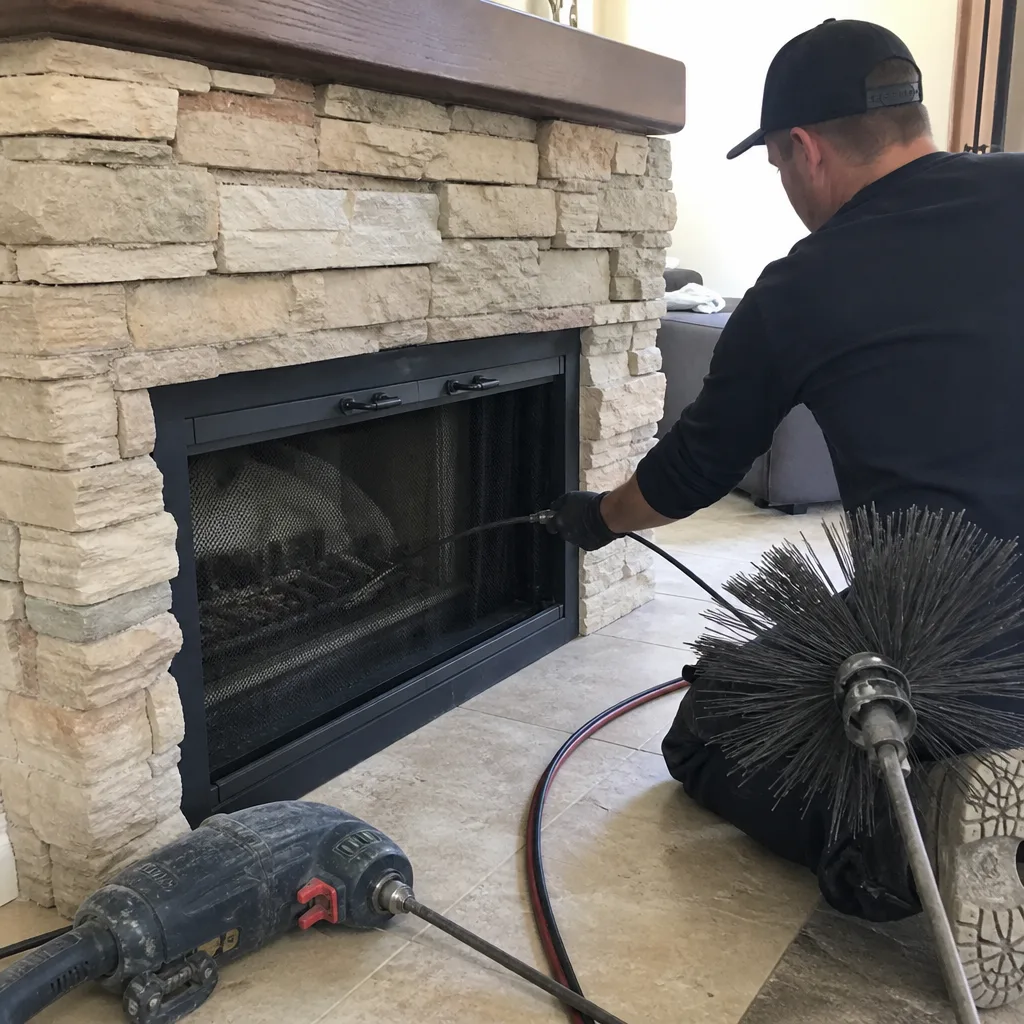
- Mechanical cleaning. Wire or poly brushes sized to the flue diameter scrub the liner walls from top to bottom. A rotary cleaning system powered by a drill works better on the glazed creosote common in Corona than a hand-pulled brush. The brush size matters: too small and it misses the corners, too large and it scuffs the liner.
- Inspection. This is where the sequence matters. A visual inspection with a mirror or basic camera checks for obvious damage. A Level 2 camera inspection goes further, documenting the full liner interior. We’ll get into the levels below.
- Report and recommendation. You should receive photos or video of what was found, plus a clear statement of whether any work can wait or needs to be addressed. At Corona Chimney Sweep, nothing gets recommended without camera evidence you can review yourself. That’s the standard.
What separates a real sweep from a surface clean is the report. If the company can’t show you the inside of your flue, you have no way to verify their work or their recommendations.
The Three-Level NFPA 211 Inspection System
NFPA 211, the standard for chimneys and fireplaces that California adopts into its building codes, defines three levels of chimney inspection. Knowing which level applies to your situation in Corona prevents paying for either too little or too much.
- Level 1 inspection: A visual check of the readily accessible portions of the chimney interior and exterior. This is the minimum inspection performed during a routine sweep. It verifies that the chimney is free of obstructions and combustible deposits, and that the basic structure is sound. Level 1 is appropriate when you’re using the appliance in the same way as before, with no changes to fuel, use frequency, or configuration.
- Level 2 inspection: Everything in Level 1 plus a video camera scan of the entire flue interior, plus inspection of accessible attic, crawl space, and roof areas. A Level 2 inspection is required when there’s been a change to the system (new appliance, relining, addition), when a property is changing hands, or after an event that may have damaged the chimney. In Corona, that event list includes Santa Ana wind events strong enough to knock branches into chimneys or shift mortar crowns.
- Level 3 inspection: Everything in Levels 1 and 2 plus the removal of building components (drywall, masonry, framing) to access concealed areas of the chimney. Level 3 is reserved for cases where a Level 2 inspection found significant damage and repair access requires opening walls. It’s rare but necessary in some older Corona homes where fireplaces sit inside finished wall cavities.
For most Corona homeowners scheduling a routine cleaning, a Level 1 inspection is the starting point. But if you’re buying a home in South Corona, Horsethief Canyon, or Eagle Glen, California real estate disclosure standards commonly trigger a Level 2 inspection. If you’ve just lived through a wind event that put a tree limb on your roof, Level 2 is the right call.
How Creosote Forms and Why It Burns
Creosote is the condensed residue of incomplete wood combustion. When wood smoke hits the cooler walls of a flue liner, the gases and water vapor condense and stick. The deposit builds in layers, and those layers come in three recognized grades:
- First-degree creosote: A light, dusty, soot-like film. Brushes remove this easily. Common in chimneys used occasionally with dry, seasoned wood.
- Second-degree creosote: A flaky, granular deposit that looks like coffee grounds or coarse sand. It requires more aggressive brushing and sometimes rotary cleaning tools. This grade develops in chimneys used regularly during cold seasons.
- Third-degree creosote: A hard, shiny, tar-like glaze that bonds to the flue wall. This is the dangerous grade. It can’t be removed with standard brush work, resists scraping, and is highly concentrated fuel. A chimney with third-degree creosote is a chimney fire waiting for a spark. Removing it often requires chemical treatment followed by rotary cleaning, and in some cases the liner is damaged beyond cleaning and needs resurfacing or replacement.
The transition from second-degree to third-degree creosote is a combustion risk, not just a maintenance problem. Here’s the sequence: creosote ignites at around 451°F. A hot fire or a sudden flare-up can push flue temperatures past that point. Once creosote ignites, it burns violently, reaching temperatures up to 2,000°F. That temperature cracks clay flue tiles, warps stainless liners, and can spread fire into framing through cracks in the masonry. A chimney fire is often loud, sounding like a freight train or a jet engine, but it can also burn slow and quiet, damaging the structure without anyone noticing until the next inspection.
What matters for Corona homeowners is that our burn patterns produce third-degree creosote faster than coastal climates. Wood stoves and fireplaces used for short, intense burns during cold snaps, then left to cool rapidly, create exactly the thermal cycling that cures soft creosote into glaze. If you burn wood from October through February, you’re generating fuel inside your flue all season long.
Corona Climate, Draft, and Creosote Grades
Corona sits in the Inland Empire, inland from the marine layer that keeps Orange County chimneys cooler and damper. We get real winters with overnight lows in the 30s, then warm afternoons. That temperature swing affects how your chimney draws and how creosote deposits.
Single-story tract homes dominate much of Corona’s housing stock. These homes have shorter chimneys than two-story builds, and short chimneys produce weaker draft. A taller flue creates a stronger pressure differential between firebox and outside air, pulling smoke up more efficiently. A shorter flue means smoke lingers longer in the bore, giving creosote more contact time to condense on the liner walls. This is why we see faster creosote accumulation in single-story Corona homes than in two-story homes in coastal cities with the same burn frequency.
Santa Ana winds compound the draft problem. When high pressure builds over the Great Basin and pushes air down through the Cajon Pass and the Santa Ana Mountains, outdoor air pressure around your chimney shifts. The result is downdraft: outside air pushes down the flue, forcing smoke back into the living space. Many Corona homeowners first notice this as a smoky smell in the house on windy days. What they may not notice is that downdraft cycles also cool the flue rapidly, hardening creosote deposits into third-degree glaze faster than a chimney that maintains a steady temperature.
Gas inserts and gas log sets change the equation too. They don’t produce creosote the way wood does, but they do produce acidic condensation that corrodes flue liners over time. A gas insert venting into an older clay liner in a Corona home is silently etching that liner with every burn season. The cleaning protocol for a gas appliance flue is different: less emphasis on creosote removal, more emphasis on confirming the liner is intact and the termination cap is clear.
In our experience, a wood-burning fireplace used three to four nights a week from November through February in Corona will typically reach second-degree creosote by February. If the homeowner burns unseasoned wood, or if Santa Ana winds have been creating downdraft cycles, third-degree glaze can form in a single season. This is not a slow process.
Inspection Before Cleaning: Why the Sequence Matters
The standard industry sequence in many companies is clean first, inspect second. That’s backward for one simple reason: whatever the cleaning removes, the inspection now can’t see.
Here’s the problem. If your flue liner has a hairline crack, a heavy creosote deposit can partially fill and obscure it. A sweep removes the creosote, and only then does the crack show up on camera. So far, so good. But what if the crack is in an area where creosote was acting as a temporary seal? The chimney wasn’t safe before the sweep; the sweep just exposed a problem that already existed. The homeowner now faces a liner repair they didn’t know about, and they’ve paid for a cleaning on a chimney that needs structural work.
Worse: if the liner crack is significant and the sweep uses aggressive rotary tools, the cleaning itself can worsen the crack. A spinning wire brush head can catch a loose flue tile edge and chip it further. That’s how a $200 cleaning turns into a $2,500 liner repair, and the homeowner has no way to know whether the damage existed before the sweep arrived.
The correct sequence for Corona homes is:
- Initial assessment. The technician checks the firebox, damper, smoke chamber, and exterior chimney condition before any equipment goes up the flue. This is a Level 1 visual pass.
- Camera inspection if indicated. If the initial assessment shows signs of liner damage, glaze creosote, or structural concern, the technician runs a Level 2 camera scan before brushing. The camera documents exactly what the flue wall looks like before any tool touches it.
- Cleaning matched to condition. Based on what the inspection showed, the technician selects the right cleaning method. Light soot gets a standard brush. Glazed creosote gets a rotary system or chemical treatment. A flue with cracks gets a gentle cleaning or no cleaning at all, because aggressive brushing on a compromised liner is the wrong move.
- Post-cleaning verification. A second camera pass confirms the cleaning removed the deposits without damaging the liner.
This sequence is why we lead with diagnostics at Chimney Sweep in Corona. The inspection determines what the cleaning should be. Reversing that order wastes money and can hide problems you’ll pay for later.
What a Level 2 Camera Inspection Reveals
A visual sweep can tell you the flue is dirty. It can’t tell you what’s under the creosote. A Level 2 camera inspection runs a forward-facing video camera on a flexible rod up the full length of the flue, recording every inch. Here’s what it catches that a mirror check misses:
- Hairline cracks in clay flue tiles. The most common hidden defect in Corona homes built between the 1960s and 1990s. A hairline crack leaks heat and combustion gases into the chimney cavity. Camera resolution shows these as light lines or offset joints on the monitor.
- Deteriorated mortar joints between flue tiles. Mortar erodes over time from heat cycling and acidic condensation. Camera footage shows missing or crumbling joints that allow gas leakage between sections.
- Glaze creosote thickness. The camera reveals whether the shiny deposit is a thin coating or a thick, hardened layer that has already begun to close off the flue diameter.
- Offsets and obstructions. Older Corona chimneys sometimes have unusual flue offsets or constrictions. A camera maps them so the sweep knows what the brush will encounter.
- Animal nests or debris. Birds, squirrels, and rats build nests in chimneys, especially in Corona neighborhoods near the foothills and open space. A nest blocks draft and is a fire hazard. The camera confirms its location and size.
- Previous repair work or damaged repair attempts. If someone previously patched the flue with a product not rated for high-temperature use, the camera will show it. We’ve seen silicone caulk, spray foam, and even sheet metal screws inside flues, all of which are combustion hazards.
When is a Level 2 inspection required in California real estate transactions? When the property is changing hands, when there has been a chimney fire, when a new appliance is installed, or when the system has been altered. In practice, home inspectors in Corona flag chimneys on nearly every resale purchase, and the standard follow-up is a Level 2 inspection by a chimney professional. If you’re buying in Corona, ask for the camera footage, not just the summary.
We’ve seen Santa Ana events in Corona knock clay flue tiles out of alignment without any visible exterior damage. The only way to catch that is a camera line.
What Repair Capability Changes About Your Cleaning
Most chimney companies in Corona clean and then refer repair work to someone else. That handoff creates a gap: the sweep finds a cracked liner, tells you to call a mason, and leaves. Now you’re responsible for getting a second company out, paying a second diagnostic fee, and hoping the two companies communicate about what was found.
That gap is why we built repair into our core scope. The same technicians who run the camera and perform the sweep are the ones who can repair what the camera found. When we find a deteriorated flue liner during a cleaning in Corona, we don’t hand you a phone number for someone else. We give you options with prices.
One of those options is HeatShield resurfacing. HeatShield is a ceramic-based resurfacing system designed for flue liners with deteriorated mortar joints, hairline cracks, or surface spalling. The system trowels or sprays a specialized cementitious material onto the existing liner interior, creating a smooth, thermally stable surface without full demo. For a Corona homeowner with a clay liner showing early-stage damage, HeatShield can restore the flue at a fraction of the cost of a full relining, provided the underlying structure is still sound.
When the liner damage is beyond resurfacing, the answer is a DuraFlex stainless flexible liner. DuraFlex is a continuous stainless steel liner that runs the full flue length and connects to the appliance at the bottom. Because it’s flexible, it can navigate offsets and bends in older Corona chimneys that rigid pipe cannot. The result is a code-compliant, continuous venting path without rebuilding the chimney.
The point is this: we repair what we find. That changes the conversation during a cleaning because the recommendation comes with a fix, not a referral. If a sweep in Corona tells you the chimney needs a liner but can’t offer to install one, you’re about to pay for two visits and two markups. If we tell you the liner needs work, you’re looking at the people who will do the work. That’s the Chimney Repair in Corona difference.
Dryer Vents: The Other Venting Hazard in Corona Homes
A chimney guide that ignores dryer vents is incomplete. The same home in Corona that has a fireplace also has a dryer vent, and clogged dryer vents cause more residential structure fires in California than chimneys do. The National Fire Protection Association tracks dryer vent fires as a leading cause of home fires, and the reason is simple: lint is fuel, and a restricted vent allows heat to build until the lint ignites.
Why does this belong in a chimney guide? Because the physics is identical. A chimney moves combustion gases out of the home. A dryer vent moves hot, moisture-laden air and lint out of the home. Both systems rely on draft. Both systems accumulate deposits that restrict airflow. Both systems fail by allowing heat to build against combustible material. The same technicians trained in combustion venting are the right people to clean both.
We treat Dryer Vent Cleaning in Corona as a fire-prevention service, not a convenience. Lint builds up in the vent run, especially in the long horizontal stretches common in Corona laundry rooms located in the middle of the house. The longer the run, the more surface area for lint to accumulate. Every time you run the dryer, that lint layer thickens. Eventually the airflow restriction causes the dryer to overheat, and lint ignites at around 400°F. A clogged dryer vent is a fire waiting to happen.
The sequencing point applies here too: when we clean a dryer vent, we inspect the full run. If the vent is disconnected, crushed, or venting into an attic, that’s a repair issue we address on the same visit. One provider, every venting hazard.
What a Corona Chimney Service Should Include
If you’re comparing chimney companies in Corona, here’s a checklist of what a complete service includes. Use it when you call for quotes.
- A pre-cleaning visual check of the firebox, damper, smoke chamber, and exterior crown. Not just a glance; a methodical assessment.
- A camera inspection before or after cleaning at the level appropriate to the situation. If the company doesn’t own a chimney camera, that’s a flag.
- A written report or video file showing the flue condition before and after. You should see what the sweep saw.
- Containment protocol that keeps dust out of the living space. HEPA vacuum, drop cloths, firebox sealing.
- Proper brush sizing and cleaning method matched to the creosote grade. Glaze creosote needs rotary, not standard brushing.
- A direct repair capability for whatever is found. If the answer to “can you fix that?” is “we don’t do repairs,” you’re talking to a sweep-only operation.
- A clear recommendation on timing. Not every finding requires immediate work. Some things can wait a season. The technician should tell you plainly what’s urgent and what’s not.
Material quality matters when repairs are on the table. We source from six professional-grade brands: DuraFlex, HeatShield, Gelco, Olympia Chimney, Famco, and Copperfield. These are the same product lines professional chimney contractors source through supply houses, not the substitutes you’ll find at big-box stores. When we install a cap, a damper, or a liner system, the components are contractor-grade and selected for the specific chimney configuration, not whatever fits.
Common Mistakes to Avoid
- Skipping inspection before cleaning. Cleaning a chimney with a damaged liner doesn’t make it safe. It just shines up a system that still leaks heat and gases. Insist on inspection first in Corona.
- Assuming gas fireplaces don’t need service. Gas inserts and log sets don’t produce creosote, but they do produce acidic condensation that attacks flue liners. A gas flue in a Corona home needs an annual check to confirm the liner is sound and the termination is clear.
- Not checking the technician’s camera capability. If the company won’t show you camera footage, you’re paying for a blind cleaning. Ask before booking.
- Treating a chimney sweep as a standalone service. A sweep that finds a cracked flue tile and tells you to call someone else doubles your diagnostic cost. Use a company with in-house repair capability.
- Waiting until fall to schedule. Corona chimney companies book out weeks ahead of burn season. Schedule in late summer, and you’ll get a slot before the first cold snap.
- Burning unseasoned wood to save money. Wet wood produces more smoke, more creosote, and less heat. The money you save on cheap wood gets spent on aggressive cleaning and liner damage.
- Ignoring the dryer vent because it isn’t a chimney. The dryer vent moves the same kind of hazard through your house. Clean both on the same visit, and you’ve addressed the two biggest venting fire risks in the home.
When to Call a Professional
Call a chimney professional if you haven’t had an inspection in the past 12 months and you plan to burn wood this season. That’s the baseline. Beyond that, call if you see dark staining on the ceiling or walls around the chimney, if you smell smoke inside the house when the fireplace isn’t in use, if Santa Ana winds push smoke back into the room on a regular basis, if you hear debris falling down the flue, or if you’ve just bought a home in Corona and don’t know when the chimney was last inspected. Any of these signals warrants a Level 2 camera inspection. Corona Chimney Sweep home offers free estimates in Corona. Call (855) 382-6159 to schedule an inspection before burn season, or to get a second opinion on a repair recommendation you’ve already received.
Frequently Asked Questions
A standard chimney sweep in Corona typically costs $129 to $229 for a basic Level 1 cleaning on a wood-burning fireplace, with the price increasing if the chimney has heavy creosote glaze, requires a Level 2 camera inspection, or an animal nest removal. The cash price is always the starting point, not the cap. The real cost variable is what the inspection finds. If the camera shows a cracked flue liner, the total scope of work changes. That’s why we recommend getting the inspection done with the cleaning rather than separately, so you’re not paying two diagnostic fees. Call (855) 382-6159 for an exact quote, estimates are free.
Wood-burning chimneys in Corona should be swept at least once per year, and more often if you burn more than three cords of wood per season or if you notice a sticky, shiny creosote buildup developing quickly. Gas fireplace flues should be inspected annually but swept less frequently, since they don’t produce creosote. The NFPA minimum is one cleaning per year when deposits reach detectable levels, but reality in Corona’s burn climate means scheduling in late summer so the chimney is ready before the first burn. Call (855) 382-6159 to schedule.
If you skip cleaning, creosote accumulates to a combustible thickness in stages. First-degree turns to second-degree, then second-degree to third-degree glaze. Once third-degree glaze is present, a hot fire can ignite it, and a chimney fire can reach 2,000°F inside the flue, cracking clay tiles, warping steel liners, and spreading into the home’s framing through gaps. Even if a fire doesn’t occur, the built-up creosote restricts draft, causing smoke to back up into the living space and increasing carbon monoxide risk. If you can’t remember when the chimney was last swept in your Corona home, call (855) 382-6159 and we’ll get a camera in there before it becomes an emergency.
Not always. A camera inspection is the only way to know whether the flue liner can be repaired, resurfaced, or needs full replacement. Hairline cracks and deteriorated mortar joints can sometimes be restored with HeatShield resurfacing, which coats the existing liner with a ceramic-based material that fills the defects without removing the liner. If the liner is severely cracked, shifted, or corroded, a DuraFlex stainless flexible liner is the code-compliant fix. We’ll show you the camera footage and walk you through the condition before we recommend anything. Call (855) 382-6159 for a free estimate in Corona.
Gas fireplaces produce acidic condensation that corrodes flue liners over time, so they need annual inspection even though they don’t create creosote. The condensate eats into clay mortar joints and can cause deterioration that goes undetected without a camera check. A gas flue should still be swept when debris or animal nests are present, and the termination cap should be checked for blockage every year. If you have a gas insert in Corona, call (855) 382-6159 and we’ll do an inspection focused on liner condition rather than creosote, since creosote is not the risk with gas appliances.
No. A sweep removes deposits from the flue walls. An inspection evaluates the structural condition of the liner, crown, smoke chamber, and termination. A proper sweep includes at least a Level 1 inspection by definition, but that’s a visual check, not a camera scan. A Level 2 inspection adds full camera documentation and is the standard for real estate transactions, post-fire events, and system changes. The two work together, and in our process, inspection happens before cleaning to establish the starting condition. Call (855) 382-6159 to schedule both in Corona.
The Bottom Line
Chimney cleaning in Corona is a sequence, and the sequence starts with inspection. The sweep is only as useful as the information gathered before the brush goes up. If the flue liner is cracked, the cleaning is secondary to the repair. If the creosote is glazed, standard brushing won’t remove it. If the dryer vent hasn’t been cleaned, the chimney work addressed only half the venting fire hazard. The clean itself is routine equipment work. What protects the home is the diagnostic sequence around it: inspect first, clean accordingly, repair what’s found, and verify with camera pass. That’s how it should be done in Corona.
Written by the team at Corona Chimney Sweep, serving Corona since 2018.
See the difference
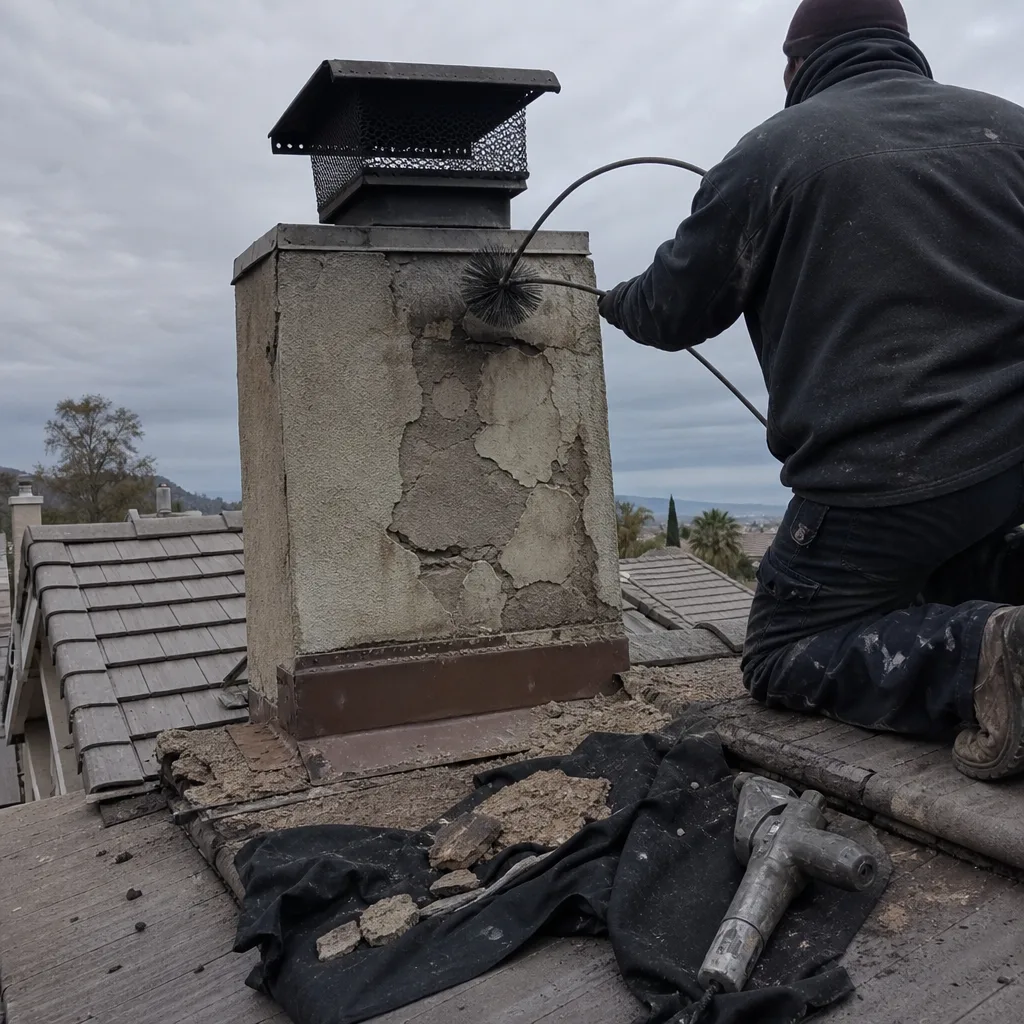 Before
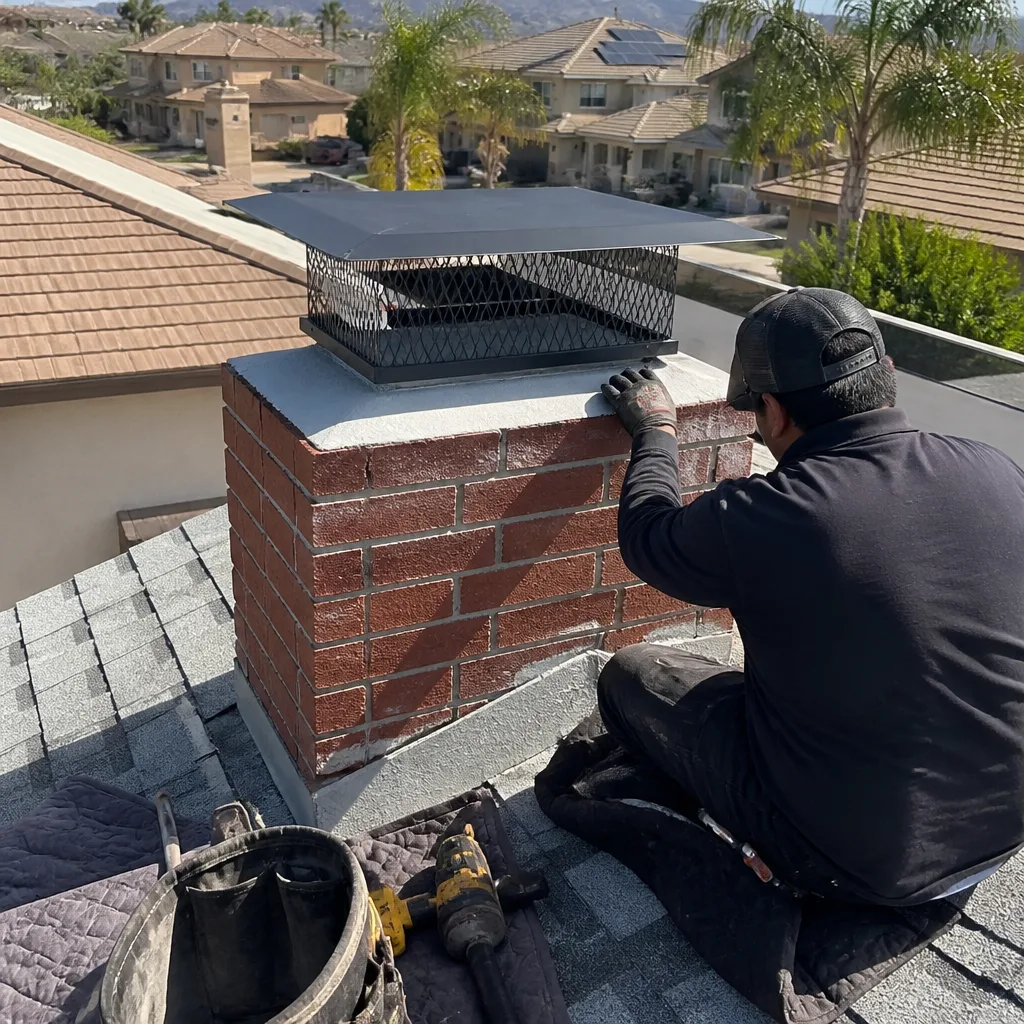 After
 Before
 After
 Before
 After