Last updated October 30, 2026
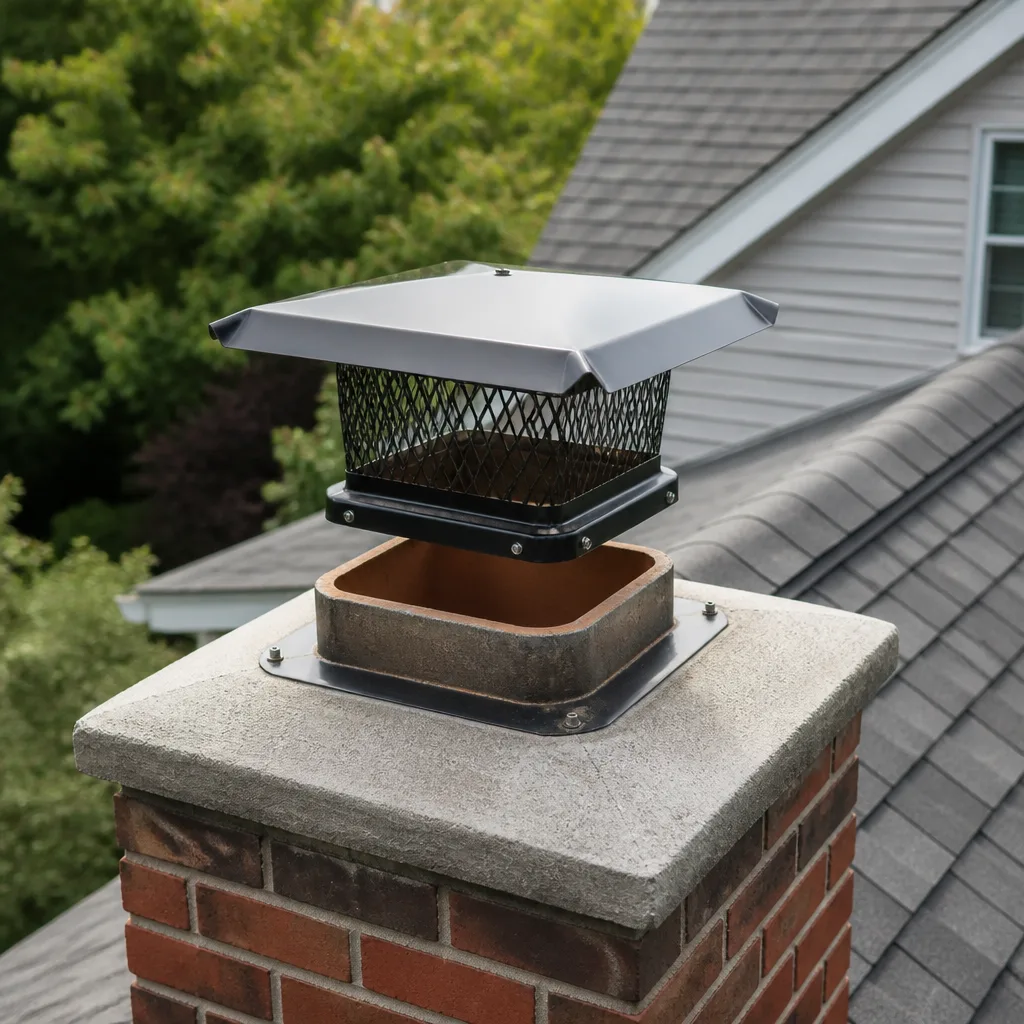 Sweep & inspection
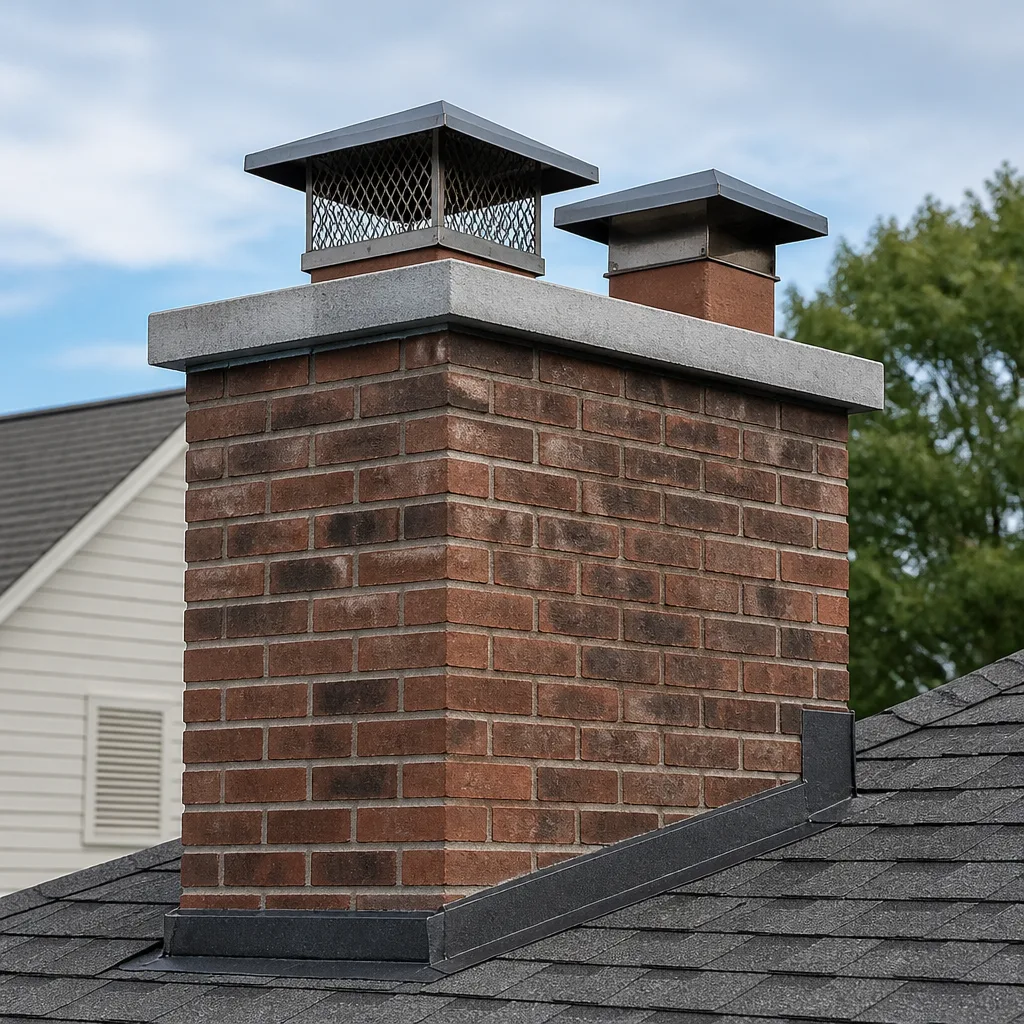 Caps & crowns
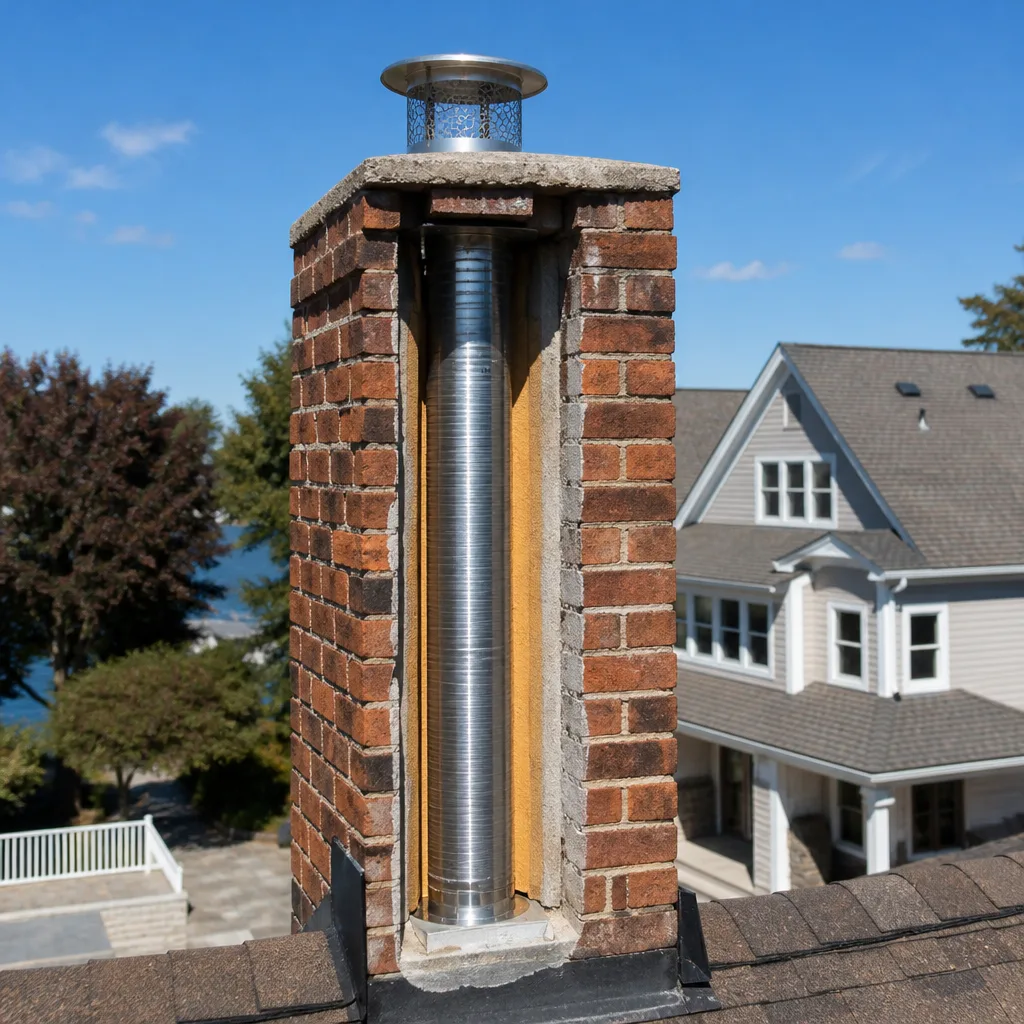 Flue relining
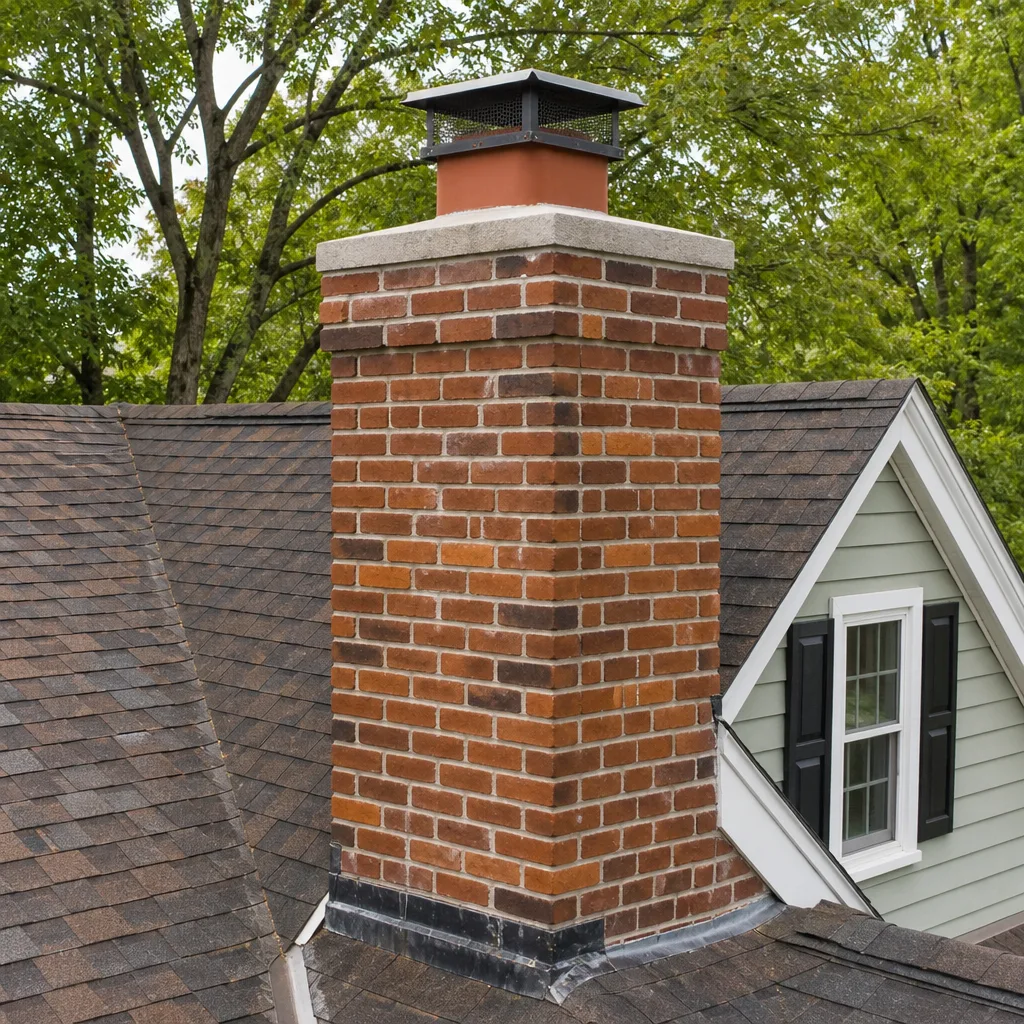 Masonry repair
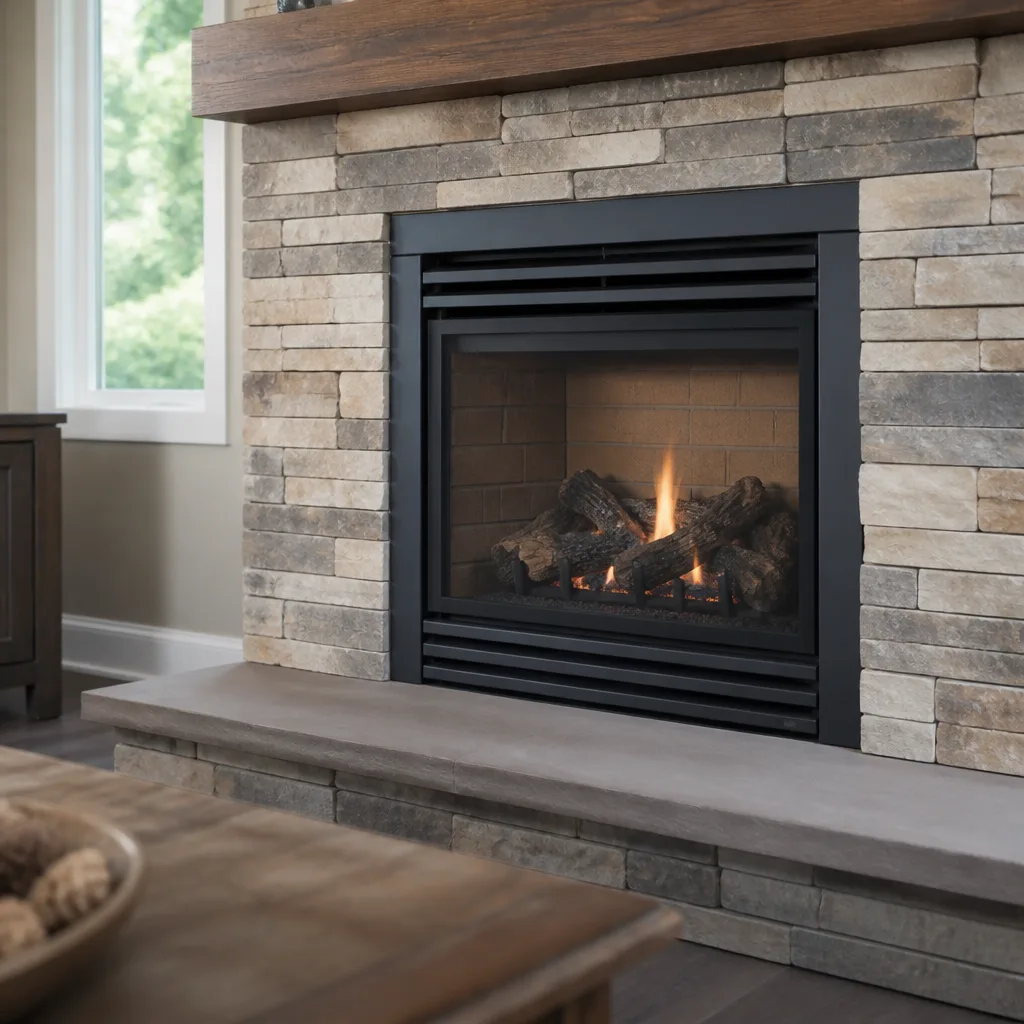 Gas fireplace service
Level 1 sweep and inspection to the NFPA 211 annual standard - flue, crown, cap, and flashing checked and photographed
Chimney sweep logs do not sweep chimneys. They loosen some creosote - which then falls where a brush and vacuum still have to collect it.
DIY vs Professional Chimney Cleaning: The Corona Homeowner’s Decision Guide
Here’s a number most Corona homeowners never hear: creosote can ignite at temperatures as low as 451°F, and a routine fireplace fire produces flue gas temperatures between 800°F and 1,200°F. The margin between normal operation and a chimney fire is thinner than most people assume. This guide walks through exactly when a DIY chimney cleaning makes sense in Corona, when it doesn’t, and what actually separates a rod-and-brush job from what a technician does. For more guides & resources, see our blog. By the end, you’ll know the break-even math, the insurance implications, and the specific conditions where self-cleaning is a reasonable choice rather than a gamble.
Styles & brands we work with
Quick Answer
DIY chimney cleaning is reasonable only under narrow conditions: a straight single-flue system, light soot or stage-one creosote deposits, and a homeowner who has had a professional inspection within the prior 12 months. If you cannot verify the condition of your flue liner, damper, or smoke chamber before starting, you are cleaning blind. Professional cleaning in Corona typically costs between $180 and $320 for a standard single-flue sweep, and includes the inspection documentation insurers expect if a fire event ever occurs. For a detailed look at pricing, see our Chimney Cleaning Cost Breakdown: The Corona Homeowner’s Reference for 2026.
Table of Contents
- What DIY Chimney Cleaning Actually Involves
- The Specific Conditions Where DIY Makes Sense
- What You Cannot See From the Firebox: The Real Limitation
- Equipment Cost Breakdown: The Break-Even Math
- Creosote Stages: Why Glazed Deposits Are Not a DIY Problem
- Insurance Implications for Corona Homeowners
- The Hybrid Approach: What’s Safe to Do Yourself
- Common Mistakes to Avoid
- When to Call a Professional
- Frequently Asked Questions
- The Bottom Line
What DIY Chimney Cleaning Actually Involves
The rod-and-brush kits sold at hardware stores in Corona and everywhere else are legitimate cleaning tools. The basic technology, a stiff brush attached to flexible fiberglass rods pushed up through the flue, is the same approach chimney technicians use. The tool is not the problem. The problem is that a brush only removes what it touches, and it only removes deposits that are loose enough to be mechanically dislodged. What the brush does not do is tell you whether the flue liner behind those deposits has hairline cracks, whether the mortar joints between clay tiles have begun to spall, or whether the damper is sealing correctly when closed.
In our experience, the homeowners who get the best results from DIY cleaning are those who treat it as light maintenance, not as a replacement for inspection. They have already had a technician document the condition of the system. They know their flue is straight, their liner is intact, and their deposit level is manageable. That knowledge comes from a camera inspection, not from looking up the flue with a flashlight from the living room floor.
A proper cleaning, whether DIY or professional, involves more than running a brush. You need drop cloths or plastic sheeting to contain the soot that falls into the firebox. You need a vacuum with HEPA filtration, because standard shop vacuums will blow fine particulate straight through their filters and into the room. You need a ladder if you’re cleaning from the roof down, which means working at height with all the fall risk that implies. And you need to know whether your chimney has a single flue or multiple flues, because cleaning the wrong one or failing to cap the unused one changes the entire calculus.
Corona’s climate adds a variable. We get long dry stretches and then sudden rain. Mortar crowns and brickwork expand and contract through those cycles, and small cracks that were stable a year ago may have opened up. A homeowner doing a DIY clean in March is working with structural conditions that may have shifted since the previous burning season ended.
The Specific Conditions Where DIY Makes Sense
We are not going to tell you that DIY chimney cleaning is always a bad idea. That would be dishonest. There are specific, verifiable conditions where a homeowner with the right equipment and a prior professional inspection can reasonably handle light cleaning themselves. The key word is verifiable.
Here are the conditions under which DIY cleaning is a defensible choice:
- Straight single flue. The flue runs vertically from the firebox to the termination with no offsets, no elbows, and no smoke chamber complexity that would prevent a brush from traveling cleanly through. Most masonry chimneys are not perfectly straight. Prefabricated metal chimneys sometimes are.
- Light deposits only. A prior inspection confirmed stage-one creosote, which is the flaky, soot-like form. This is the only creosote type that brushes reliably remove without chemical pre-treatment.
- Gas insert or gas log set with light soot. Gas appliances produce little creosote, but they can produce light soot and dust accumulation. A homeowner who confirmed via inspection that the venting is clear and the deposits are superficial can handle this.
- Professional inspection within 12 months. You have documentation showing the flue liner is intact, the mortar joints are sound, the damper works, and the crown is not cracked. That documentation exists because a technician put a camera up the flue.
- No recent seismic activity or high-wind events. Corona sits in a seismically active region. A chimney that was structurally fine before a 4.0 tremor may not be after. If there has been any notable earthquake or a severe Santa Ana wind event since your last inspection, do not clean blind.
If all of those conditions are true, a DIY cleaning with a properly sized brush and HEPA vacuum is a reasonable maintenance task. The moment any one of those conditions fails, the risk profile changes, and not in a subtle way.
What You Cannot See From the Firebox: The Real Limitation
The thesis of this guide is simple: the decision point in DIY chimney cleaning is not skill level, it is whether you can accurately assess what you are working with before you start. And the honest answer for most homeowners is no, you cannot, because the tools that make assessment possible are not in your garage.
From the firebox opening, looking up with a flashlight, you can see perhaps four to five feet of flue. A typical Corona masonry chimney is 15 to 25 feet tall. That means 70 to 80 percent of the flue interior is invisible to you. Here is what hides in that unseen space:
- Cracked flue tiles. Clay tile liners crack from thermal stress, water intrusion, and settling. A crack is a pathway for heat and combustion gases to reach combustible framing. Cracked tiles are visible with a camera, not with a flashlight from below.
- Spalled mortar joints. The mortar between clay tiles erodes over time. When joints open, the flue loses its gas-tight seal. This is a repairable condition, but only if it is found.
- Failed damper seals. A damper that does not close fully is a constant route for conditioned air to escape the house year-round. Damper function is checked from the firebox, but damper seal quality often requires closer inspection.
- Stage-two creosote. Glazed, tar-like creosote does not respond to brushing. It requires chemical treatment and rotary cleaning. If you brush a glazed flue, you remove nothing meaningful and convince yourself the flue is clean when it is not.
- Nesting animals. Birds, squirrels, and raccoons find chimneys attractive. A nest partway up a flue blocks draft and creates a fire hazard. Nests are removed from the top or with specialized tools, not pushed further up with a brush.
This is where the Chimney Sweep in Corona distinction matters. A professional sweep is not just brushing. It is assessment first, cleaning second. The camera goes up the flue before the brush does, because the order of operations matters. Cleaning a compromised flue without knowing it is compromised means you may dislodge material that was masking a problem, or you may miss the problem entirely and burn through another season.
Equipment Cost Breakdown: The Break-Even Math
Let’s look at what it actually costs to do this properly yourself versus what a professional service costs, using realistic prices for equipment available in the Corona market. If you’re deciding whether to hire help, our How to Hire a Chimney Cleaning Contractor in Corona: A Step-by-Step Guide covers what to look for.
| DIY Equipment Item | Typical Cost Range |
|---|---|
| Chimney brush (correct diameter for your flue) | $25 – $50 |
| Fiberglass rods (enough length for full flue height) | $40 – $80 |
| HEPA-rated shop vacuum | $150 – $400 |
| Drop cloths and plastic sheeting | $15 – $30 |
| Dust masks / respirator | $10 – $30 |
| DIY total (first time) | $240 – $590 |
| Inspection camera (for actual verification) | $80 – $200 |
| DIY total with inspection capability | $320 – $790 |
| Professional sweep (single flue, Corona pricing) | $180 – $320 |
The break-even math works out like this: your first professional-quality DIY setup costs roughly the same as one professional sweep, and if you add any kind of inspection camera, you are now above the cost of one sweep and approaching two. Yes, the equipment is reusable across years. But so is the knowledge you gain from watching a technician work the first time, and so is the documentation that comes with a professional service.
A consumer-grade inspection camera from a hardware store is not the same as the camera equipment used in professional flue inspection. The resolution, focal length, and lighting are different. You can see whether the flue is roughly clean. You cannot reliably assess hairline cracks in liner tiles or early-stage spalling in mortar joints. That distinction is not snobbery. It is a matter of what the tool is built to resolve.
There is also a time cost. A first-time DIY cleaning, including setup, containment, cleaning, vacuuming, and cleanup, typically takes four to six hours. A professional sweep on a standard single-flue chimney takes about an hour to ninety minutes, and that includes the inspection documentation. What is your time worth per hour? For most Corona homeowners, that calculation alone makes the first professional sweep the obvious starting point.
Creosote Stages: Why Glazed Deposits Are Not a DIY Problem
Creosote is not one substance. It forms in stages, and the stage determines what kind of removal is required. Understanding this distinction is the difference between a successful DIY cleaning and a false sense of security.
- Stage one: flaky, soot-like deposits. This is the form creosote takes when flue temperatures stay relatively high and the fire burns efficiently. It brushes off easily. This is the only stage where a standard brush is reliably effective.
- Stage two: glazed, tar-like deposits. This forms when flue temperatures drop and condensation deposits tar onto the liner. It is shiny, hard, and does not brush off. Mechanical removal requires a rotary cleaning system with chains or aggressive heads, and usually a chemical treatment applied first to break down the tar bonds. A standard brush will skip right over it.
- Stage three: thick, hardened glaze. This is concentrated fuel. It looks like tar that has dried into a dense, hard layer. It is highly combustible and can require multiple chemical treatments, rotary cleaning, and in some cases, liner replacement or resurfacing if the underlying liner has been damaged by the heat it has absorbed.
The homeowner who brushes a stage-two chimney sees black dust fall and assumes the flue is clean. It is not. The glazed layer remains intact, and the fire risk remains unchanged. This is the single most dangerous outcome of unsupervised DIY chimney work: not that you fail to clean entirely, but that you do enough to feel safe while leaving the actual hazard in place.
Rotary cleaning systems, which professional technicians use, attach to a drill and spin steel whip lines or specialized chains at high speed. They physically break up hardened deposits that a brush cannot touch. These systems are not generally available at hardware stores, and using one without training risks damaging the flue liner itself. When we encounter stage-two or stage-three creosote in a Corona home, the standard approach is chemical application first, then rotary removal, then a final sweep and camera confirmation. The camera confirmation is not optional. It is how we know the deposit is actually gone.
This is also where products like HeatShield come into the picture. Creosote removal sometimes reveals underlying damage, deteriorated mortar joints, hairline cracks, that previous deposits were hiding. HeatShield resurfacing is a repair method that restores the interior of a deteriorated flue without full liner replacement, in cases where the underlying structure still qualifies. A sweep-only company finds that damage and hands you a referral. A company that performs Chimney Repair in Corona finds the damage and fixes it. The distinction matters when you are standing in front of a chimney that needs work before it can safely burn again.
Insurance Implications for Corona Homeowners
This is the section most DIY guides skip, and it is the one that matters most when something goes wrong. Here is the reality of how insurance carriers evaluate chimney fires.
When a chimney fire occurs, the insurance adjuster investigates. They look for evidence of maintenance. The homeowner who can produce a professional inspection report and cleaning record dated within the prior 12 to 24 months has documentation that the system was maintained in accordance with industry standards. The homeowner who says, “I cleaned it myself,” has no documentation at all.
That does not automatically mean the claim is denied. Insurance policies vary, and coverage decisions depend on the specific policy language, the cause of the fire, and the adjuster’s findings. What changes is the burden of proof. A self-performed cleaning with no before-and-after inspection data, no photos of the flue interior, no record of what was found and what was done, cannot demonstrate that the system was adequately maintained. The adjuster has no basis to confirm that the cleaning was effective or that the fire did not result from neglected maintenance.
There is a second layer to this that is specific to California and relevant to Corona homeowners: the combination of seismic risk and wildfire exposure. Insurance carriers in this market are already attentive to property maintenance. Chimney documentation is one of the things they look at when underwriting and when processing claims. A professional inspection report is not just evidence of cleaning. It is evidence of structural verification, and that is the broad point: after an earthquake, after a high-wind event, after years of seasonal thermal cycling, the question is not just whether the flue is clean, it is whether the flue is sound.
We are not saying that a DIY cleaning will void your policy. We are saying that the documentation gap is real, and that in the worst-case scenario, the homeowner who cleaned their own chimney has a weaker position than the homeowner who can produce records. That weakness has a dollar value.
The Hybrid Approach: What’s Safe to Do Yourself
The realistic answer for most Corona homeowners is neither “always DIY” nor “never touch your chimney.” It is a hybrid: professional inspection and deep cleaning at regular intervals, with light homeowner maintenance in between. Here is what that looks like in practice.
Safe to self-perform between professional visits:
- Visual checks of the firebox. Look for falling debris, unusual buildup, signs of animal activity, or any change in the damper’s operation. You are looking for changes, not diagnosing.
- Damper operation checks. Confirm the damper opens and closes fully. If it sticks, if it does not seal, if you feel a draft when it is closed, that is a service call, not a DIY repair.
- Brick and mortar inspection from the ground. Walk around the exterior of the chimney. Look for spalling brick faces, missing mortar, white efflorescence (which signals water intrusion), or visible cracks in the crown. Again, you are looking for changes, not making repairs.
- Cap screen clearing. From a safe position, check whether the chimney cap screen is clogged with debris or visible nesting material. If you can reach it safely, you can clear surface-level buildup. If it requires getting on the roof, most homeowners should leave it to a technician.
Not safe to self-perform, regardless of skill level:
- Any work that requires roof access. Roof falls are a leading cause of home-accident fatalities. The risk is not worth the cost savings.
- Flue liner repair or replacement. This includes products like DuraFlex flexible liner systems, which are engineered for code-compliant venting in both new construction and retrofit applications. Installing a liner requires specialized knowledge of clearance requirements, termination heights, and connection details. Getting it wrong creates a carbon monoxide risk inside the home.
- Chemical creosote treatment on glazed deposits. The chemicals used are corrosive and require proper application and dwell times. Leave it to a technician.
- Smoke chamber parging or any masonry repair inside the chimney. These repairs require access, materials, and techniques that are beyond the scope of even a handy homeowner.
The hybrid approach also extends to dryer vents, and this is a point worth making bluntly. A clogged dryer vent is a fire waiting to happen. Lint is highly combustible, and the dryer vent in a typical Corona laundry room runs through walls or under floors where a fire can spread before anyone notices. Dryer Vent Cleaning in Corona is a fire-prevention service, not a convenience add-on. The same technicians who work on chimney flues are the right people to handle dryer venting, because both systems are about combustion venting and both fail in the same way: blockage causes heat buildup, and heat buildup causes fire.
Common Mistakes to Avoid
- Cleaning without a prior inspection. This is the foundational error. If you do not know the condition of the flue liner before you clean, you are performing maintenance on a system you have not evaluated. You cannot clean your way past a structural defect.
- Using the wrong brush size. A brush that is too small leaves deposits on the liner walls and gives false confidence. A brush that is too large can wedge in the flue and become a removal project. Correct sizing comes from knowing your flue dimensions, which most homeowners do not know.
- Treating glazed creosote with a standard brush. As covered above, stage-two and stage-three deposits do not brush off. Trying anyway wastes time and leaves the fire hazard exactly where you found it.
- Skipping the HEPA vacuum. Chimney soot is fine particulate. A standard shop vacuum will blow it into the room, coating your furniture and your lungs. If you do not own a HEPA-rated unit, you do not own the equipment needed for this job.
- Cleaning from the roof without fall protection. We should not have to say this, but every year, homeowners are seriously injured doing exactly this. If the cleaning requires roof access and you do not have fall-arrest equipment and training, call someone who does.
- Ignoring changes between cleanings. If your fireplace suddenly drafts differently, or the damper starts sticking, or you notice a smell even when the fireplace is not in use, something has changed. The response is investigation, not another burn season.
- Assuming gas appliances do not need venting inspection. Gas log sets and gas inserts produce less creosote, but they still vent combustion gases. A blocked or compromised gas vent is a carbon monoxide risk, which is invisible and potentially fatal. Gas appliance venting on a service schedule, not an ignore-list.
When to Call a Professional
Call a professional chimney service when any of these conditions apply: you have not had a camera inspection within the last 12 months, you see glazed or tar-like creosote deposits, you have reason to suspect animal nesting, you have experienced an earthquake or severe wind event since the last inspection, your chimney is not straight, you have multiple flues sharing the same structure, your damper is not sealing, you notice a draft or smell when the fireplace is not in use, or you simply do not want to spend four to six hours doing a job that requires equipment you will use once a year.
Corona Chimney Sweep offers free estimates in Corona – call (855) 382-6159.
Frequently Asked Questions
A standard single-flue chimney sweep in Corona typically costs between $180 and $320, depending on flue height, accessibility, creosote stage, and whether additional services like camera inspection or cap replacement are needed. Glazed creosote removal, chemical treatment, and rotary cleaning add to the cost because they require more time and materials. Call (855) 382-6159 for an exact quote on your system.
The National Fire Protection Association (NFPA 211) standard says chimneys should be inspected at least once a year and cleaned when deposits reach 1/8 inch of accumulation. For a wood-burning fireplace used regularly during Corona’s winter months, annual cleaning is the safe baseline. Gas appliances can often go two years between cleanings but still need annual inspection of the venting system.
Yes, if the conditions are right: a straight single flue, light stage-one deposits only, and a professional inspection within the prior year that confirms the liner is sound. If you cannot verify all three of those conditions, the kit is a tool without the assessment that makes it safe to use. The brush is not the problem. The diagnosis is.
Creosote accumulates. As the deposit layer builds, it constricts the flue, reduces draft, and creates a fuel load inside the chimney. Eventually, if the temperature reaches the ignition point, you have a chimney fire. Chimney fires burn hot and fast, often cracking flue liners and igniting surrounding framing. The damage from a chimney fire can reach the attic and spread before anyone realizes it is happening. This is not a scare tactic, it is a description of how these fires actually work.
No, DIY cleaning does not automatically void a policy. But if a chimney fire occurs, the adjuster will ask for maintenance documentation. A professional inspection report and cleaning record is strong evidence that the system was maintained. A self-cleaning with no inspection data is weaker evidence, and in a disputed claim, the homeowner who cleaned their own chimney is in a less defensible position than the homeowner with professional records.
A sweep removes deposits. A camera inspection evaluates the condition of the flue liner, mortar joints, damper, and smoke chamber before and after the cleaning. The camera is how we know whether the liner has hairline cracks, whether the mortar is spalling, and whether the cleaning actually removed the deposits. A sweep without inspection is maintenance without diagnosis, and diagnosis is the part that prevents fires and catches problems before they become structural failures.
The Bottom Line
DIY chimney cleaning in Corona is a reasonable choice only under specific, verifiable conditions: a straight flue, light deposits, a recent professional inspection, and no intervening seismic or weather events. If any of those conditions are missing, the homeowner is cleaning blind, and cleaning blind is how false confidence gets created. The equipment cost for a proper DIY setup, including HEPA filtration and inspection capability, exceeds the cost of a professional sweep the first year. The insurance documentation gap is real. And the repair capability matters: when a cleaning reveals a cracked liner or deteriorated mortar, Corona Chimney Sweep does not hand you a referral. We repair what we find, using materials like DuraFlex liners, HeatShield resurfacing, and other contractor-grade product lines sourced from Copperfield, Gelco, and the same supply houses professional contractors use. One provider, every venting hazard, from the chimney to the dryer vent.
Written by the team at Corona Chimney Sweep, serving Corona since 2018.
See the difference
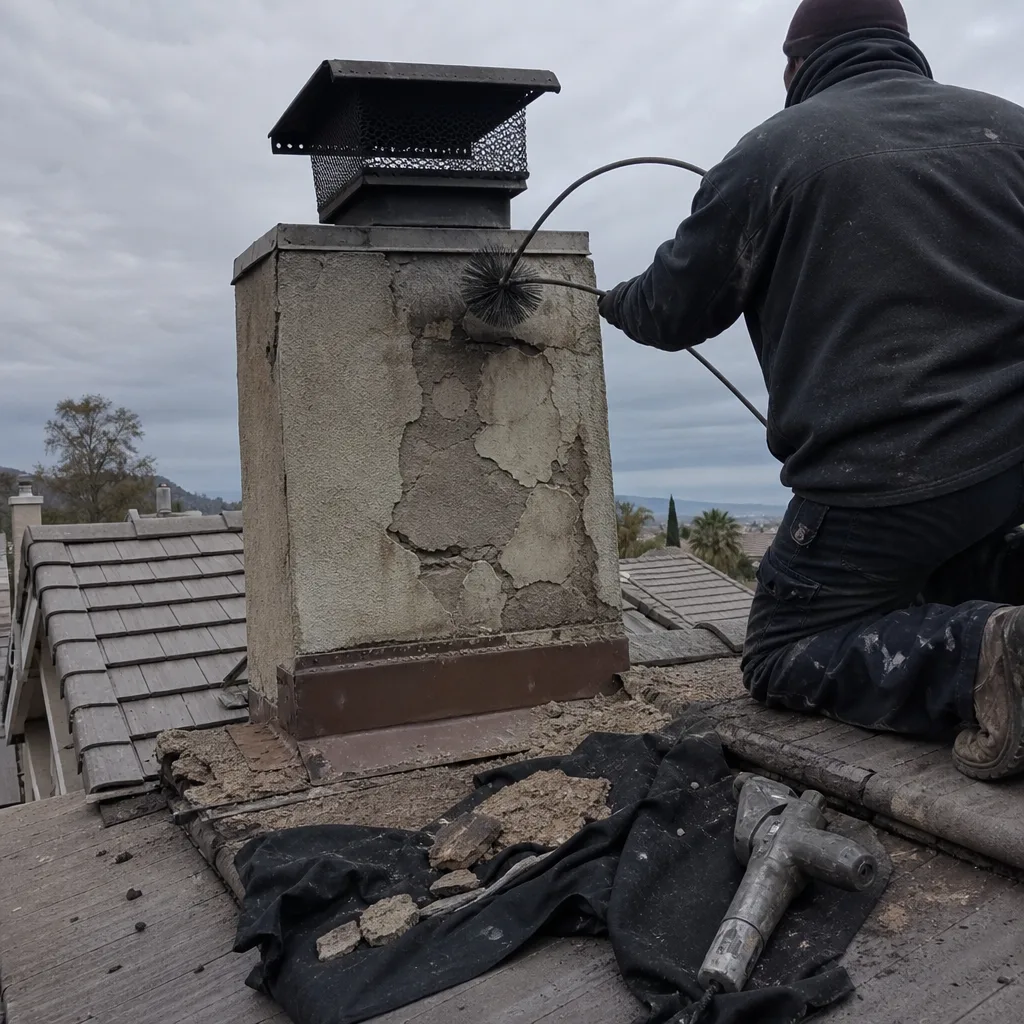 Before
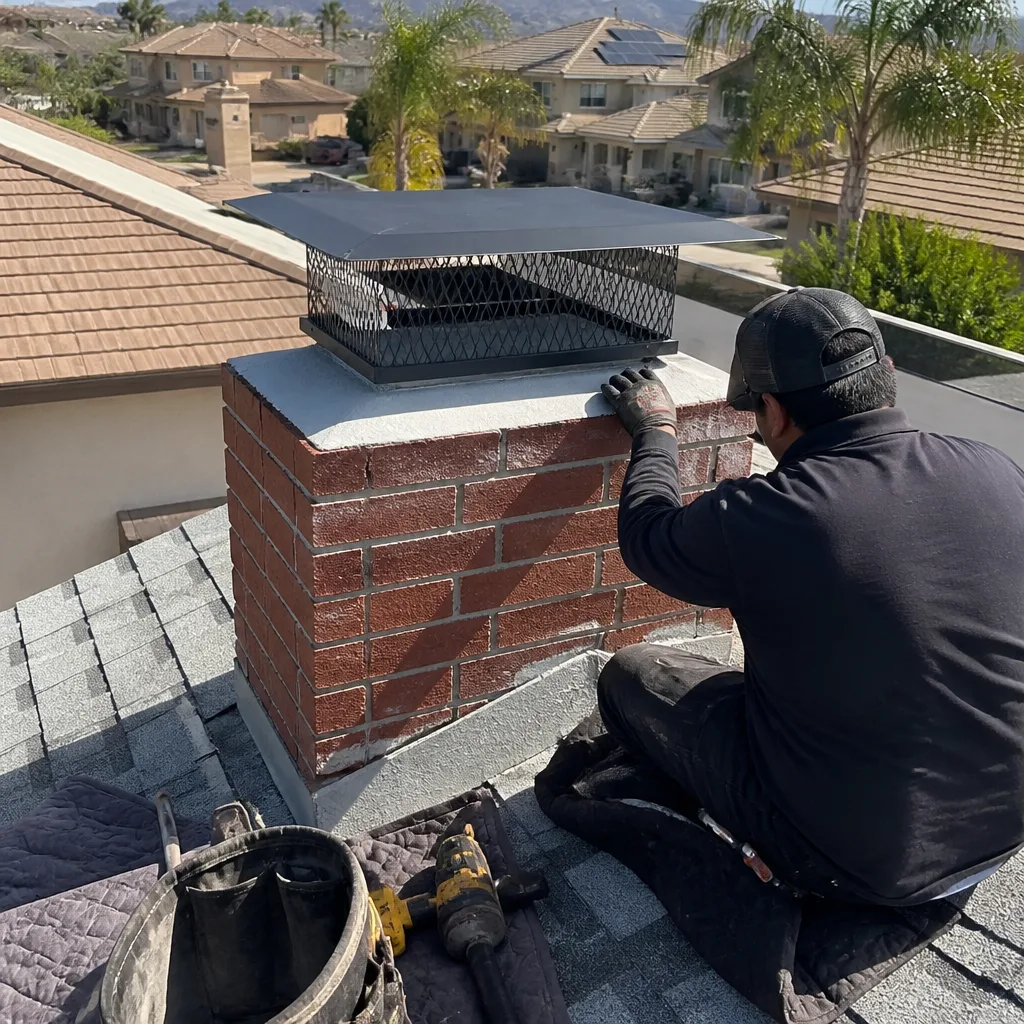 After
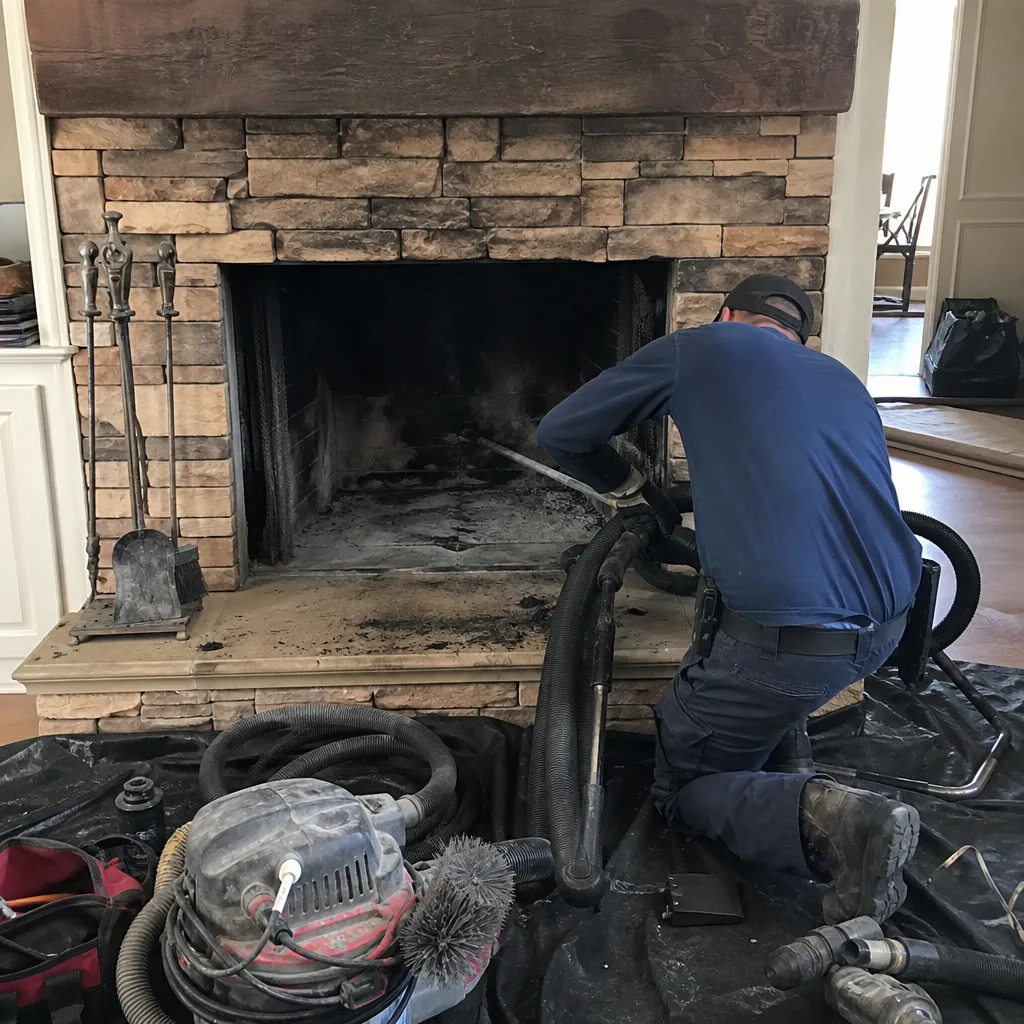 Before
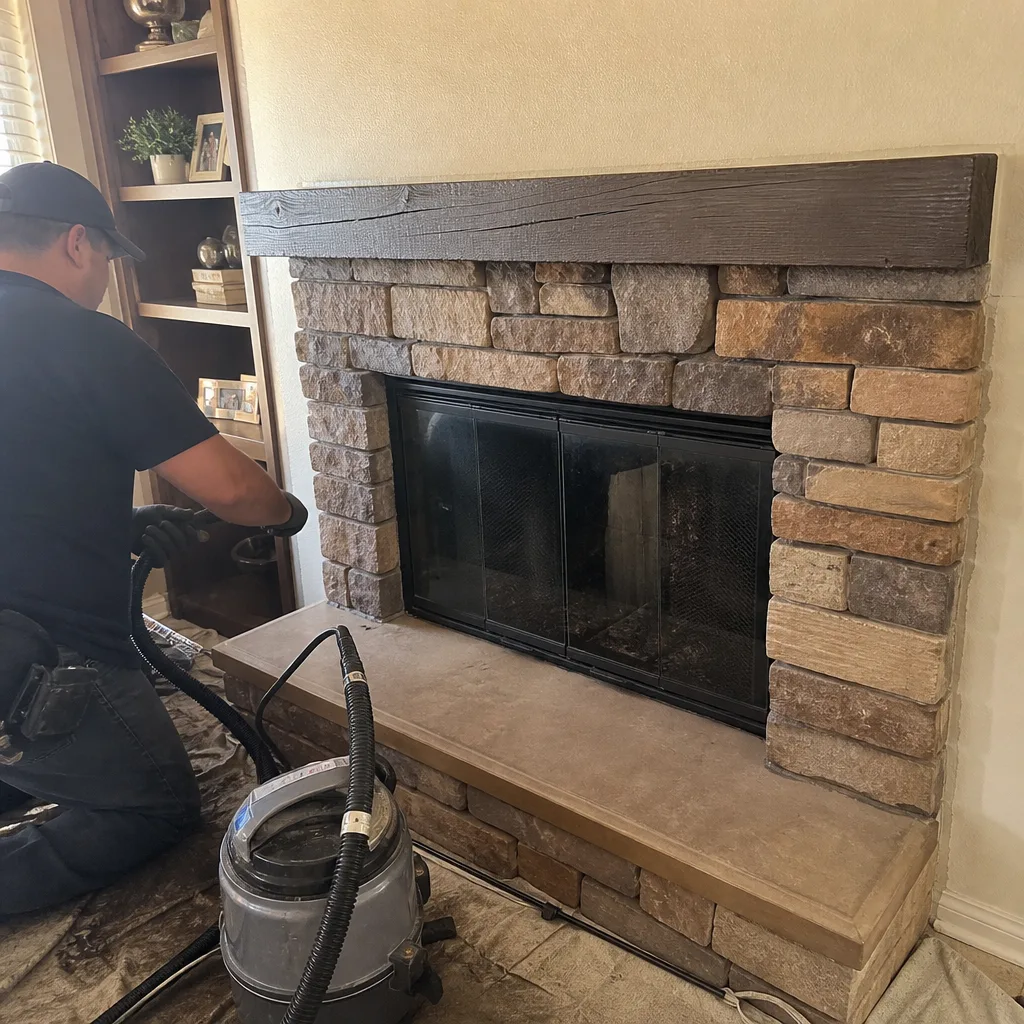 After
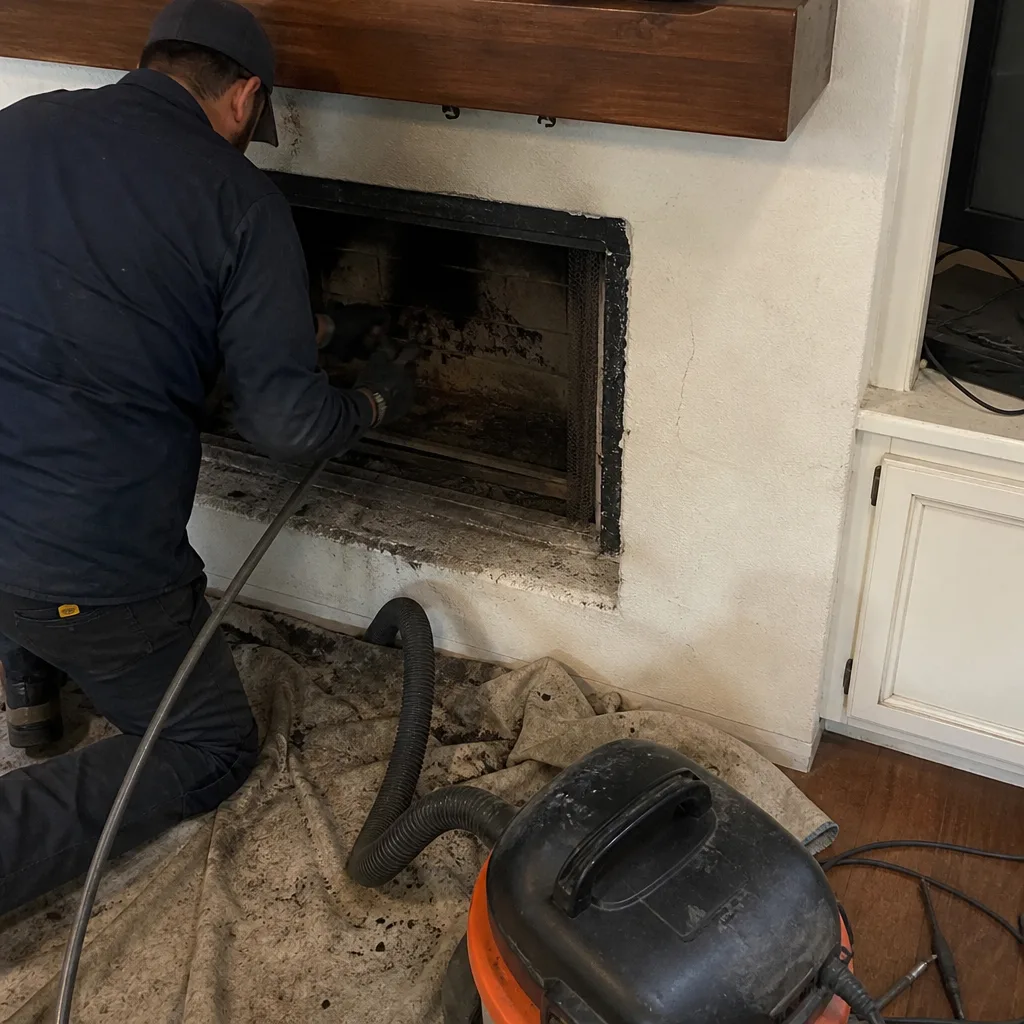 Before
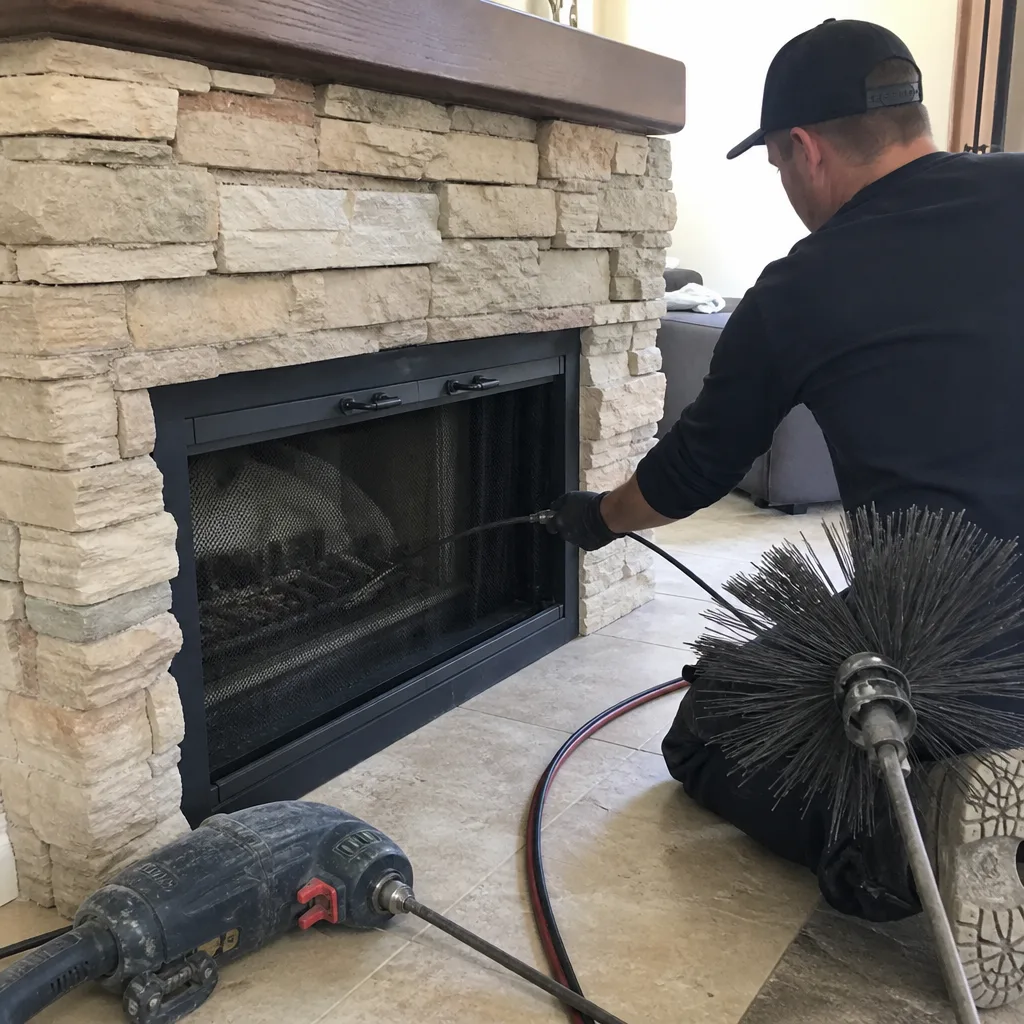 After