Last updated October 30, 2026
 Sweep & inspection
 Caps & crowns
 Flue relining
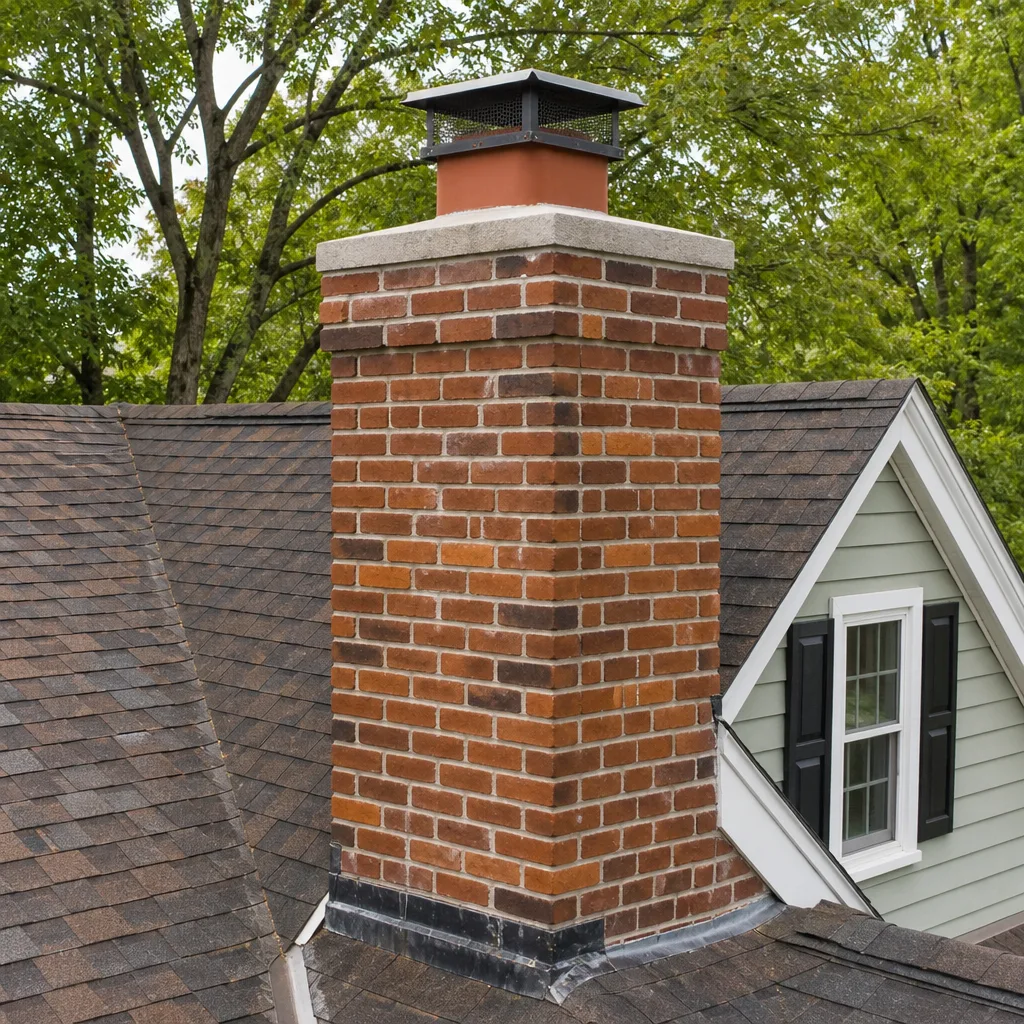 Masonry repair
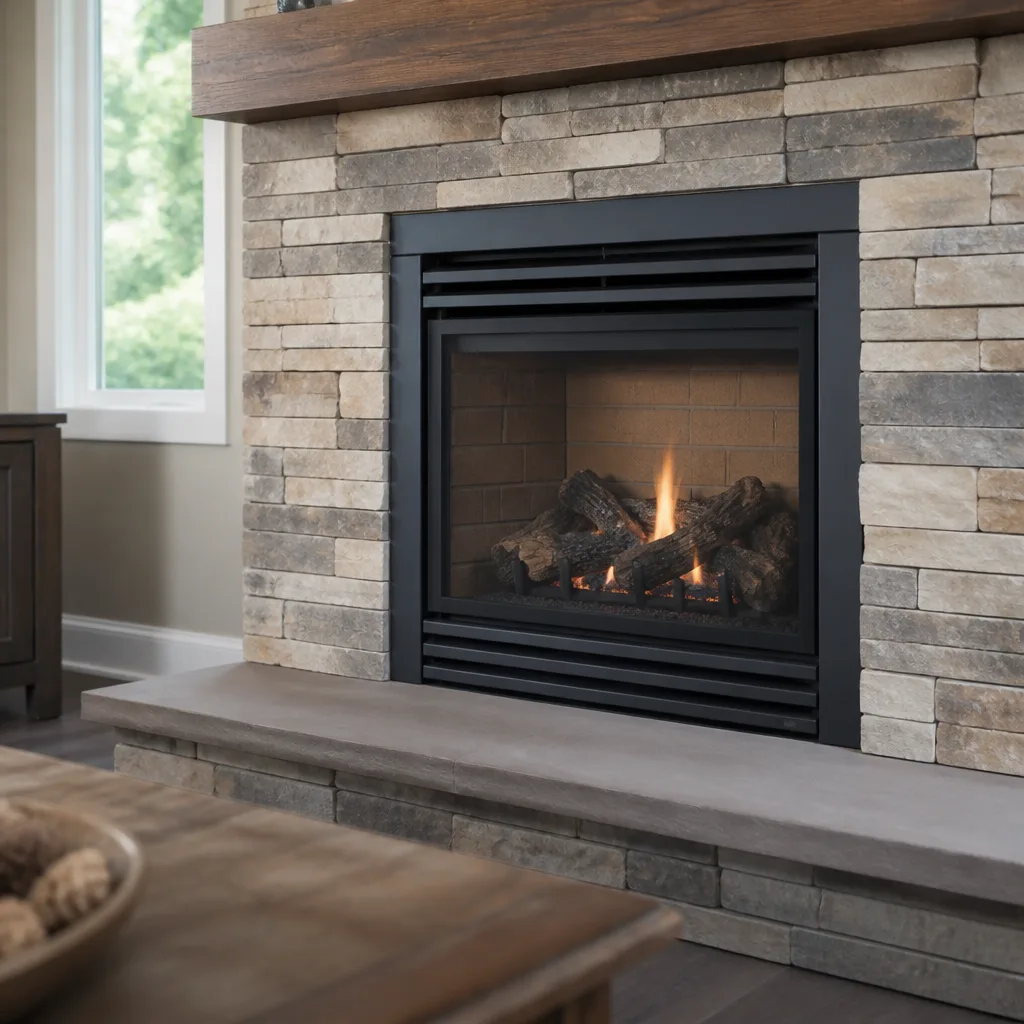 Gas fireplace service
Level 1 sweep and inspection to the NFPA 211 annual standard - flue, crown, cap, and flashing checked and photographed
Chimney sweep logs do not sweep chimneys. They loosen some creosote - which then falls where a brush and vacuum still have to collect it.
The Complete Chimney Sweep Guide for Corona Homeowners
Most Corona homeowners use their fireplace fewer than 15 nights a year, yet creosote still accumulates enough in a single burn season to require a Level 2 inspection after any chimney fire – even a small one most people never noticed. The Inland Empire’s dry heat, Santa Ana wind events, and sub-freezing winter nights create a chimney deterioration profile you won’t find in coastal California homes. Our Chimney Sweep guide walks through exactly what a full-service chimney inspection and cleaning covers, component by component, so you know what you’re paying for before the truck arrives. If you’ve deferred sweeping for a year or three, or just bought a resale home in Corona with an unknown chimney history, this is the reference you need.
Quick Answer
A chimney sweep in Corona, CA costs between $189 and $350 for a standard Level 1 inspection and cleaning, with the price varying based on flue type, creosote stage, and whether the chimney has been serviced in the past two years. For more guides & resources, see our blog. The National Fire Protection Association (NFPA 211) recommends annual inspection and cleaning as needed, but Corona’s Santa Ana wind patterns and summer heat cycles make certain deterioration checks more urgent here than in coastal climates. A complete service should include the flue interior, smoke chamber, damper, firebox, chimney crown, and exterior masonry – and repairs should be handled by the same company that finds them.
Styles & brands we work with
Table of Contents
- How Corona’s Climate Changes Your Chimney
- What a Chimney Sweep Actually Covers in Corona
- CSIA Inspection Levels: Which One Applies to You
- Creosote Stages and Why They Matter More Than You Think
- Santa Ana Winds and the Draft Problem
- Why Chimney Crowns Crack Faster in the Inland Empire
- Dryer Vents: The Second Fire Hazard on Your Checklist
How Corona’s Climate Changes Your Chimney
Corona sits in a thermal sweet spot that’s actually tough on masonry. Summer surface temperatures on a south-facing chimney crown routinely exceed 140°F. Winter nights dip to freezing. That’s a 100-degree-plus swing, repeated daily for months, year after year. Concrete and terra cotta expand and contract at different rates. Mortar joints crack. Hairline fissures open in the crown. Water gets in during the rare but real winter rainstorms, then sits there. Flash forward a few seasons and you’ve got spalling brick, a deteriorated smoke shelf, or a flue liner with enough cracked mortar joints to require resurfacing or replacement.
Coastal homes deal with salt air and persistent moisture. Corona homes deal with thermal shock, Santa Ana dust, and long dry stretches that let creosote harden into a glassy, third-stage coating. The sweep schedule that works for a Huntington Beach fireplace doesn’t map cleanly onto a Corona one. Our service area stretches across the city, from the older homes near Main Street to newer developments off the 15, and the chimney conditions we see track more closely with lot age and exposure than with neighborhood income level. A 1980s home in South Corona with a south-facing chimney has a completely different maintenance profile than a 2010s build in Eagle Glen with a shaded flue.
What this means in practice: annual inspection isn’t a suggestion here. It’s the only way to catch freeze-thaw damage in the crown before water reaches the firebox, and the only way to confirm creosote hasn’t progressed to a stage that requires rotary removal rather than hand-swept brushing.
What a Chimney Sweep Actually Covers in Corona
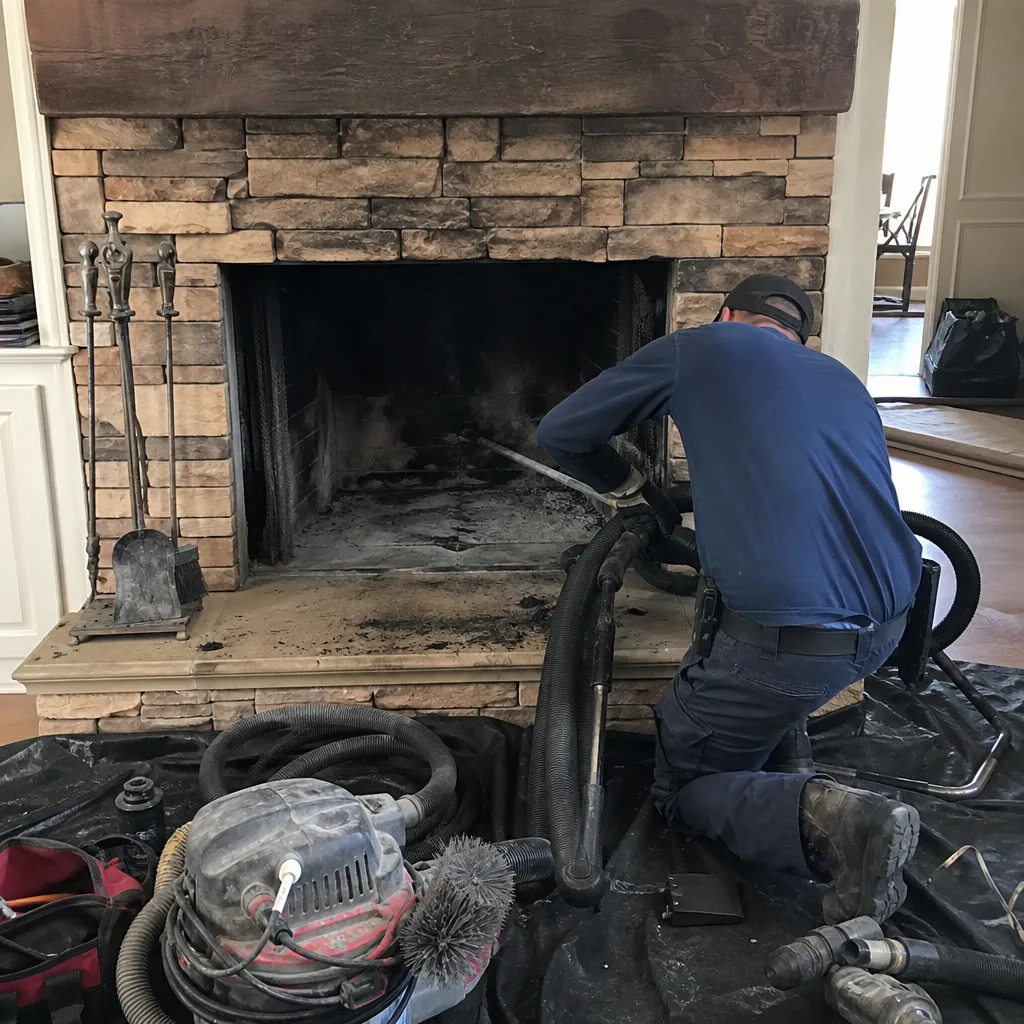
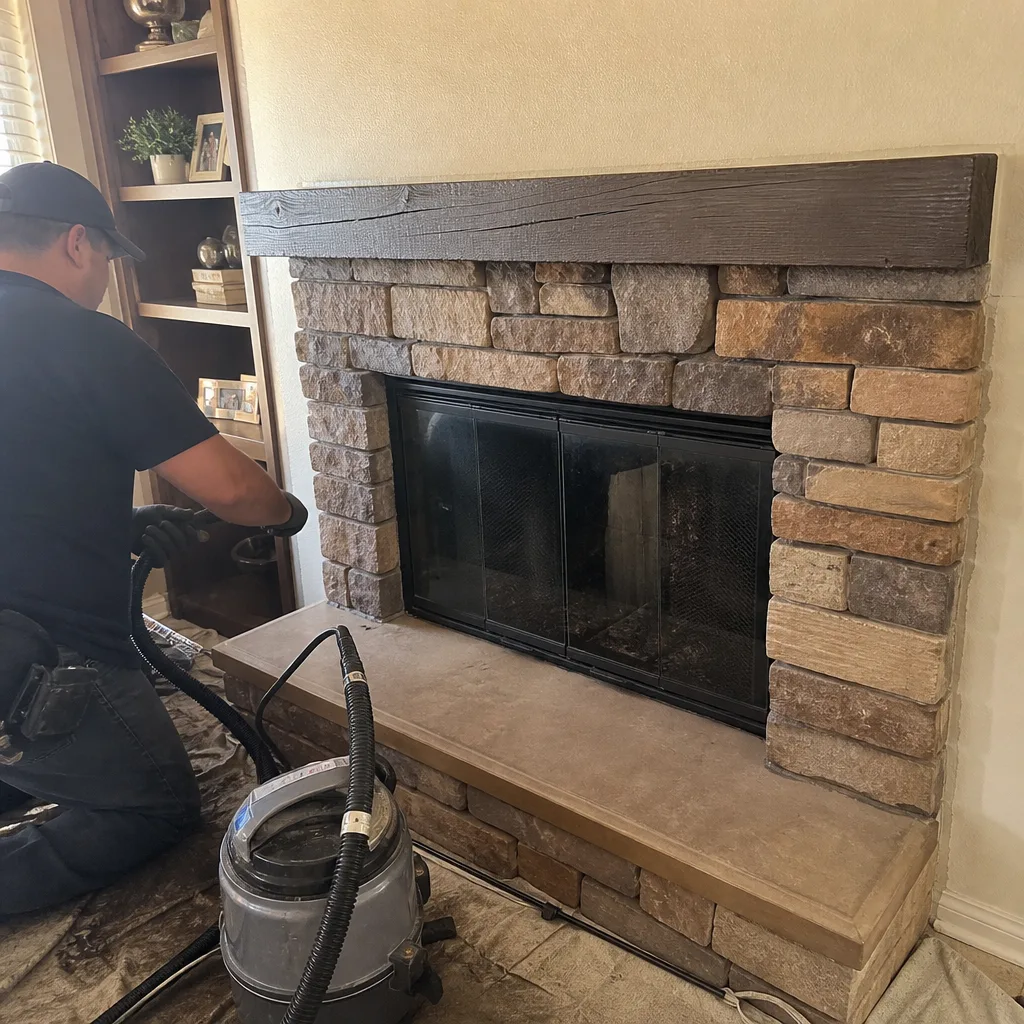
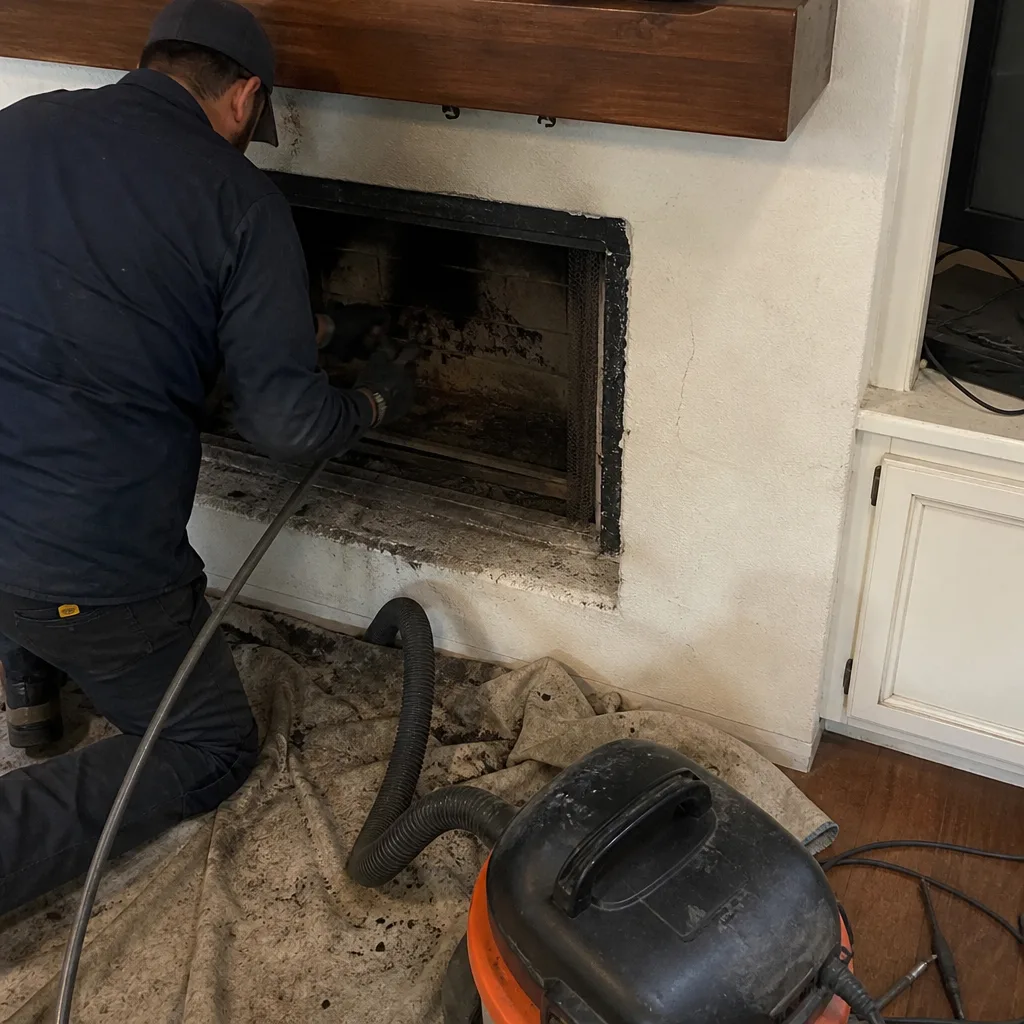
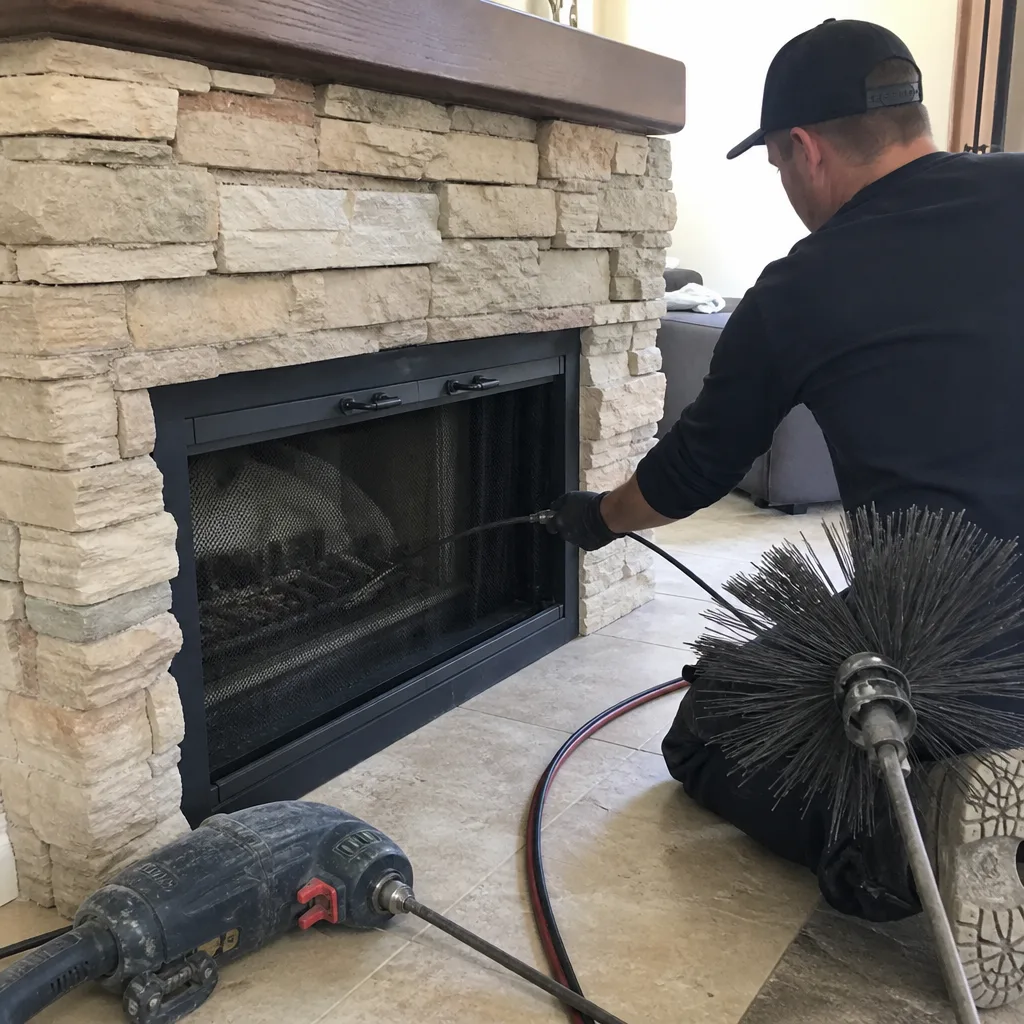
Say the word “sweep” and most people picture a guy with a wire brush and a top hat. The reality is a component-by-component inspection and cleaning that touches every part of the system. Here’s what happens on a standard visit from Corona Chimney Sweep home, in the order we do it:
- Interior firebox inspection. We check the firebrick for cracks, the grate placement, and the ash dump if one exists. A cracked firebrick isn’t cosmetic – it exposes the outer masonry to direct flame heat.
- Damper function and seating. A damper that won’t close fully lets conditioned air escape year-round and pulls draft away from the fire when it’s open. We lubricate or note replacement needs.
- Smoke chamber inspection. This is the funnel-shaped area above the damper. It’s the most common site of hidden creosote buildup in Corona homes because smoke slows down here before entering the flue. Chamber deterioration is why many older chimneys fail inspection.
- Flue liner inspection and cleaning. We inspect the liner material – terra cotta, stainless, or cast-in-place – then clean using the right method for that liner. More on method below.
- Chimney crown and exterior wash. We inspect the crown for cracks, the brick or stone for spalling, and the flashing where the chimney meets the roofline. This is where Inland Empire heat does its work.
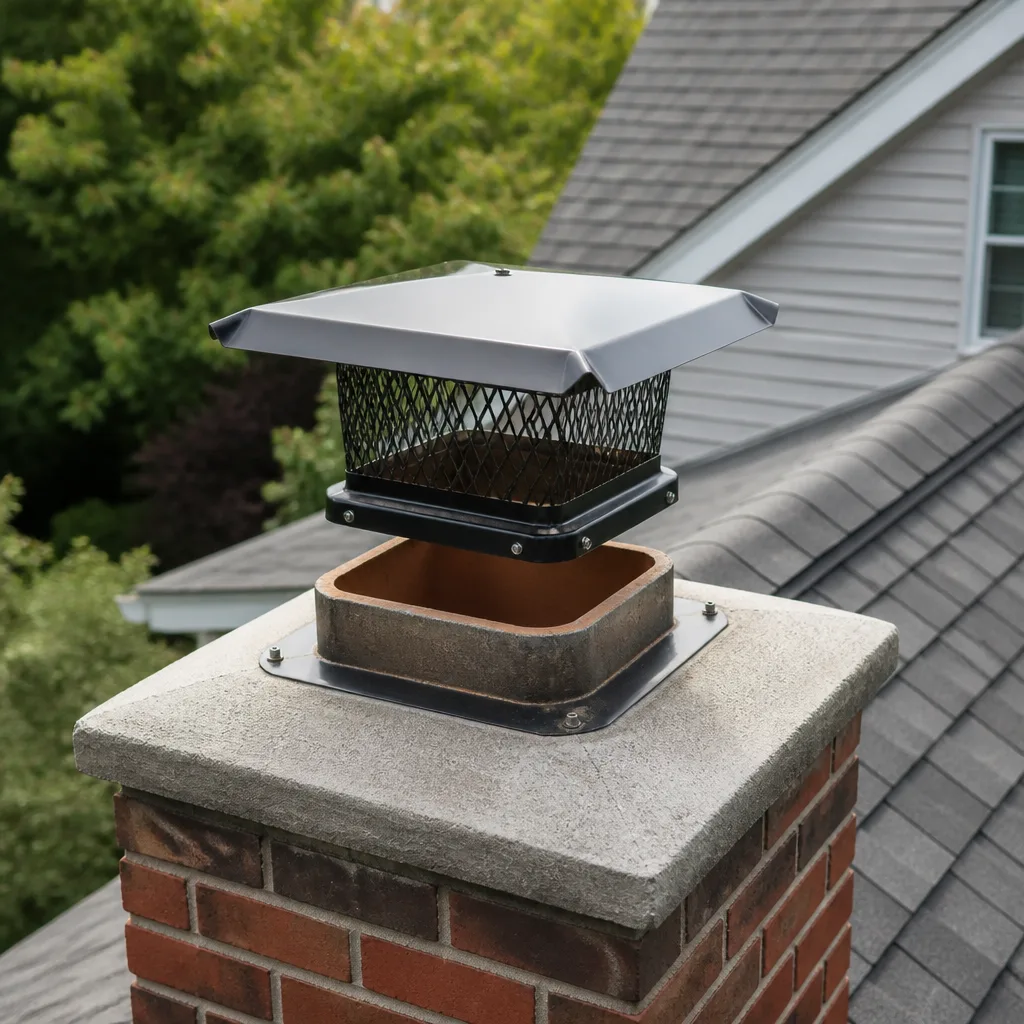
- Rain cap and spark arrestor check. Missing or damaged caps let rain, birds, and debris enter. A functioning spark arrestor is a Corona code requirement in wildfire-adjacent zones.
- Report and photo documentation. You get photos of anything we find. No verbal-only “you need work” recommendations. If we say a liner needs attention, you’ll see the crack or the stage-three creosote yourself.
If you’re scheduling a Chimney Sweep in Corona, expect the full component list above. A sweep-only company might brush the flue and call it done. We sweep, but we also inspect – and when we find a problem, we repair it. That’s the difference between a cleaning visit and a chimney health assessment.
CSIA Inspection Levels: Which One Applies to You
The Chimney Safety Institute of America defines three inspection levels. Most Corona homeowners only ever need Level 1. Some need Level 2. Almost nobody needs Level 3 unless there’s structural damage after an earthquake or a major chimney fire. Here’s the breakdown:
Level 1: The Annual Standard
A Level 1 inspection covers all accessible surfaces – everything we can see from the firebox opening, the top of the chimney, and with basic tools down the flue. It’s appropriate when you’ve used the fireplace regularly, haven’t changed fuel type, haven’t changed the liner or appliance, and got a clean report last year. This is what most annual service visits include. If you use your fireplace at all – even a dozen nights a season – this is your baseline.
Level 2: The Resale and Event Inspection
A Level 2 inspection adds video scanning of the entire flue interior, inspection of accessible attics, basements, and crawlspaces where chimney structure passes through, and evaluation of clearance to combustibles. It’s required by real estate standards when a property in Corona changes hands, and it’s recommended after any chimney fire, any seismic event significant enough to crack drywall, a lightning strike, or a change in fuel type (say, converting from wood to gas inserts). If you bought a Corona home in the last two years and don’t know whether a Level 2 was done, assume it wasn’t.
Level 3: The Destructive Inspection
Level 3 involves removing building components – drywall, masonry, chimney crown sections – to access hidden areas of the system. It’s indicated only when a Level 2 video scan shows damage that can’t be reached from inside the flue. This is rare. If someone recommends a Level 3, they should have Level 2 video footage in hand showing exactly why.
The right question isn’t “which level should I get” – it’s “what does my situation require under NFPA 211.” Annual service plus no changes equals Level 1. Property transfer or system change equals Level 2. And a chimney that’s been ignored for five years in a Corona home with a south-facing crown probably gets a Level 1 that turns into a recommendation for video scanning anyway.
Creosote Stages and Why They Matter More Than You Think
Creosote is the condensed byproduct of wood combustion – unburned wood gases that cool and solidify on the flue interior. It comes in three recognized stages, and the stage determines both the cleaning method and the urgency.
Stage 1: Flaky dust. Feels like soot or ash. Brushes off with standard wire or poly brushes. Normal after a season of burning. Not urgent, but that doesn’t mean skip it. Stage 1 creosote is what’s accumulating in the flue of the Corona homeowner who burns 12 nights a year and thinks that’s too little to matter.
Stage 2: Crunchy, tar-like flakes. Darker, harder, with a visible granular structure. This is where many chimneys sit after two or three seasons without cleaning. Hand-swept brushes start to struggle. Rotary tooling with chains or specialized heads may be required if buildup is thick enough. Stage 2 is a real draft restriction.
Stage 3: Glazed, tar-like coating. Hard, shiny, often with a tar consistency that re-ignites at a lower temperature than the flue can safely handle. Stage 3 is a verified chimney fire waiting for the right burn conditions, and in Corona’s dry Santa Ana conditions, those arrive every fall. Removal often requires chemical treatment followed by rotary cleaning, and in some cases the liner interior is too compromised for cleaning alone to resolve.
Here’s the part most guides skip: every chimney fire, even a small one that burns itself out in fifteen seconds, changes the structural integrity of the flue liner. Chimney Repair in Corona after such an event isn’t optional. If you hear a whoosh sound from the chimney, see flames from the top, or notice cracked flue tiles in the firebox after a burn, the next step is a Level 2 inspection with video scanning. Not a sweep. Not a shrug. A documented look at the entire flue path.
Santa Ana Winds and the Draft Problem
Corona sits directly in the path of the Santa Ana wind corridor that funnels through the Santa Ana River canyon. Winds of 40 to 60 mph are common several times each autumn and winter, and they do more than knock over patio furniture. They create negative draft pressure at the chimney termination, which pulls smoke, soot, and combustion byproducts back down the flue and into the house. Homeowners describe it as a “backdraft” – the fireplace that smokes into the room on windy nights or the gas insert that keeps tripping its spill switch.
The issue isn’t the fire. It’s the interaction between wind, termination height, and flue diameter. A chimney that draws perfectly on a calm evening can backdraft badly during a Santa Ana event if:
- The termination is below the roofline or within ten feet of a taller structure on the windward side.
- The flue is oversized for the appliance, reducing gas velocity and making it easier for wind to overcome the draft.
- The rain cap or spark arrestor is partially clogged with creosote or debris, adding resistance at the worst possible point.
- The home is tightly sealed – newer Corona construction with upgraded insulation and windows – so replacement air can’t enter elsewhere and the flue becomes the path of least resistance for the wind.
This matters for your annual service because the fix often isn’t more sweeping. It’s a draft analysis, possibly a taller termination, possibly a damper upgrade, possibly a liner resizing. A sweep-only company will clean the flue and tell you to open a window. We’ll look at the wind exposure and recommend the repair that actually solves the backdraft. That’s what separates Chimney Repair in Corona from a brush-and-go visit.
Why Chimney Crowns Crack Faster in the Inland Empire
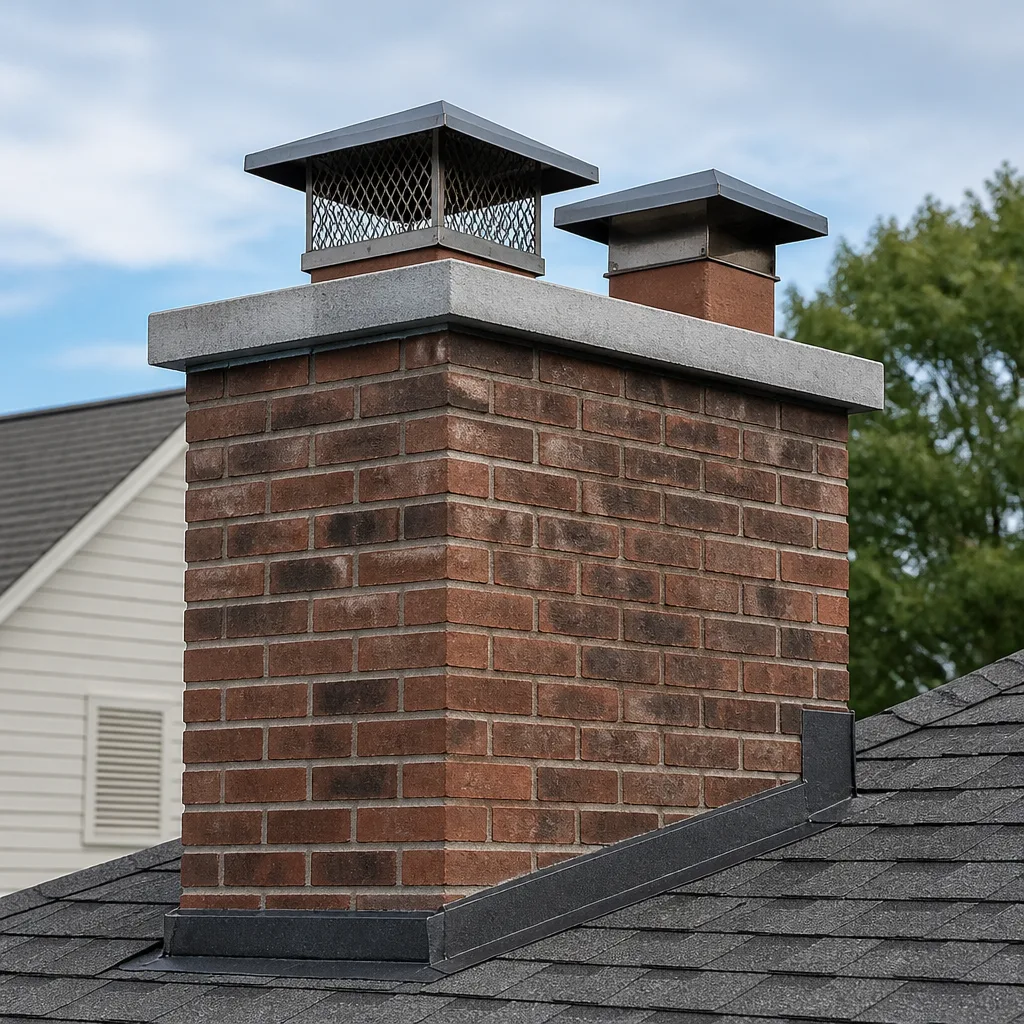
The chimney crown is the concrete slab that caps the masonry at the top of the chimney, sealing the top course of bricks from direct weather. It’s not the rain cap – that’s the metal screen above it. The crown slopes away from the flue and has an overhang, and when it’s intact, it’s the primary water barrier for the entire chimney structure.
Corona summers push surface temperatures on a south-facing crown past 140°F. Desert-winter nights drop below 32°F often enough to freeze any water that’s penetrated a hairline crack. Concrete expands when hot, contracts when cold, and the daily cycle creates micro-fractures that widen every year. Add in the occasional monsoon-season downpour and water gets past the crown, into the masonry, and eventually into the smoke chamber and firebox.
What starts as a crown crack ends up as a full chimney rebuild if it’s ignored long enough. The sweet spot for intervention is the point where the crack is visible but the masonry below is still dry. That’s a crown reseal or recast – a few hundred dollars in most Corona homes – versus a five-figure rebuild when spalling brick and rotten mortar joints have spread through the structure.
This is why a proper sweep visit in Corona always includes a crown inspection. It’s not a repair upsell. It’s the first line of defense against the single most expensive chimney problem we see, and catching it early is almost always cheap. When crown damage has already progressed, we use professional-grade materials including Gelco and Olympia Chimney products for crown repair and waterproofing. These are the same lines professional chimney contractors source from supply houses, not the watered-down caulk from a hardware aisle.
Dryer Vents: The Second Fire Hazard on Your Checklist
A clogged dryer vent is a fire waiting to happen. That’s not a slogan – it’s the National Fire Protection Association’s position, backed by thousands of residential structure fires every year in the United States. Lint accumulates in the duct between the dryer and the exterior termination, reducing airflow, overheating the exhaust, and creating exactly the kind of smoldering condition that ignites lint in seconds.
Why is a chimney company talking about dryer vents? Because the failure mode is the same: a venting system that moves heated air and combustion byproducts through your home. Our technicians are trained in combustion venting, and we clean dryer vents with the same discipline we apply to flue liners. It’s not an afterthought service we tacked onto a chimney visit. It’s a fire-prevention task with the same annual checkbox, and the fact that most homeowners never think about it is exactly the problem.
In Corona, where laundry rooms are often adjacent to garages and dryers run more frequently in the summer heat, lint buildup reaches dangerous levels quickly. The National Fire Protection Association recommends cleaning the dryer vent at least once per year, more often with heavy use. If your dryer takes longer than one cycle to dry a load, makes the laundry room hot, or smells like burning lint, schedule a Dryer Vent Cleaning in Corona before you run another load.
The service is straightforward: we disconnect the dryer, brush the full duct run with rotary tooling, clear the exterior termination, and confirm airflow at the vent hood. You get a photo report of what came out and what the duct looked like before and after. It takes about an hour. It’s the cheapest fire insurance you’ll buy this year.
Common Mistakes to Avoid
- Burning pine or other softwoods because they’re cheap. Softwoods produce more creosote per cord than hardwoods. Corona’s dry climate doesn’t soften that math. If you’re burning pine, expect stage 2 creosote faster, and move your sweep schedule up accordingly.
- Assuming a gas fireplace needs no service. Gas inserts still produce moisture and corrosive byproducts in the flue. They still need annual inspection, and in many Corona homes the gas insert was installed without addressing a pre-existing creosote-loaded liner. That’s a combination you don’t want.
- Skipping the crown inspection because “it looked fine from the ground.” Crown cracks don’t show from the yard. They show from the top of the chimney. If the sweep didn’t get on the roof, you didn’t get a full inspection.
- Ignoring a smoky fireplace during Santa Ana events. Backdrafting isn’t a quirk you live with. It’s a draft system problem with a fix. A window opened in the room is a band-aid, not a cure.
- Putting off a Level 2 inspection after a chimney fire. Even a small fire changes the liner. The fireplace will still “work” after the event, which is exactly the problem – it works until the liner fails and the fire moves into the framing.
- Hiring a sweep-only company for a chimney that’s been deferred for years. If a chimney hasn’t been serviced in five years and has visible creosote or crown cracks, you need a company that can both diagnose the full system and repair what’s found. A brush-and-go visit leaves you with a clean flue and the same structural problems.
When to Call a Professional
Call a chimney professional if you’ve lived in your Corona home for more than a year without a documented inspection, if you burn wood regularly and it’s been more than one season, if the fireplace smokes into the room during high winds, if you see white staining on the exterior masonry, or if your dryer takes longer than a single cycle to dry a load. Read DIY vs Professional Chimney Cleaning: The Corona Homeowner’s Decision Guide to understand when to call in the pros. These aren’t optional maintenance checkmarks. They’re the specific conditions where chimney and venting systems fail, and in every case the fix is cheaper before the failure than after. If you’re in Corona and uncertain about your chimney’s condition, call (855) 382-6159 for a free estimate. We’ll schedule a Level 1 or Level 2 inspection, show you photo evidence of anything we find, and repair what we find in-house – no handoff to a third party, no mystery recommendations.
Frequently Asked Questions
According to NFPA 211, chimneys should be inspected annually and swept whenever creosote reaches 1/8 inch of buildup or any stage 2 or stage 3 creosote is present. In Corona’s dry climate, most homeowners who burn wood regularly find they need a sweep every one to two seasons. If you burn softwoods or use the fireplace during Santa Ana wind events, lean toward annual. Call (855) 382-6159 for an honest assessment of your current buildup – the estimate is free.
Standard sweeping and Level 1 inspection in Corona typically runs between $189 and $350, depending on flue type, creosote stage, roof access difficulty, and whether a video scan is added. Stage 3 creosote removal or rotary cleaning costs more. The best way to get an exact number is to call (855) 382-6159 and describe your fireplace – we’ll give you a flat price before the visit, not after we’re on your roof.
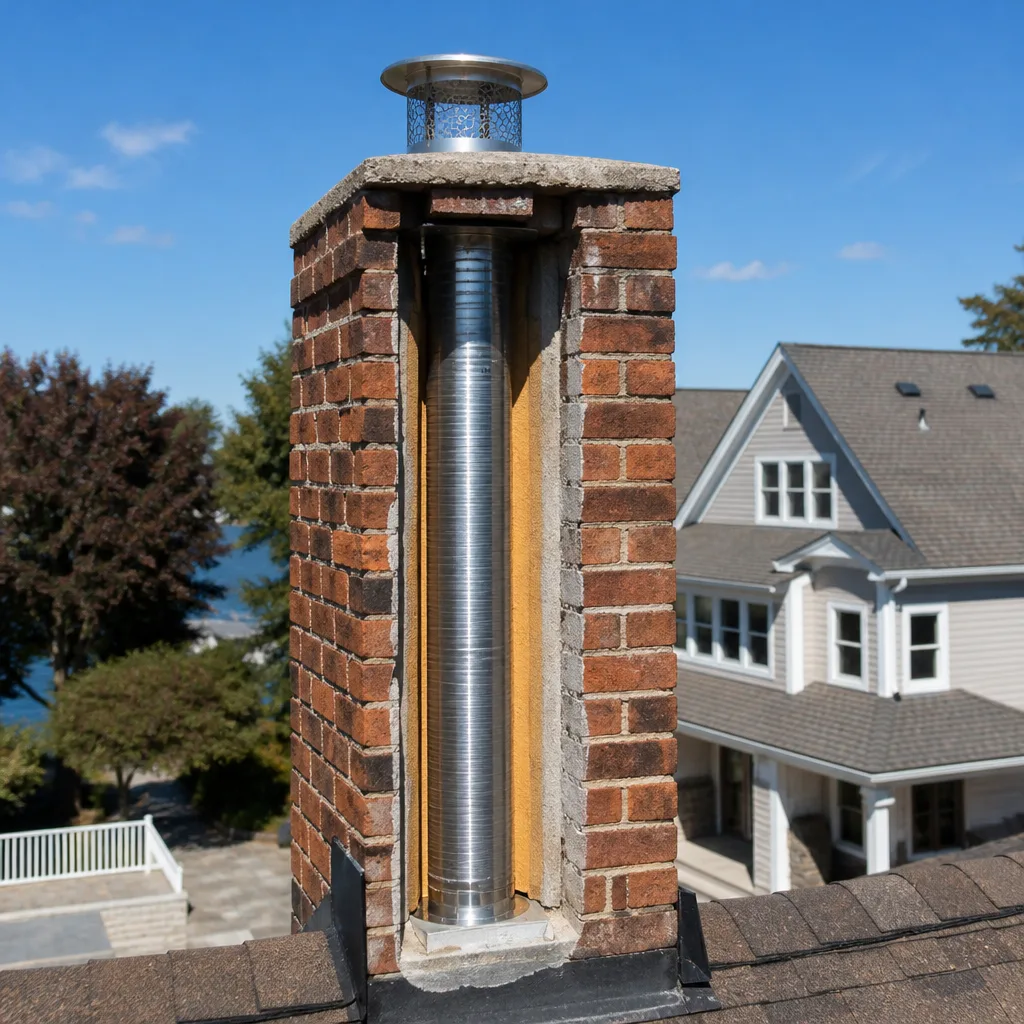
Not always. Hairline cracks in terra cotta liner mortar joints can often be addressed with HeatShield resurfacing, which restores the flue interior to a smooth, sealed surface without a full tear-out and liner replacement. This is a repair option sweep-only companies cannot offer. Where a full replacement is genuinely needed, we install DuraFlex stainless flexible liner systems – the same product professional chimney contractors use for code-compliant venting in both retrofit and new construction applications. You’ll see the video evidence before any recommendation is made.
Creosote progresses from flaky stage 1 to tarry stage 2 to glazed stage 3. The flue diameter effectively shrinks, draft weakens, smoke spills into the home, and the glazed creosote becomes a fuel source for a chimney fire. Meanwhile, the crown degrades without inspection, water enters the masonry, and the structural shell of the chimney deteriorates. By year five, a service that would have cost a few hundred dollars has often become a liner replacement, a crown rebuild, and a masonry repair. The math is straightforward: sweep early, repair cheaply, use the fireplace without worry.
A standard sweep includes a Level 1 inspection of accessible surfaces and cleaning appropriate to the creosote stage found. A Level 2 inspection adds video scanning of the flue interior, evaluation of attic and crawlspace areas where the chimney passes through, and clearance checks to combustibles. Level 2 applies to Corona resale home purchases, any chimney fire, any fuel type change, and any system that hasn’t been inspected in several years. Level 2 is not included automatically in a sweep price – it’s booked separately and costs more because of the video equipment and additional inspection points.
It’s a separate system but the same fire-prevention discipline. Dryer vents carry heated air and lint through the home, and a clogged vent is a verified cause of residential structure fires every year. We clean dryer vents because the failure mode matches chimney risk, not because it’s a bolt-on revenue item. If you use your dryer regularly, schedule both services annually. Call (855) 382-6159 and we’ll bundle the visit so one appointment clears both fire hazards.
The Bottom Line
Corona’s chimney problems are predictable: thermal cycling cracks crowns, Santa Ana winds disrupt draft, deferred maintenance lets creosote hit stage 3, and dryer vents accumulate lint until airflow fails. None of these are mysteries. All of them are cheap to address when caught early and expensive when ignored. Annual inspection is the baseline. Level 2 scanning applies to resale purchases and any chimney fire, no matter how small. See The Complete Guide to Chimney Cleaning in Corona for a deeper breakdown of what each service level includes. And the company that sweeps your flue should be the same one that can repair a cracked crown, resurface a deteriorated liner with HeatShield, install a DuraFlex stainless system, or clean a dryer vent. One provider, every venting hazard, with photo evidence for every recommendation. That’s the standard worth holding in Corona, and it’s the standard we work to every day.
Written by the team at Corona Chimney Sweep, serving Corona since 2018.
See the difference
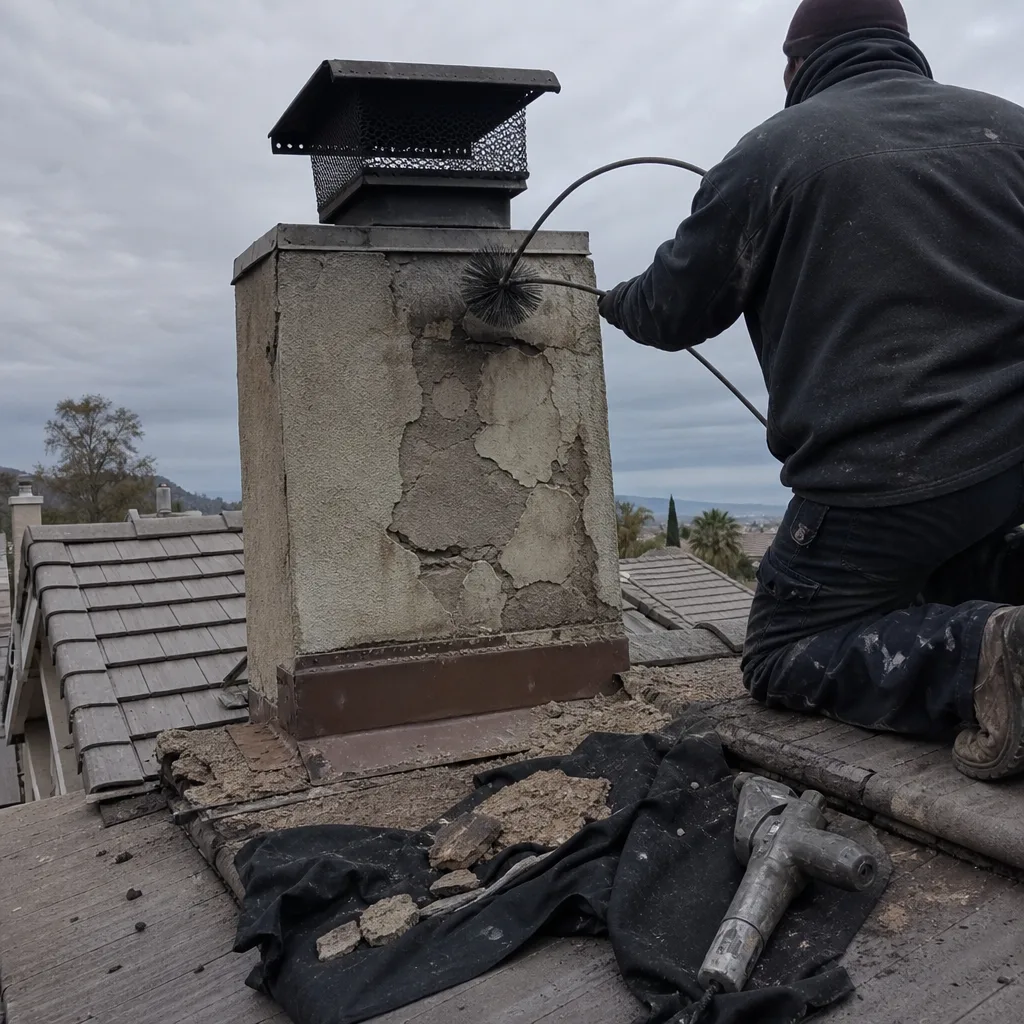 Before
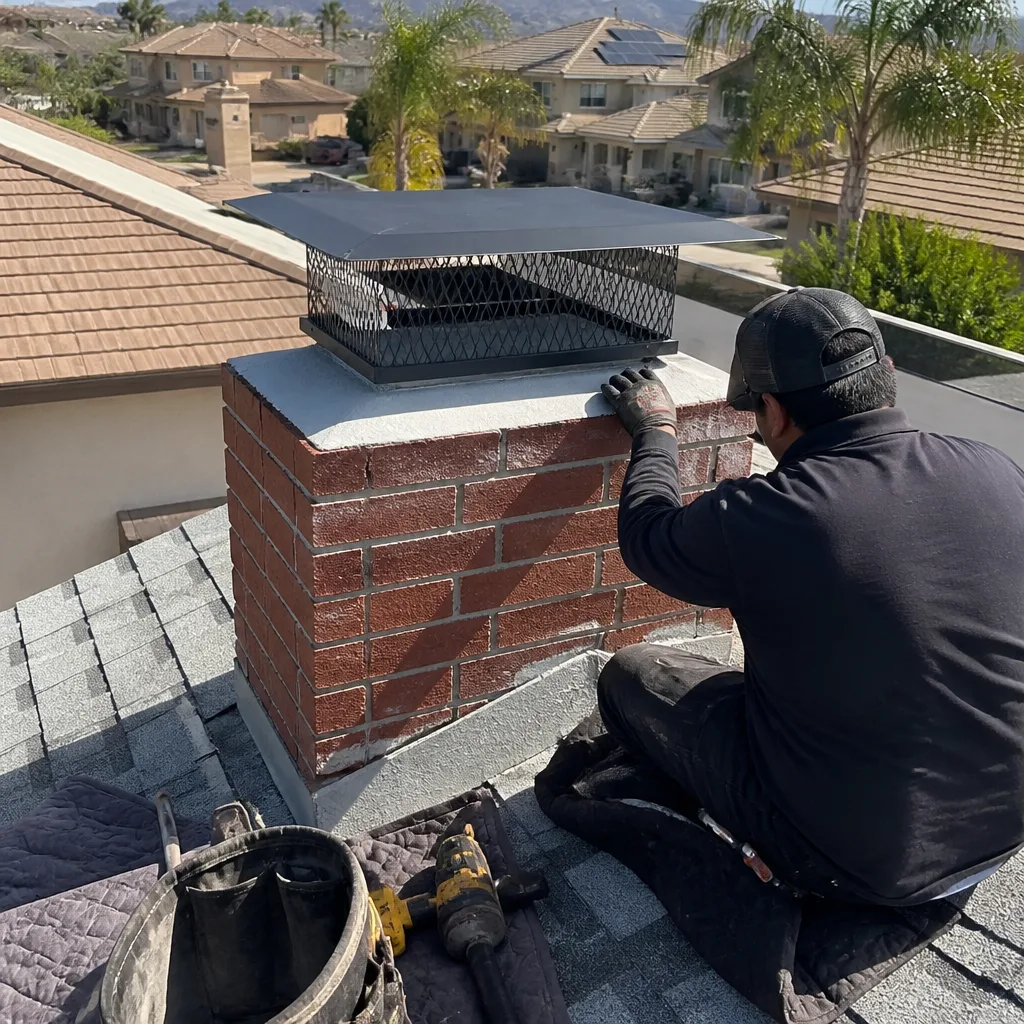 After
 Before
 After
 Before
 After