Last updated October 30, 2026
 Sweep & inspection
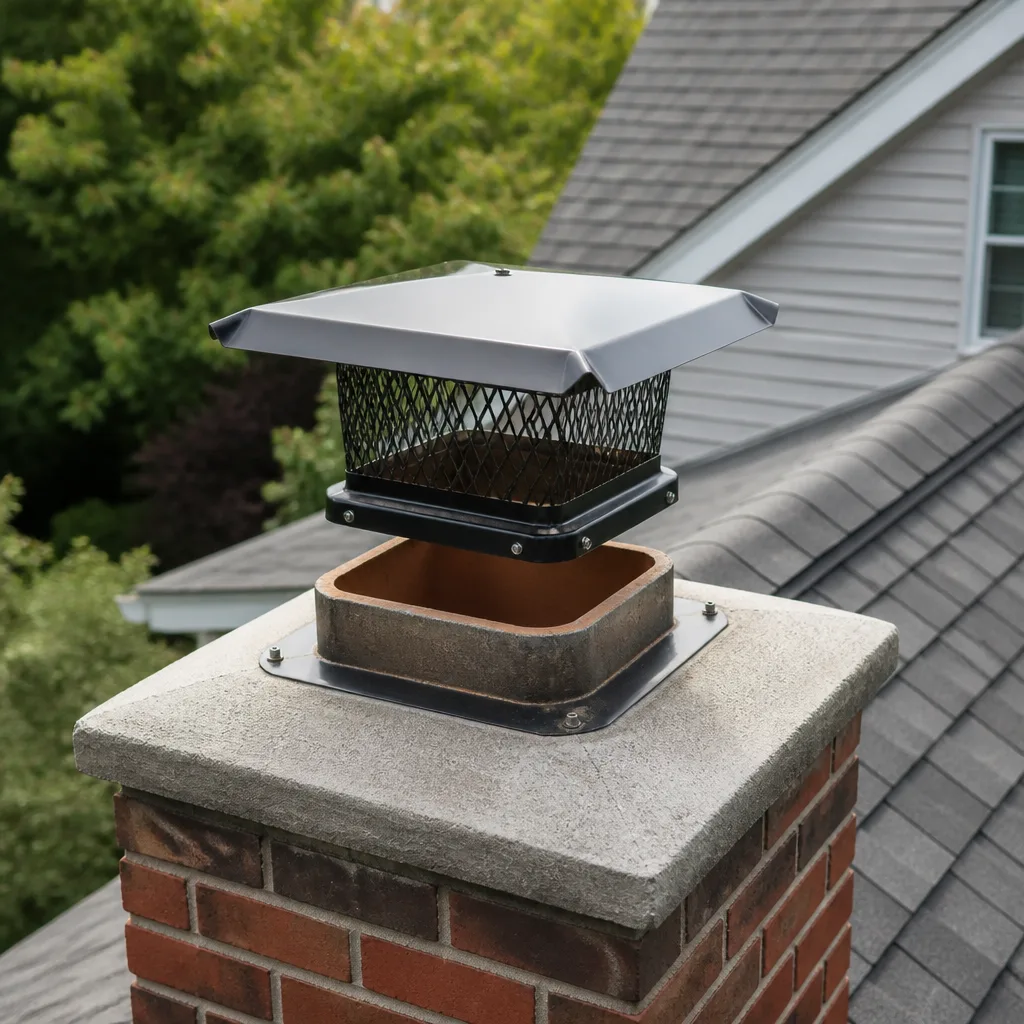
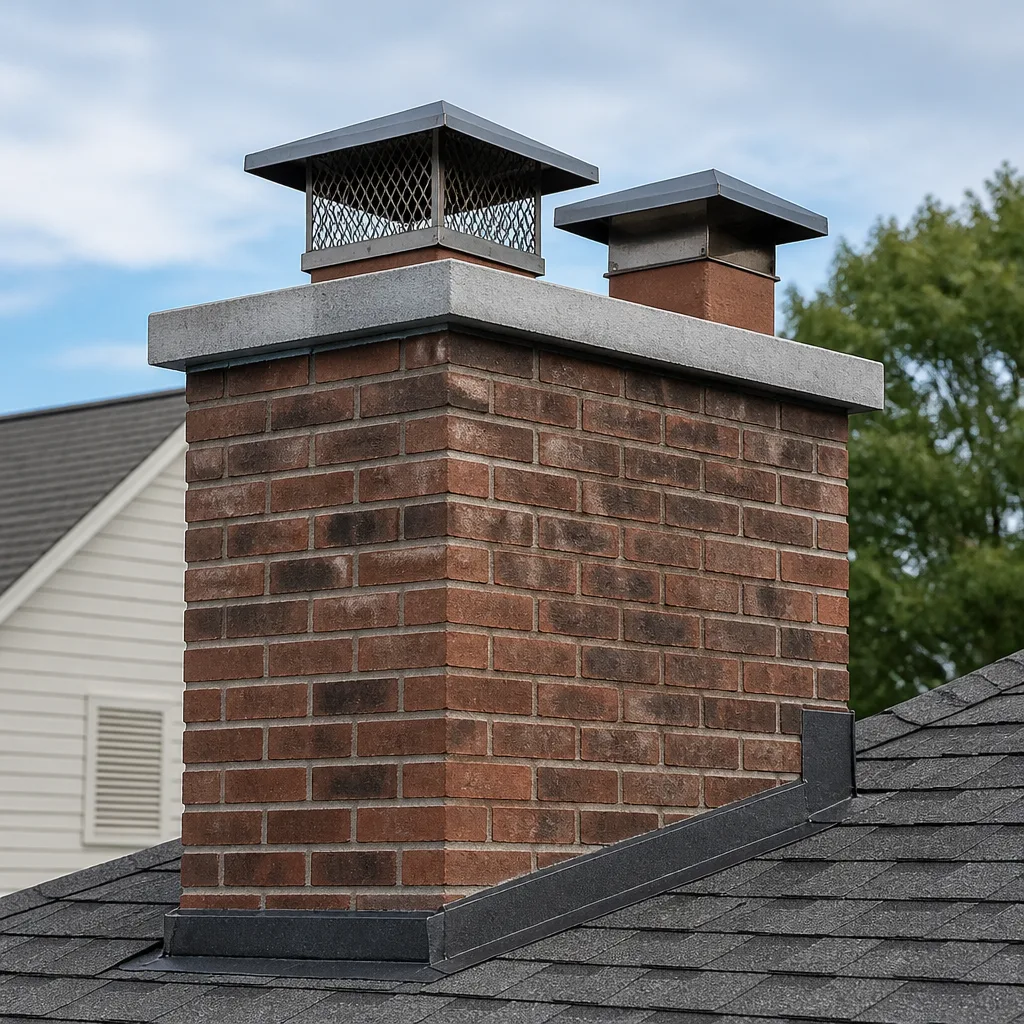 Caps & crowns
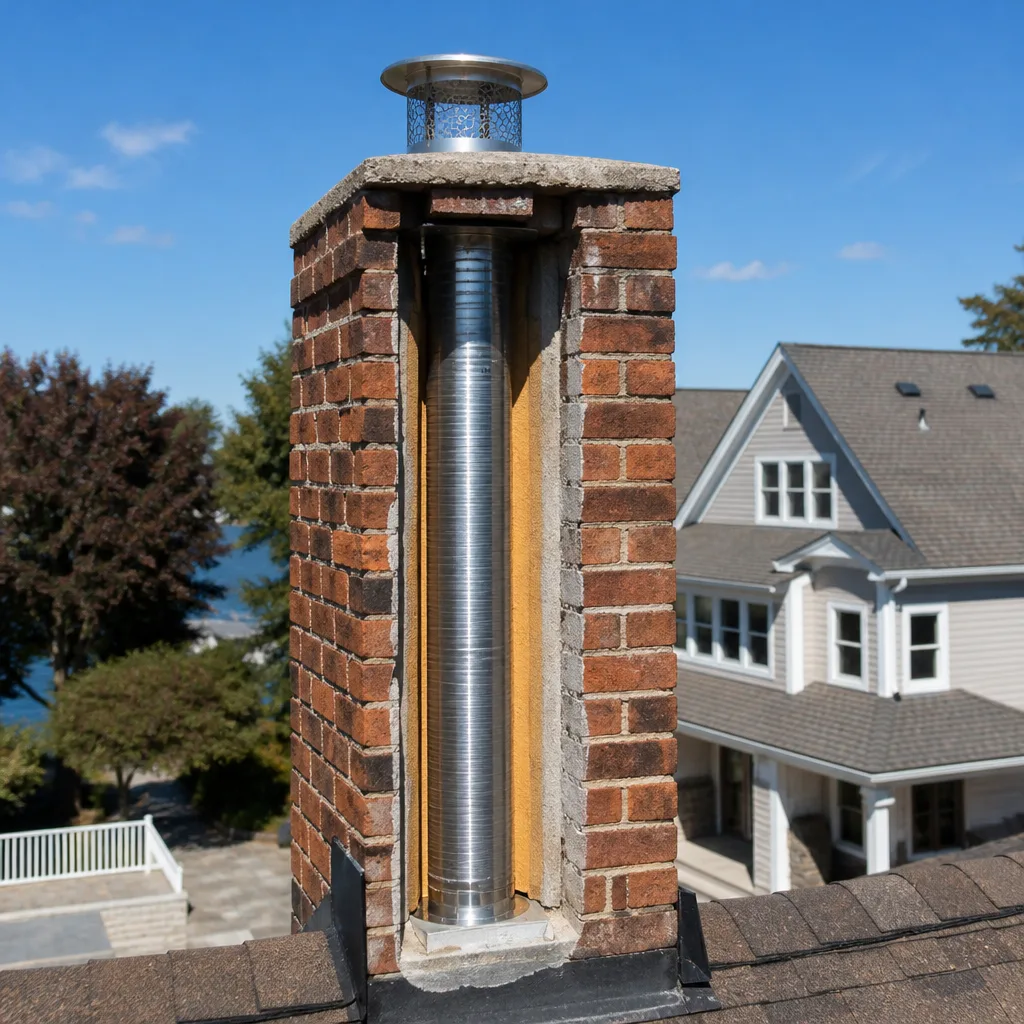 Flue relining
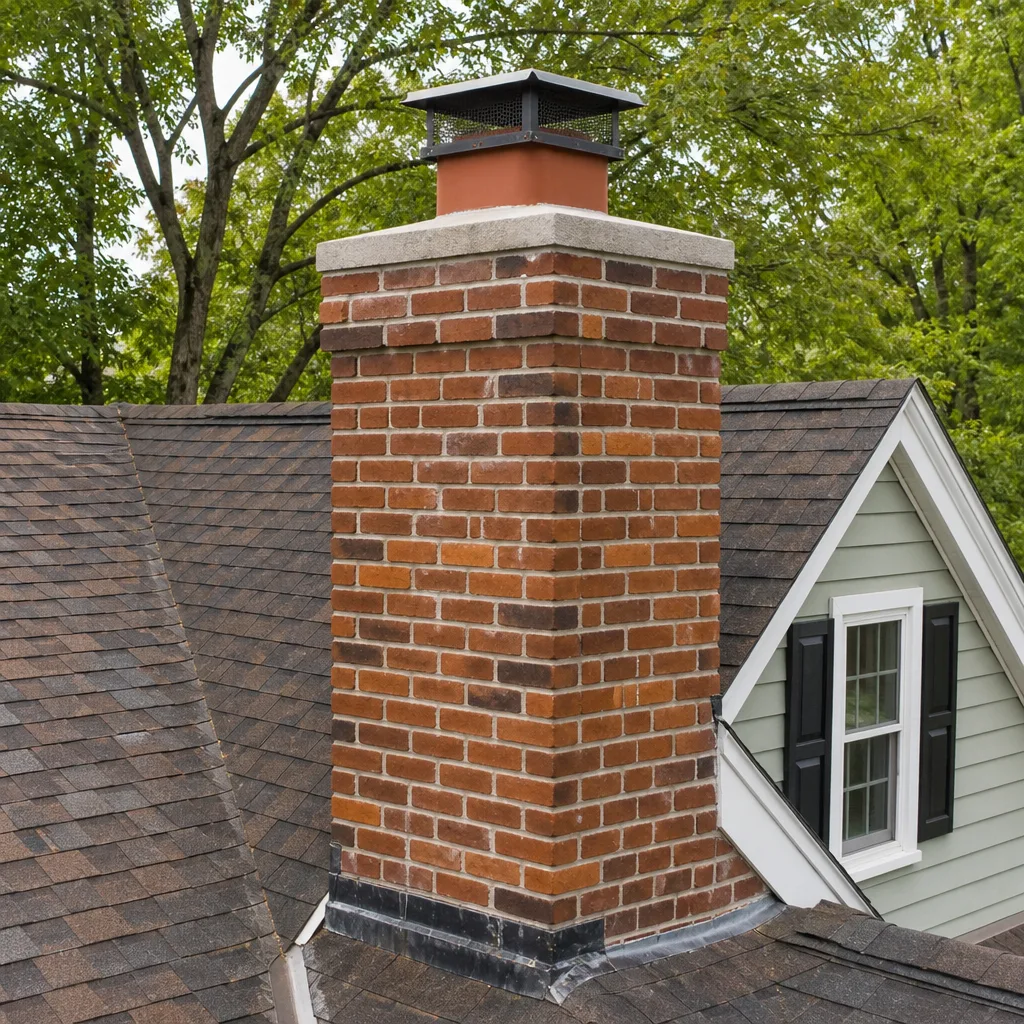 Masonry repair
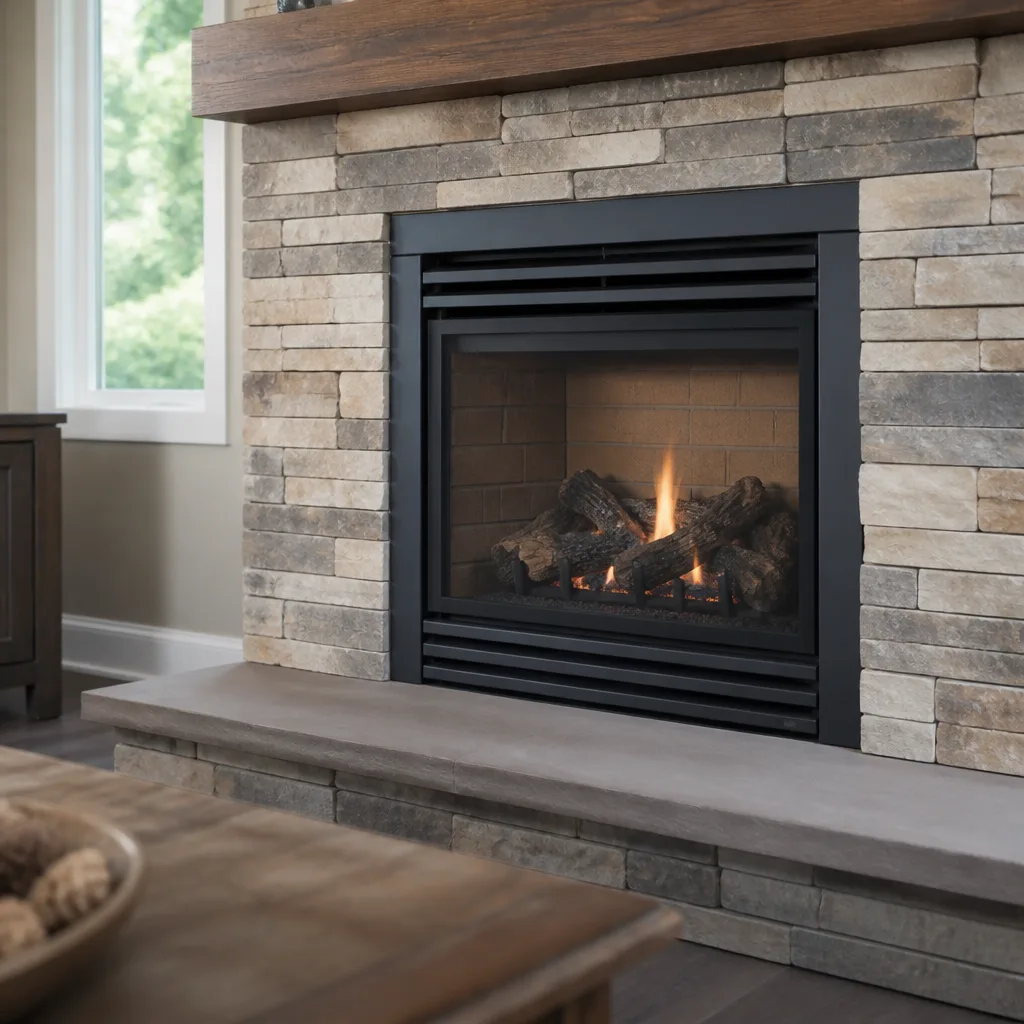 Gas fireplace service
Level 1 sweep and inspection to the NFPA 211 annual standard - flue, crown, cap, and flashing checked and photographed
Chimney sweep logs do not sweep chimneys. They loosen some creosote - which then falls where a brush and vacuum still have to collect it.
Chimney Sweep Troubleshooting: Common Problems and How to Fix Them
Here’s a counterintuitive fact from years of running chimney diagnostics in Corona: the most common service call we get, a smoky living room, is rarely caused by a dirty flue. In our experience, roughly six out of ten smoky-chimney calls trace back to a flue that is structurally undersized for the firebox opening or a negative-pressure problem created by the house itself. This guide maps the specific symptoms homeowners see, smell, or hear to the actual mechanical or structural failure behind them. You’ll learn how to tell a draft problem from a blockage before you pick up the phone, why some creosote can’t be brushed out, and when you need a mason before you need a sweep. Along the way, we’ll explain what we do at Corona Chimney Sweep when we encounter each of these in the field.
Quick Answer
Chimney problems fall into three buckets: draft failure, blockages, and structural deterioration. Draft failure means the flue can’t pull enough air to overcome the house’s negative pressure, blockages mean something physical is in the way, and structural issues mean the flue liner or masonry is compromised. Most smoky-chimney problems are draft failures, most smell problems are pressure or damper issues, and most odor-in-humid-weather problems are cracked flue tiles.
Styles & brands we work with
Table of Contents
- Draft Failure vs. Blockage vs. Negative Pressure: How to Tell Them Apart
- Third-Degree Creosote Glaze: When Brushing Won’t Work
- Damper vs. Throat Damper vs. Top-Mounted Damper: Which One Is Failing
- Cracked Flue Tiles, Sulfur Odor, and Carbon Monoxide Risk
- Sweep First or Mason First: The Correct Order
- How Corona’s Climate and Housing Stock Affect Chimney Problems
- Why Your Dryer Vent Fails the Same Way Your Chimney Does
Draft Failure vs. Blockage vs. Negative Pressure: How to Tell Them Apart
A lit match at the firebox opening tells you more in five seconds than most online guides tell you in five pages. Here’s the test we use before any equipment comes off the truck. Light a long match or a piece of paper, hold it near the throat of the firebox, and watch the smoke.
If smoke drifts lazily into the room, you have a draft failure. The flue is open, but air is not moving up it. The most common causes are an undersized flue, a flue that’s cold-soaked, or a house ventilated so tightly that air can’t replace what the chimney wants to pull. We see this pattern constantly in Corona homes built in the 1990s and 2000s, when tight construction envelopes were the norm but makeup-air provisions were not.
If smoke blows back hard and fast into the room, you are dealing with negative pressure. Something inside the house is pulling air down the chimney to feed itself. The usual suspects: a bathroom exhaust fan, a kitchen range hood, a furnace or water heater venting into the same airspace, or a clothes dryer. Running any of these while the fire is lit can overpower a marginal draft.
If smoke won’t go up at all, or if a bird’s nesting material is visible at the top, you have a blockage. In Corona, we pull out everything from starlings’ nests in uncapped flues to chimney swifts nesting in the spring. Blockages also include collapsed flue tiles, shattered clay that has fallen down the flue and wedged into a corner, and the occasional flue cap that’s rusted shut.
Here is the numbered diagnostic sequence we walk through on service calls:
- Open the damper and visually confirm it’s fully open.
- Hold a lit match or strip of paper at the throat. Watch which way the smoke moves.
- If smoke drifts downward or into the room, close all exterior doors and windows, then retest. This checks for stack effect.
- If the smoke still misbehaves, turn off all exhaust appliances, then retest. This isolates negative pressure.
- If the smoke moves upward in just a few seconds, the flue is drafting, and the problem is elsewhere, usually logistics like damper position or an unsealed cleanout door.
We repair what we find. When a draft failure is confirmed, many homes in Corona need a flue resize or a liner installation. We install stainless liners from DuraFlex and Gelco, both contractor-grade systems that solve most undersized-flue cases without rebuilding the chimney. When the problem is negative pressure, the fix is an outside air source for the firebox. The key is diagnosing which of the three it is before any repair makes sense.
Third-Degree Creosote Glaze: When Brushing Won’t Work
Creosote forms in three stages. First-degree is light, flaky soot. Second-degree is granular and crusty. Third-degree is glaze: a hard, tar-like coating, almost shiny in places, that sticks to the flue wall like road tar. Homeowners see it after seasons of burning green wood, burning low-temperature fires, or running an insert without proper air.
Here is what most homeowners don’t know about third-degree creosote glaze: a brush will not remove it. The glaze is harder than the steel bristles and it simply skates across. Sweeping companies that attempt a standard brush-cleaning on a glazed flue leave the hazard in place and bill the client anyway. That’s not how we operate.
The correct procedure is a two-step process. First, a chemical treatment. Products like ACS are applied to the glaze, which chemically alters the creosote, making it granular and brushable. In some cases the treatment needs several days or a second application to fully break down the glaze. We schedule chemical treatments strategically in Corona, because the heat and low humidity here actually help the product work faster. That’s a local climate advantage we count on.
Second, after the glaze has broken down, mechanical cleaning removes the remaining material. Only after both steps is the flue actually clean. This is the only known approach that works on third-degree glaze short of a liner replacement. If the glaze has damaged the flue liner itself, a HeatShield resurfacing may be the next step. HeatShield is a ceramic material we apply to restore the flue interior where the glaze has eaten into the mortar joints. See our Chimney Sweep in Corona page for more on how we handle heavy creosote.
Damper vs. Throat Damper vs. Top-Mounted Damper: Which One Is Failing
Cold air entering a cold fireplace in the middle of summer has a specific entry point. So does the campfire smell. The component that’s failing depends on where the air or odor is entering, and most homeowners misidentify it because they don’t know which damper they have.
Throat damper. The standard cast-iron or steel damper sits just above the firebox in the throat of the chimney. It’s the one you open and close with a handle inside the firebox. When it fails, it fails in two ways. First, the damper plate warps from repeated heat cycling and no longer seals tight. Second, the damper frame rusts and the plate drops off its pins. When this fails, cold air drops into the firebox in winter and cool air in summer carries smoke smell down from the flue. The fix for a throat damper is replacement or, if the firebox will support it, an upgrade to a top-mounted damper.
Top-mounted damper. A round damper installed at the flue’s termination, opened and closed by a cable from the firebox. The advantage is a tight silicone gasket that seals the flue from weather and animals when closed. When a top-mounted damper fails, it’s usually the cable that frays or the spring that fails. We specify top-mounted dampers from Olympia Chimney for homes in Corona, because they stand up to the heat and UV of the Inland Empire climate better than uninsulated flap dampers from big-box retailers. A failed top-mounted damper lets rain into the flue, which then rusts the firebox and produces exactly the sulfur odor we cover in the next section.
Cold air arriving at the firebox floor usually means the cleanout door at the base of the chimney is unsealed. Smell arriving in the room only when the AC runs usually means negative pressure from the HVAC is pulling flue odor down. Smell arriving constantly usually means a failed damper seal. The specific entry point tells you which part to replace. Our Chimney Repair in Corona page details how we replace both damper types.
Cracked Flue Tiles, Sulfur Odor, and Carbon Monoxide Risk
There’s a very specific smell homeowners report in Corona during humid weather. It’s often described as “rotten eggs,” “gunpowder,” or “a car battery that leaked.” The smell comes and goes with humidity, and it’s strongest in the room with the fireplace. That’s a cracked or spalled flue tile.
Here’s what’s happening. Combustion byproducts from years of fires have absorbed into the porous clay flue liner. When the flue tile cracks, moisture from humid air or rainfall wicks into the cracks, releasing those sulfur compounds. The odor is the chimney’s way of telling you the flue’s structural integrity is gone. The flue liner’s job is to contain heat and combustion gases. A cracked liner fails that job.
This is the point where a chimney moves from nuisance to genuine carbon monoxide risk. Carbon monoxide is odorless and invisible. A cracked flue tile can allow combustion gases to migrate into wall cavities, attic spaces, or even living areas when conditions are right. The risk increases when the chimney serves a furnace or water heater, which runs unattended and produces CO continuously.
The fix for a cracked flue liner is never duct tape or caulk. In order of intervention: for hairline cracks and deteriorated mortar joints, a HeatShield resurfacing can restore the liner without full replacement. For significant spalling or missing tiles, a stainless liner from DuraFlex or Gelco is the correct call, because flexible stainless can navigate offsets and turns that rigid systems cannot. For severe cases, the existing liner is removed entirely, either by breaking out the tiles or by installing the new liner inside the old one.
If you smell sulfur in humid weather in a Corona home, do not ignore it. The sulfur itself is not dangerous, but the crack causing it is the same crack that can leak CO. Call for an inspection. A video scan of the flue interior shows the cracks in real time, and we don’t recommend liner work without showing you the footage.
Sweep First or Mason First: The Correct Order
This section answers a question most guides won’t touch, and it saves homeowners real money—read our Complete Chimney Sweep Guide for Corona Homeowners for the full picture. When is a sweep the right first call, and when do you need a mason before the sweep does anything useful?
Sweep first when: you see soot or creosote buildup, you hear wildlife, you smell smoke in the house during fires, the damper is stuck or warped, or you haven’t had the chimney serviced in three or more years but the masonry looks intact. A sweep diagnoses the flue interior, removes blockages, and reports structural findings.
Mason first when: you see loose or missing bricks on the exterior, the mortar crown is visibly cracked or separated from the flue tile, the chimney leans even slightly, water is staining the ceiling around the chimney chase, or there’s visible spalling (flaking or popped brick faces) at the top. A masonry problem left unaddressed will make a sweep pointless, because water entering the chimney dissolves the creosote into acidic slurry that eats the mortar joints, and the whole cycle starts again.
Here’s the sequence we recommend for Corona homeowners who aren’t sure:
- Look at the chimney’s exterior from ground level. If you see cracks, spalling, or a crown in poor condition, call a mason first.
- If the exterior is intact, schedule a sweep and ask for a video scan of the flue interior as part of the service.
- If the video shows cracked tiles or fire-damaged mortar joints, address the liner before burning again.
- After the masonry or liner work is done, have the flue swept before the first fire.
One provider has to handle both halves of this. Otherwise the homeowner gets a sweep who says “call a mason,” then a mason who says “have it swept,” and no one owns the repair. That’s the handoff gap. We sweep and we repair. The same technician that identifies a deteriorated flue can present the repair options the same day.
How Corona’s Climate and Housing Stock Affect Chimney Problems
Chimney problems are local. What fails in Minnesota fails differently in the Inland Empire, and what fails in Corona has a specific pattern we see across years of service calls.
Corona’s heat and dry air are hard on clay flue tiles. Extreme temperature swings between cool nights and hot afternoons create thermal expansion and contraction cycles that accelerate cracking. A flue tile that would last thirty years in a marine climate may crack in fifteen here. That’s why we see a higher proportion of flue-liner failures relative to creosote blockages than sweep companies in coastal markets.
Corona’s housing stock contributes too. Homes built in the 1970s through the 1990s, which make up much of the city’s inventory, were framed with chimneys designed for open fireplaces. As homeowners in neighborhoods like Eagle Glen, Sierra del Oro, and South Corona converted to wood-burning inserts or gas logs, many of those flues became mismatched to the appliance. An insert requires a properly sized and insulated liner. Venting an insert through an oversized, uninsulated clay flue creates exactly the draft problems described earlier.
We also see wind-driven draft problems in the higher-elevation communities along the Santa Ana Mountain foothills. When the Santa Ana winds blow, they create eddy currents at chimney tops that can reverse draft even in a well-designed flue. The fix is often a properly sized cap or a fan-assisted draft system.
The point is that Corona isn’t a generic setting for chimney work. The climate, the housing vintage, and the wind patterns each push failures in specific directions. A sweep company that works the whole region sees the pattern. That’s why we stock six professional-grade product lines: DuraFlex, HeatShield, Gelco, Olympia Chimney, Famco, and Copperfield. They are the same products the professionals buy at contractor supply houses, and they cover the range of problems Corona’s housing stock actually presents.
Why Your Dryer Vent Fails the Same Way Your Chimney Does
A dryer vent and a chimney are both combustion-venting systems, and they fail the same way. Lint accumulates in the dryer vent exactly the way creosote accumulates in a flue. The failure mode is identical: reduced airflow, overheating, and ignition of flammable material. A clogged dryer vent is a fire waiting to happen, and it’s one of the leading causes of residential structure fires in the United States.
The reason we treat Dryer Vent Cleaning in Corona as a core service, not an add-on, is that the same physics applies. A dryer vent’s job is to move hot, humid air and flammable lint out of the house. A restrictive vent means the dryer runs hotter, the lint stays behind, and the risk compounds. The California climate makes it worse in one specific way: Corona’s dry air means lint particles stay airborne and stick more aggressively to the vent walls rather than clumping and falling.
We see one common dryer vent problem more than any other in Corona: vent terminations routed into the roof rather than out a side wall. Roof terminations are longer, dirtier, harder to clean, and rarely fitted with a proper damper. The fix, where the layout allows, is shortening the run or adding a booster fan, and always cleaning the full length of the duct. Our technicians are trained in combustion venting, not just in running brushes through corrugated hose, which means they understand why a vent that ends in the roof accumulates lint faster than one that ends at a wall.
If you haven’t had your dryer vent cleaned in two or more years, or if loads are taking longer to dry, the vent is talking to you. Listen to it.
Common Mistakes to Avoid
- Burning green or wet wood to “save money.” Green wood produces far more creosote per fire than seasoned wood, which means more frequent sweeping and higher repair costs later. In Corona, firewood sold roadside is often green or poorly seasoned.
- Sweeping a glazed flue with a wire brush. Third-degree creosote glaze is not brushable. The brush skates across the glaze and the chimney is no safer afterward.
- Running the whole-house exhaust fan while the fire is lit. A powerful attic fan or kitchen hood can reverse the chimney draft in seconds and fill the room with smoke.
- Ignoring a sulfur odor because “it only happens when it rains.” The sulfur smell is a cracked flue liner, and the same crack can leak carbon monoxide.
- Replacing a damper with whatever’s on the shelf at the hardware store. Big-box dampers are generic. A throat damper from a contractor line like Olympia Chimney is sized to the flue and built to survive frequent heat cycling.
- Calling a sweep when you actually need a mason, or vice versa. Sweeping a chimney with a deteriorating mortar crown doesn’t fix the water entry, and masonry repair doesn’t clean a blocked flue. The wrong call costs a service fee and delays the real fix.
- Deferring the dryer vent because “the dryer still works.” A dryer that still works can still be a fire hazard. Lint buildup happens gradually, and the first symptom is often the fire.
See the difference
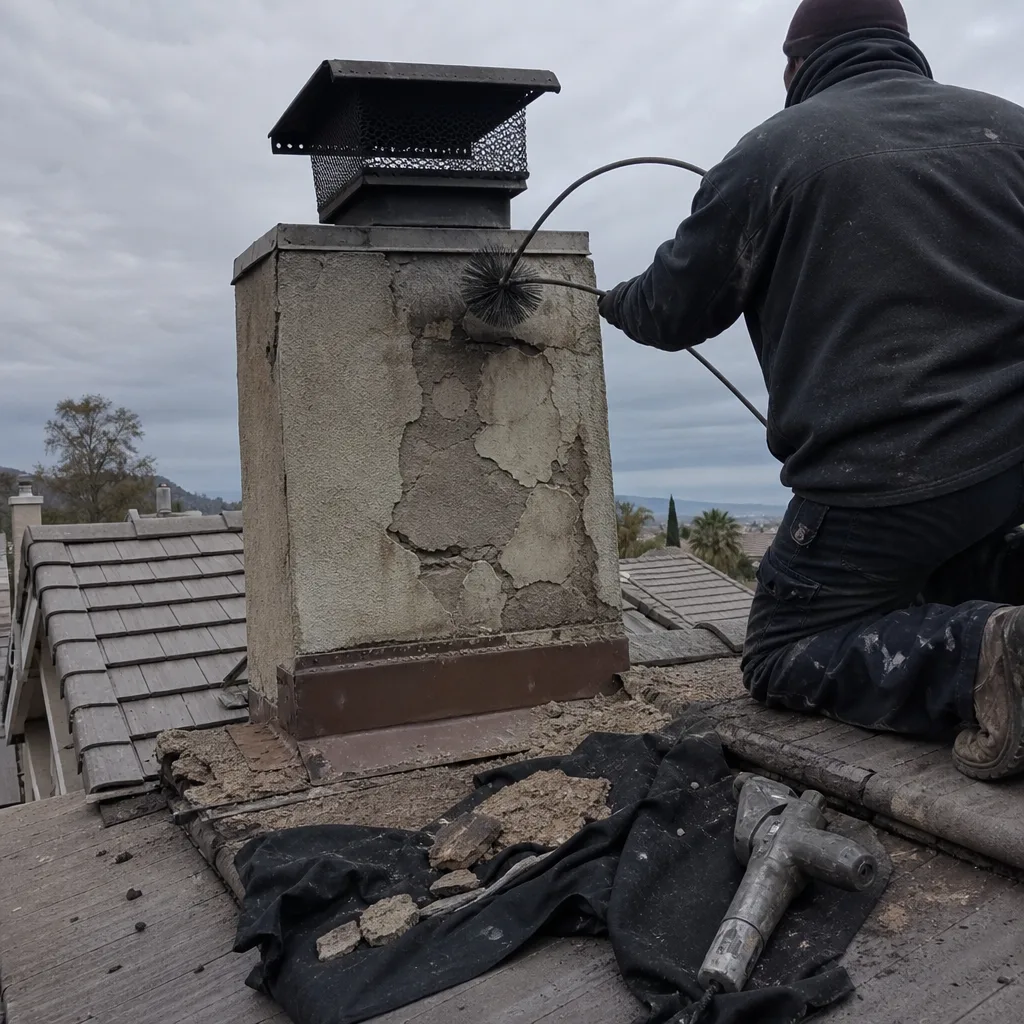 Before
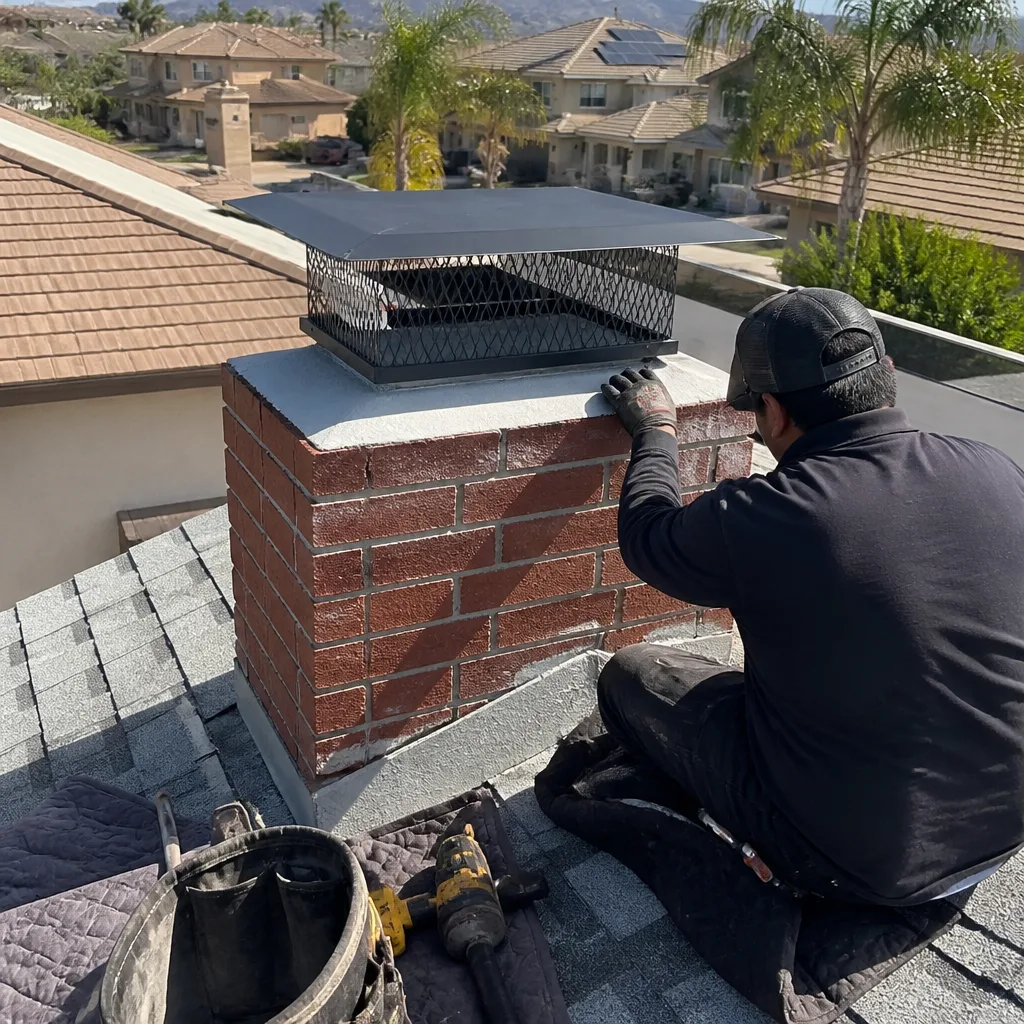 After
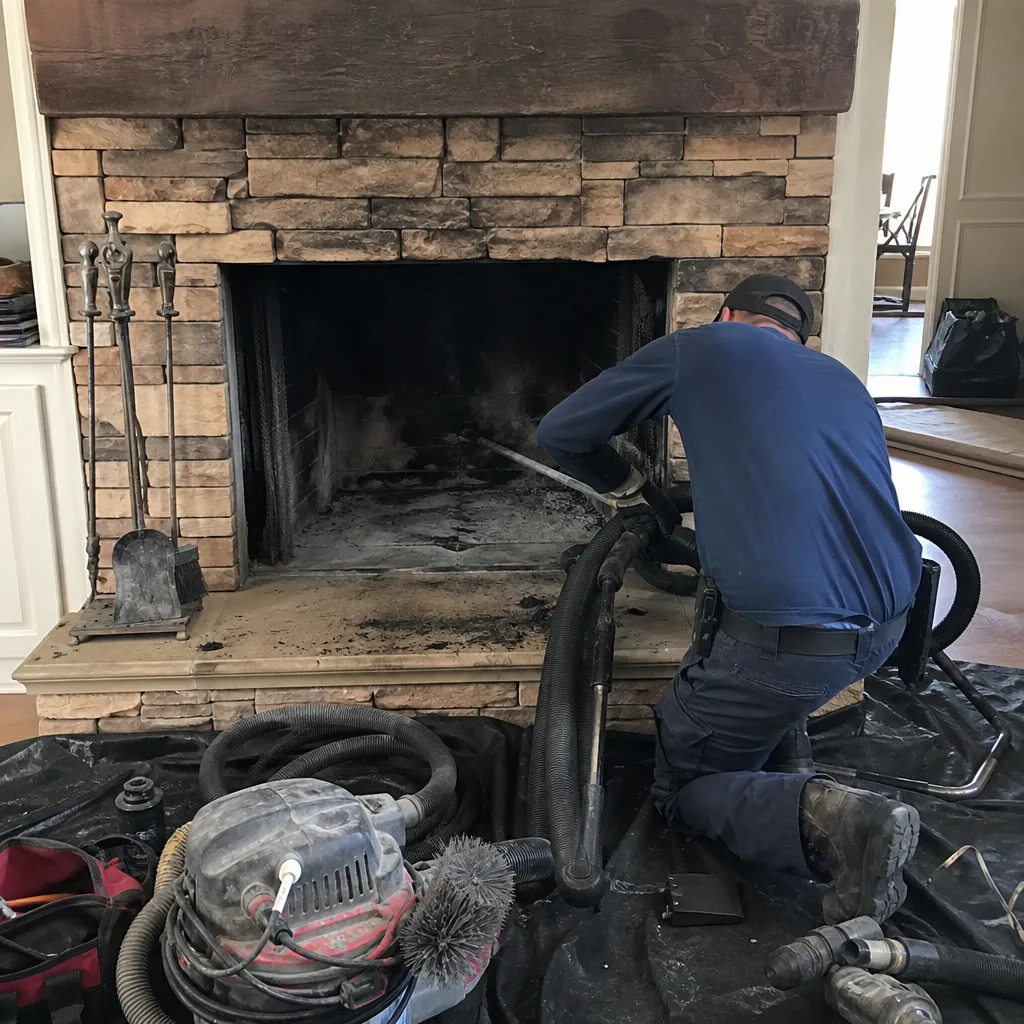 Before
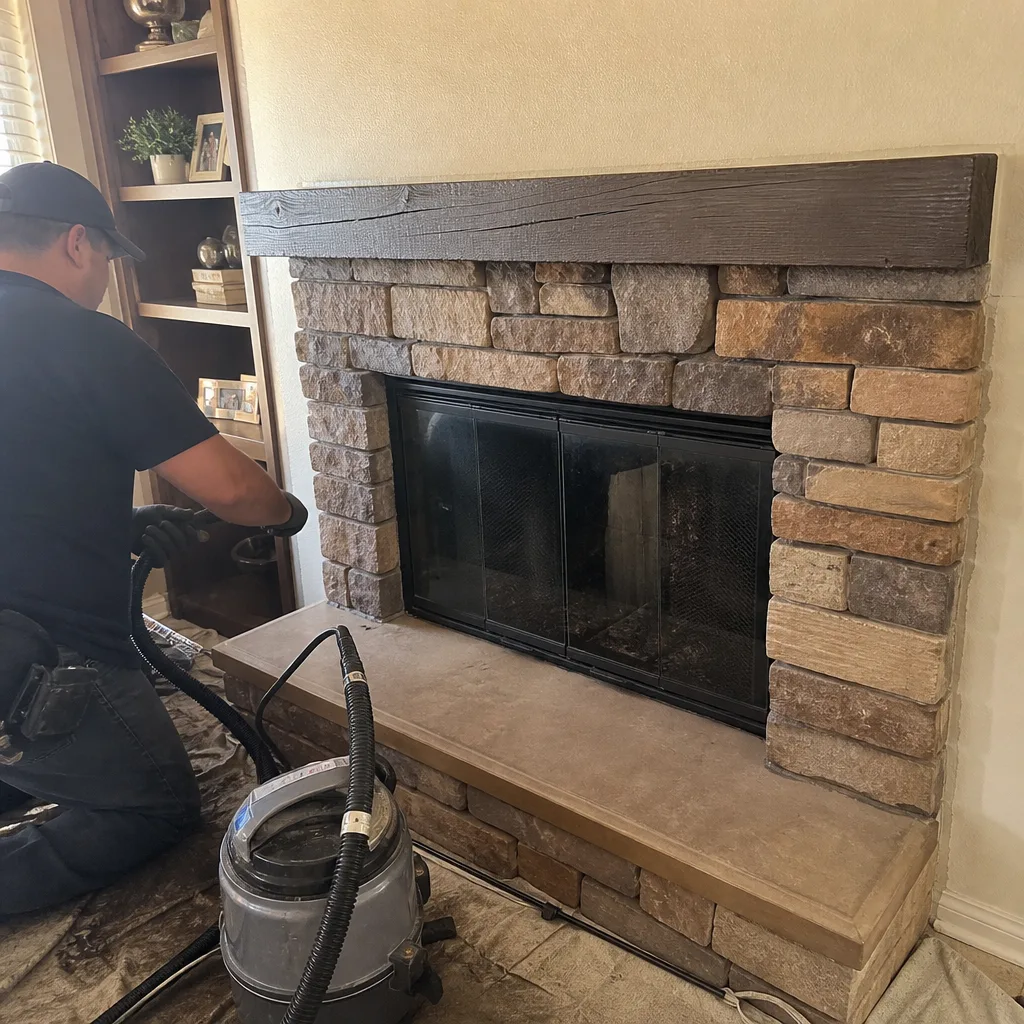 After
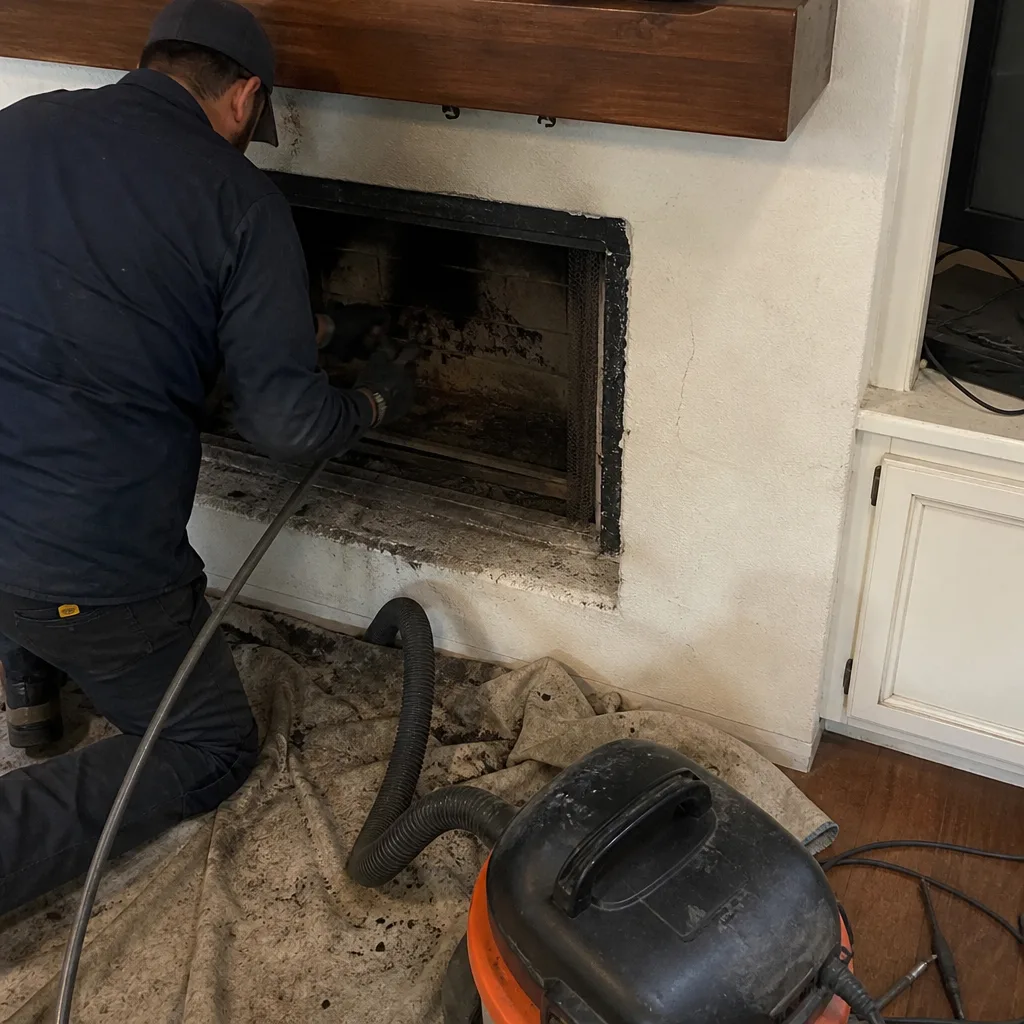 Before
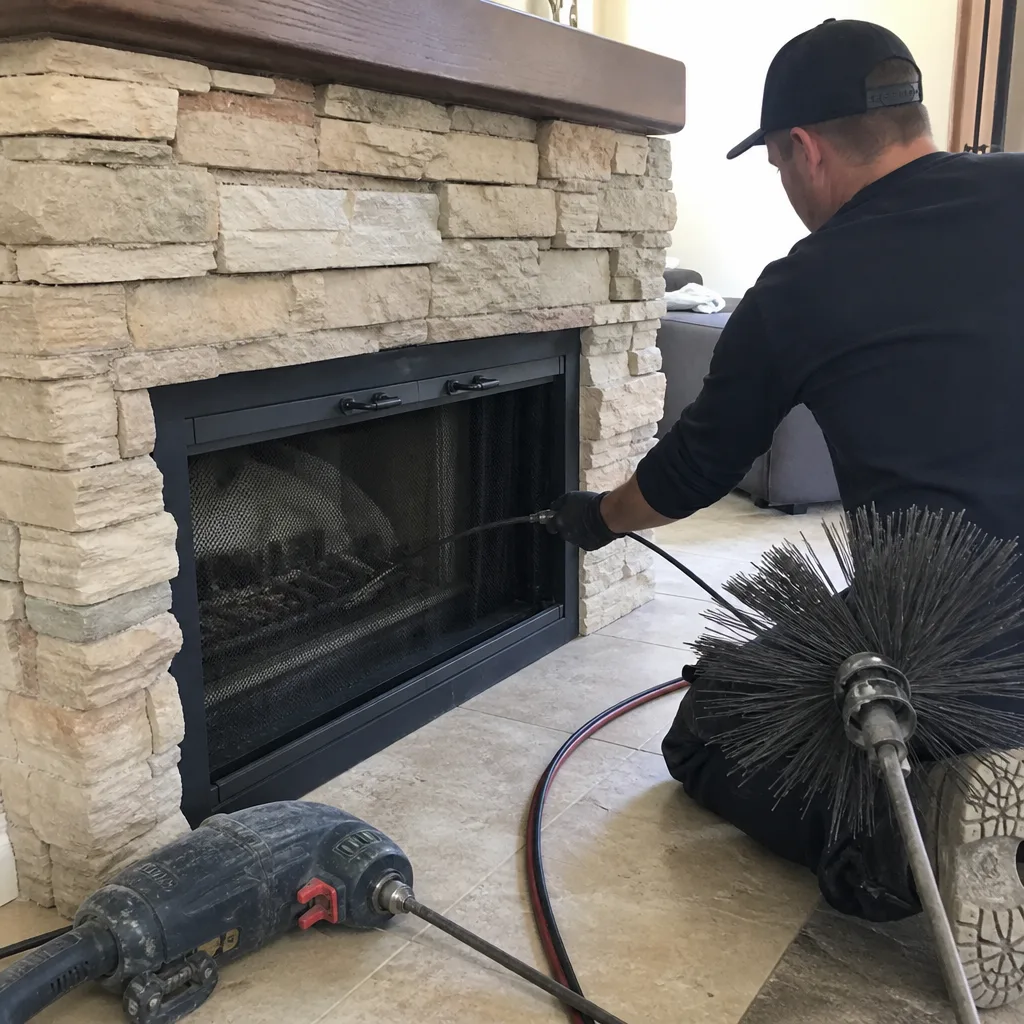 After
When to Call a Professional
Call when the match test at the firebox produces smoke that won’t rise, when you smell sulfur in humid weather, when the damper won’t move or won’t seal, when you’ve burned two or more cords of wood since the last sweep, or when the dryer takes twice as long to dry a load. Call before you burn in a home you just purchased, even if the previous owner said the chimney was “fine.” Sellers rarely know. Corona Chimney Sweep offers free estimates in Corona. We’ll inspect, show you the video, and if something needs repair, we’ll do it ourselves. Call (855) 382-6159.
Frequently Asked Questions
Smoke blowing back into the room is usually a draft failure, not a blockage. The flue isn’t pulling air, which in Corona is often caused by an undersized flue, a cold flue, or negative pressure from exhaust appliances running somewhere in the house. Try the match test described above, and if smoke drifts down instead of up, call us before assuming the chimney is dirty. Call (855) 382-6159 for an exact diagnosis.
In Corona, the first sweep may include a video inspection and creosote removal, with pricing depending on flue length and the type of buildup. Third-degree glaze costs more to treat because of the chemical stage. We don’t publish flat rates because every flue is different, but the estimate is free and we confirm the number before any work starts.
Yes. A single season of green wood can produce enough first- and second-degree creosote to create a chimney fire risk, and the flue doesn’t know or care how many fires you burned. Corona’s hot, dry climate means creosote stays brittle and ignitable. A chimney fire burns hot enough to crack a flue liner, turning a $200 sweep into a $2,000 liner replacement. Sweep on a schedule, not on a count.
You cannot patch a cracked flue liner. The liner’s job is to contain heat and combustion gases, and no patch material restores that function. For hairline cracking or deteriorated mortar joints, a HeatShield resurfacing may restore the liner without full replacement. For larger cracks or spalled tiles, a stainless liner from DuraFlex or Gelco is the correct fix. You’ll see the cracks on video before any recommendation is made.
Annually if you burn wood, regardless of how many fires. If you burn mostly manufactured logs, still annually. If you only use the fireplace for gas logs or have a gas furnace venting through the chimney, the guideline is every two years for a safety inspection, because gas produces acidic condensation that attacks the liner. Corona’s seasonal Santa Ana winds and temperature swings make regular inspection more important here than in milder climates.
Creosote accumulates, and the flue drills with it. The first failure is usually a chimney fire, which cracks the flue liner and can set the roof on fire. The second failure is deterioration of the liner from heat and chemical attack, leading to carbon monoxide leakage. The third failure is water damage when a cracked crown lets rain in and the freeze-thaw cycle, even mild in Corona, spalls the masonry. Skipping a sweep is never a neutral decision; it’s a deferred repair with compound interest.
The Bottom Line
Chimney problems are mechanical, not mysterious. Smoke in the living room is usually a draft failure. A campfire smell in July is usually a failed damper. Sulfur odor in humid weather is always a cracked flue liner. Each symptom points to a specific component, and the skill is knowing which one. The right sequence is: diagnose first, then sweep or repair as the finding requires. In Corona, where heat, wind, and housing vintage combine to accelerate certain failures, that diagnosis matters more than in most markets. We repair what we find, and we don’t hand work off to anyone else. Call (855) 382-6159 and get the chimney you actually have, not the one you hope you have.
Written by the team at Corona Chimney Sweep, serving Corona since 2018. Explore more guides & resources on our blog.