Last updated October 30, 2026
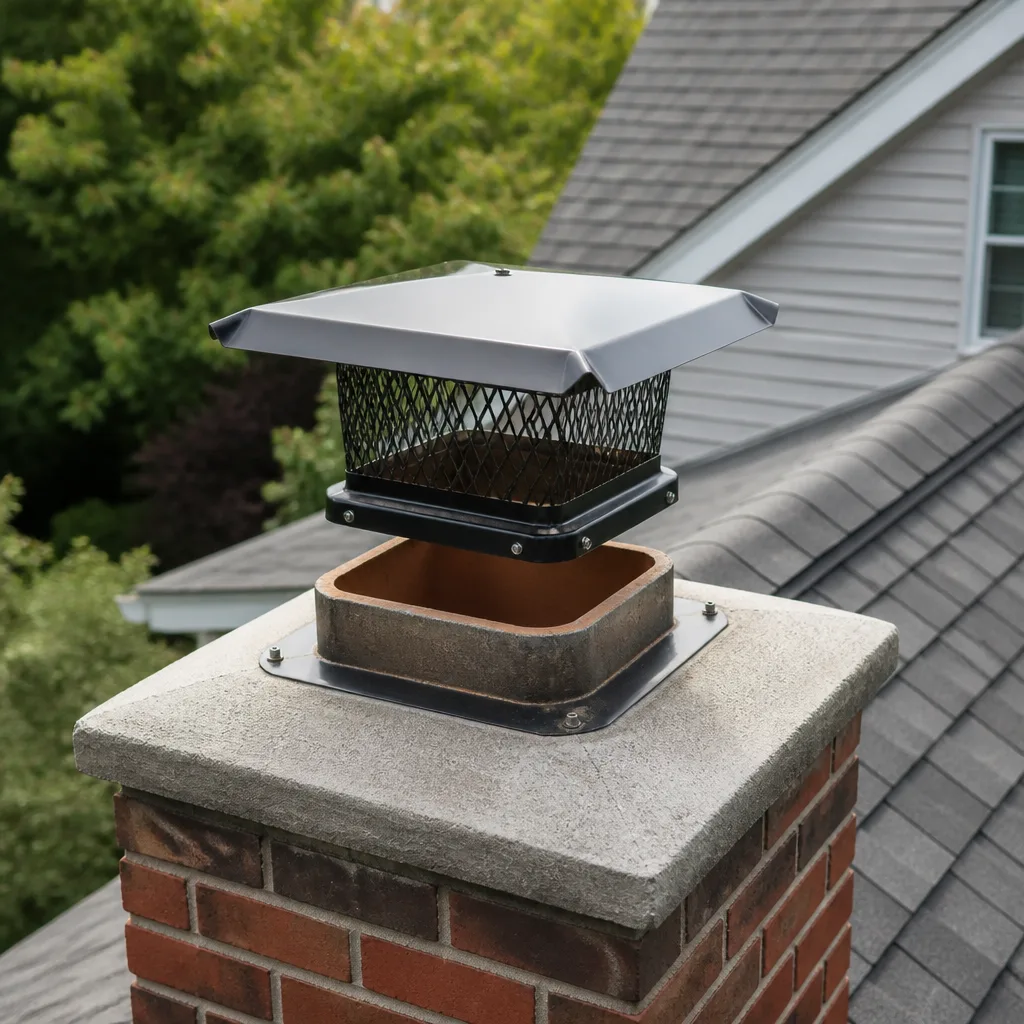 Sweep & inspection
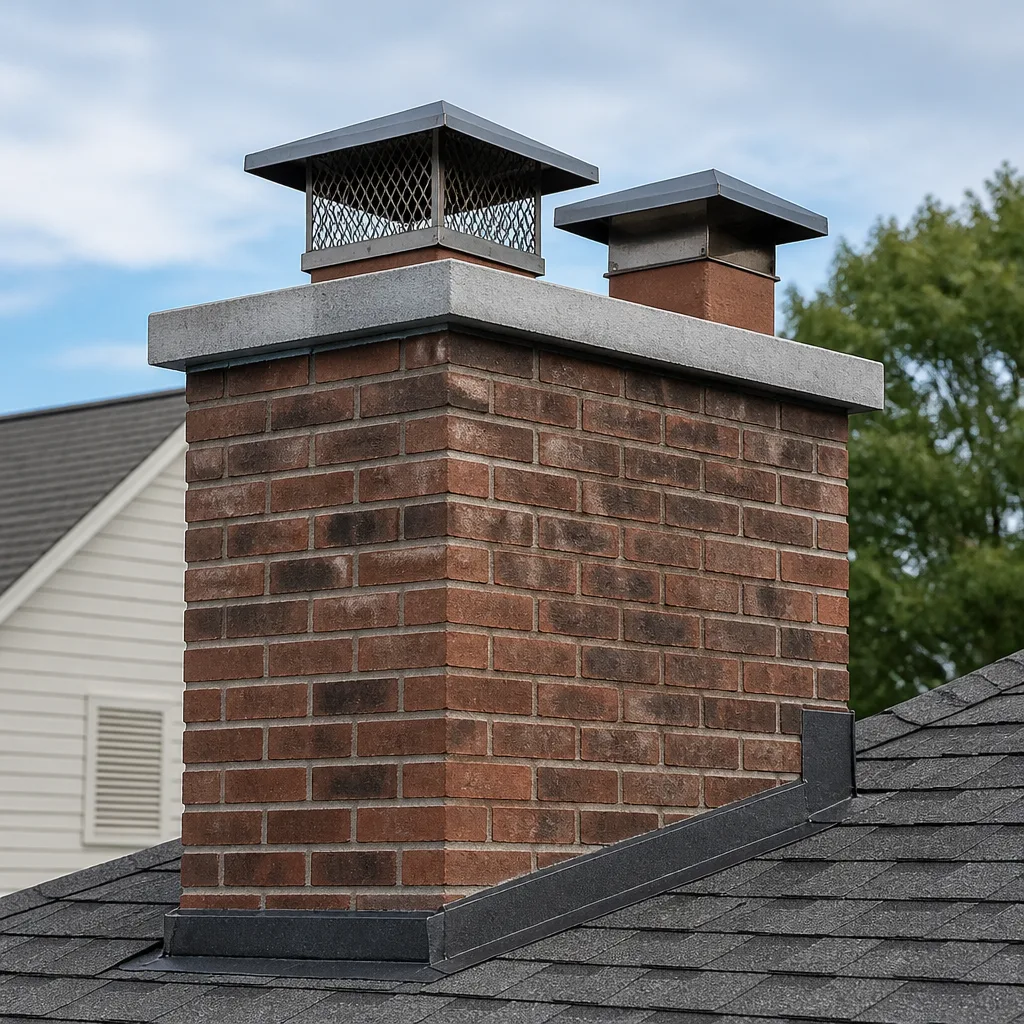 Caps & crowns
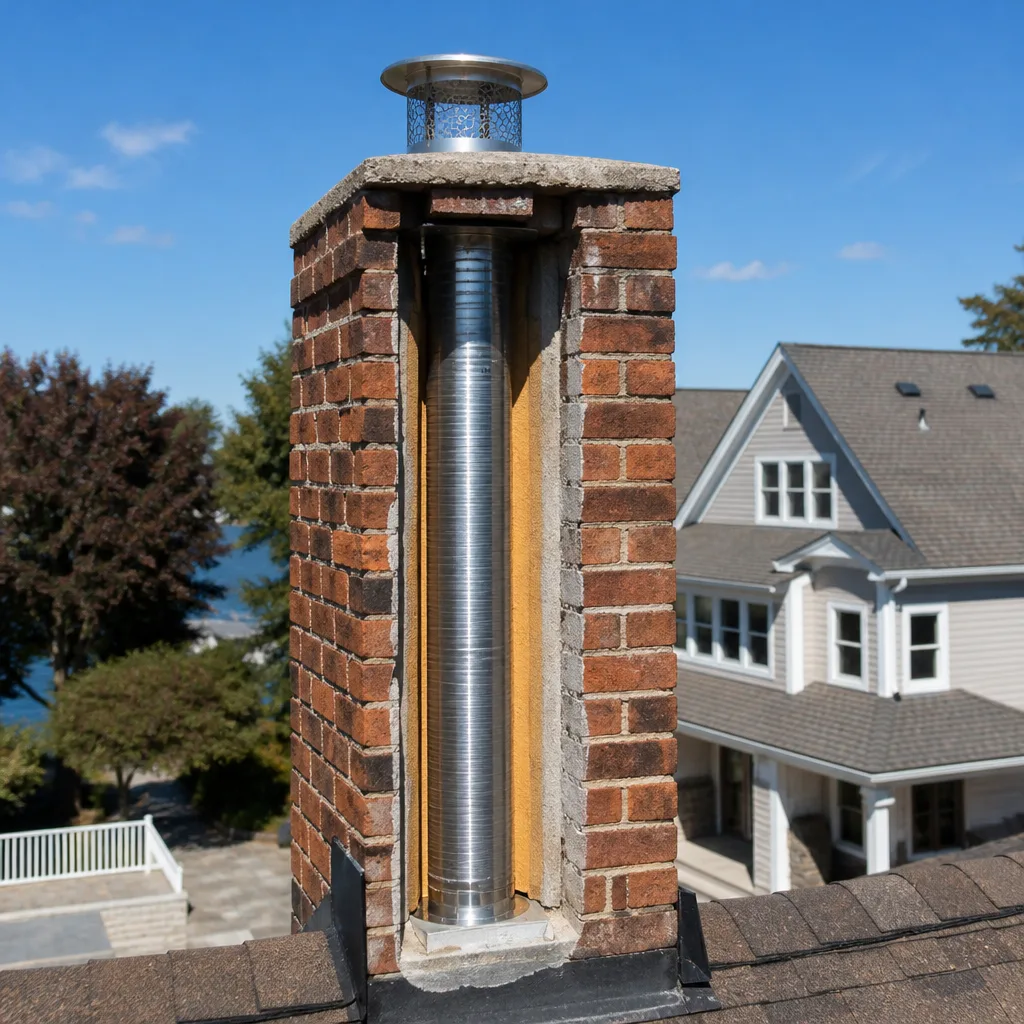 Flue relining
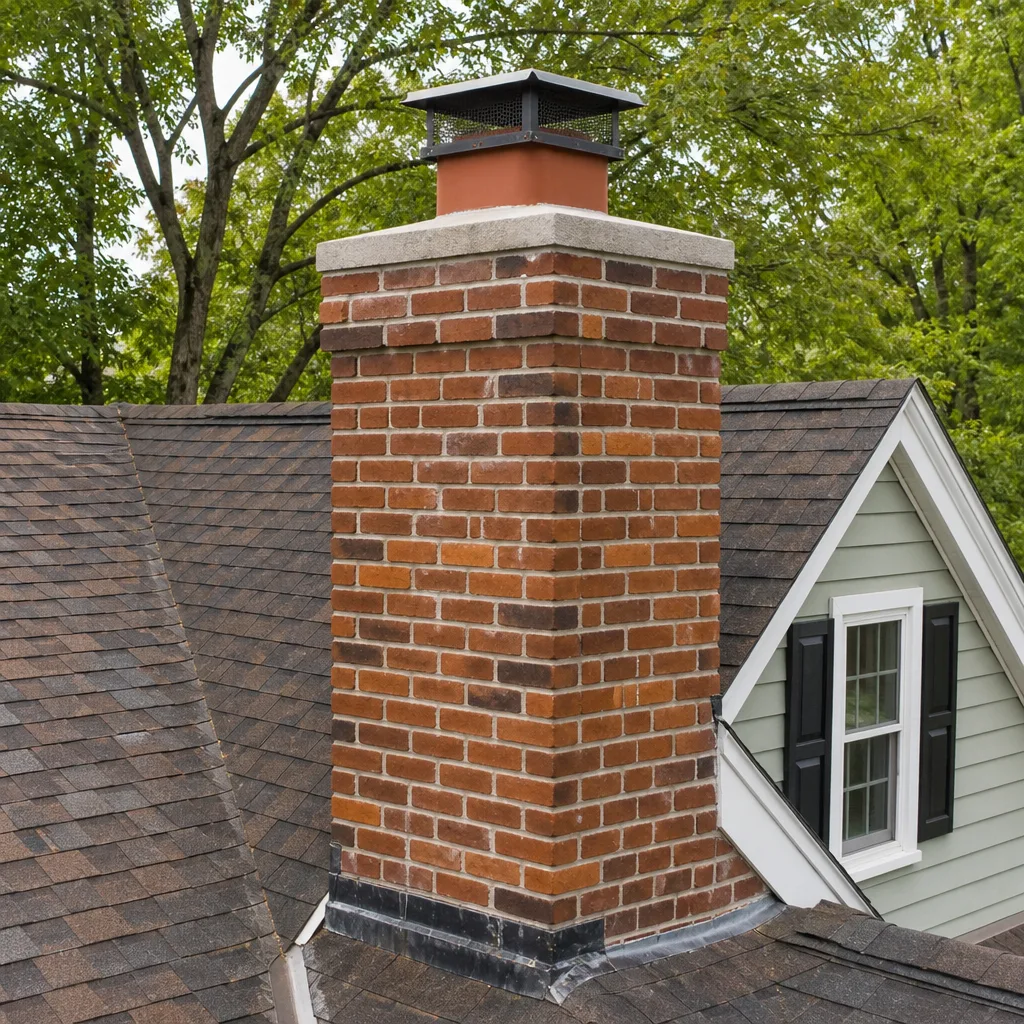 Masonry repair
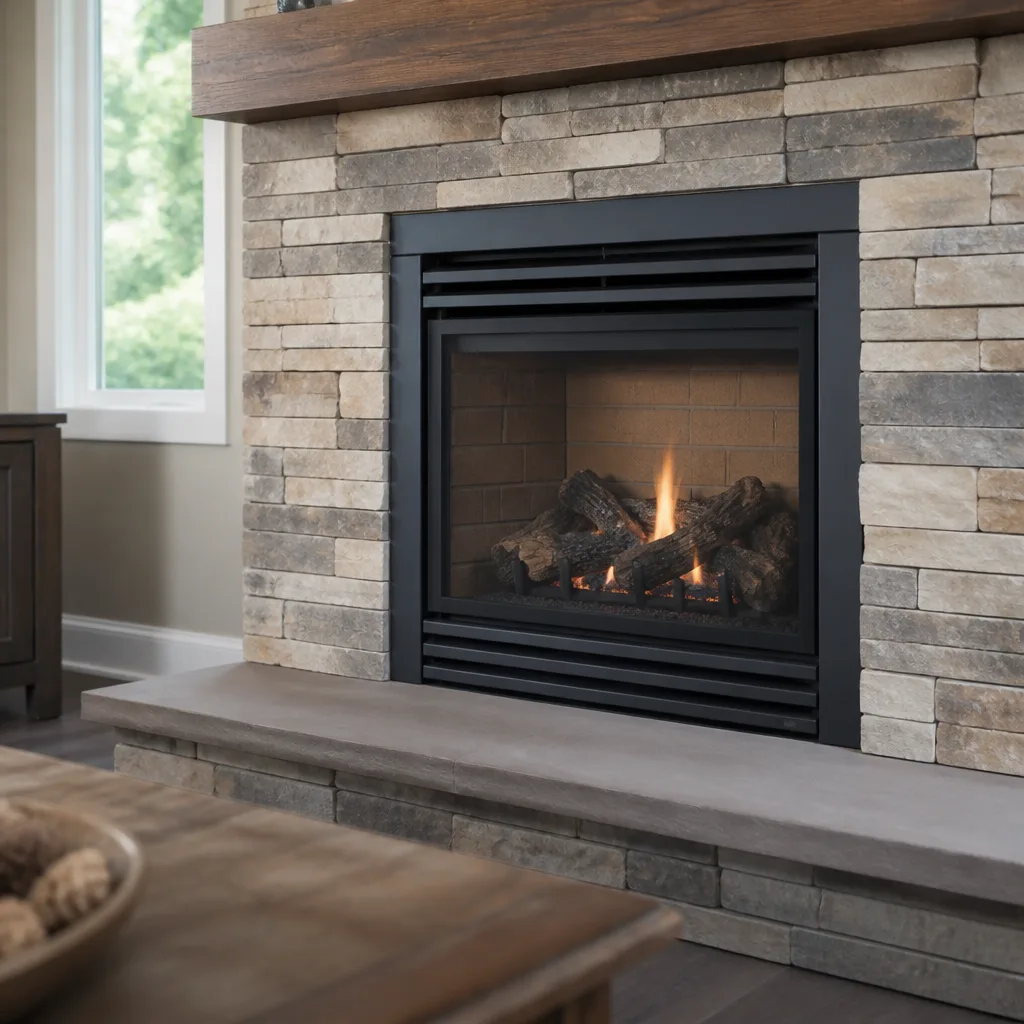 Gas fireplace service
Level 1 sweep and inspection to the NFPA 211 annual standard - flue, crown, cap, and flashing checked and photographed
Chimney sweep logs do not sweep chimneys. They loosen some creosote - which then falls where a brush and vacuum still have to collect it.
Chimney Cleaning Permits, Codes & Inspections in CA: What You Need to Know
Here’s a fact that surprises most homeowners in Corona: the state of California generally treats routine chimney sweeping as maintenance, not construction. That means no permit, no plan check, no inspection. But the line between maintenance and regulated work is thinner than most people think, and it sits exactly where liner replacement, firebox rebuilding, or appliance change-outs begin. Cross that line without a permit, and you’ve created a problem your homeowner’s insurance policy may use to deny a future claim. This guide—along with our Chimney Sweep Troubleshooting: Common Problems and How to Fix Them—walks through the specific code sections, the Riverside County process, and the California additions to NFPA 211 that decide which side of the line your chimney project falls on.
Quick Answer
Routine chimney cleaning and Level 1 inspections in California do not require a permit. However, flue liner replacement, firebox rebuilding, chimney reconstruction, and most appliance change-outs do require a permit from the Riverside County Building & Safety Department, along with an inspection. Unpermitted structural or liner work can void homeowner’s insurance coverage for fire-related claims, so the permit question matters as much for your policy as it does for code compliance.
Styles & brands we work with
Table of Contents
- Maintenance vs. Repair: Where California Draws the Permit Line
- The CRC Code Sections That Define the Boundary
- NFPA 211 vs. California Code: Where They Conflict on Clearances
- How Riverside County Processes Chimney Permits in Corona
- Title 24 and the Damper Spec Almost Nobody Knows About
- SCAQMD Rule 445: What It Means for Corona Wood-Burning Chimneys
- How Unpermitted Chimney Work Affects Insurance Claims
- Common Mistakes to Avoid
- When to Call a Professional
- Frequently Asked Questions
Maintenance vs. Repair: Where California Draws the Permit Line
The California Building Standards Code, specifically the California Residential Code (CRC), doesn’t require a permit for what it classifies as ordinary maintenance. Chimney sweeping falls squarely in that category. A sweep removes creosote, soot, and debris from the flue interior using brushes, rods, and vacuums. Nothing structural changes. The flue liner, smoke chamber, mortar crown, and masonry all stay exactly as they were. Because no component is altered, removed, or replaced, the building department has nothing to inspect.
Level 1 chimney inspections, which are the standard visual and accessible-component checks performed during a routine sweep, also fall under maintenance. A camera scan of the flue interior, a visual check of the mortar crown, a damper operation test: none of these require a permit because nothing is being modified.
The permit trigger happens when work crosses from “clean and inspect” into “alter, repair, or replace.” Here’s a practical breakdown of common chimney services and where each one lands:
- Chimney sweeping: No permit. Maintenance.
- Level 1 or Level 2 inspection: No permit. Evaluation only.
- Chimney cap replacement: No permit in most Riverside County jurisdictions, since caps are accessory components that don’t affect structural integrity or venting function.
- Damper replacement (like-for-like): No permit if the new damper matches the original specification.
- Damper replacement (different type, especially top-mount): Permit may be required, particularly when the change affects draft characteristics or brings the chimney under Title 24 damper requirements (more on that below).
- Flue liner repair (minor crack sealing with HeatShield or similar): No permit. Resurfacing is considered restoration of an existing component, not replacement.
- Flue liner replacement (new stainless liner, cast-in-place liner, or clay tile reline): Permit required. This is an alteration to the venting system.
- Firebox rebuild (replacing firebrick, reconstructing the firebox floor or walls): Permit required. Structural repair.
- Smoke chamber parging or rebuild: Permit required when the work is structural; minor parging may not trigger it depending on scope.
- Chimney partial or full rebuild above the roofline: Permit required. Structural.
- Wood stove or insert installation: Permit required. Appliance change-out or new installation.
- Gas fireplace or gas log set installation (new install): Permit required.
- CRC R1001 (Masonry Chimneys): Governs construction, alteration, and repair of masonry chimneys. When a firebox rebuild or a partial teardown above the roofline happens, this is the section the inspector references. Permits are triggered by structural alteration under this chapter.
- CRC R1003 (Factory-Built Chimneys): Covers prefabricated metal chimneys. Replacing a section of factory-built chimney pipe, changing from an air-cooled to an insulated chase, or using a product with different listing characteristics falls here.
- CRC R1004 (Chimney Liners): Sets the requirements for flue liners, including material standards and installation methods. When we install a DuraFlex flexible liner system in Corona, we’re working under this section. Liner replacement is not maintenance; it’s an alteration that requires the liner to be listed to UL 1777 and installed per the manufacturer’s instructions.
- CRC R1006 (Exterior Air Supply): Applies when a fireplace or wood stove relies on outside combustion air. Modifying the air supply during a remodel triggers this section.
- California Mechanical Code Chapter 8: Governs chimneys and vents for mechanical appliances, including gas furnaces, water heaters, and gas fireplace inserts. When a furnace flue is relined or a gas appliance is changed out, this chapter applies, and the permit follows the appliance, not the chimney.
- NFPA 211 default: In many conditions, NFPA 211 permits masonry chimneys with clay tile liners to have as little as 1 inch of clearance from the exterior of the masonry to combustible framing, provided the wall thickness and liner specifications meet the standard’s tables.
- California amendment: The California Residential Code is stricter in multiple wall and floor penetration scenarios, particularly for chimneys passing through enclosed spaces. CRC R1003.18 and related sections require clearance to combustibles that in some configurations exceeds NFPA’s minimums. A chimney that passes an NFPA-only inspection in another state can fail a California inspection based on clearance alone.
- The practical effect in Corona: When we scope a chimney repair that involves any touching of framing, sheathing, or attic space, we inspect clearances to the California standard, not the national default. A liner that was “code compliant” when the house was built in 1985 may not meet current California clearance requirements once the wall cavity is opened. That matters because the moment you alter that chimney, the inspector applies today’s code, not the code from when the house was constructed.
- Scope the work: A contractor performs a Level 2 inspection, often with a camera, to document what needs repair and why. This documentation goes into the permit application.
- Submit the permit application: The contractor files with Riverside County Building & Safety, including the scope of work, product specifications (for example, the UL 1777 listing on a DuraFlex stainless liner), and any structural drawings if the work involves a rebuild.
- Plan review: Simple liner replacements and like-for-like firebox repairs typically clear plan review without friction. Anything involving structural alterations to the chimney chase, changes to the roofline, or modifications to combustion air supply takes longer.
- Permit issuance: Once approved, the county issues the permit and the work can begin. The permit must be posted at the job site.
- Rough inspection: For a liner replacement, this happens after the old liner is removed and before the new one is connected. The inspector checks clearances, the condition of the surrounding masonry, and the suitability of the flue dimensions.
- Final inspection: After the liner is installed and the appliance reconnected, the final inspection verifies that the installation matches the approved scope, the draft is functional, and the clearance requirements are met.
- If you’re replacing a wood-burning insert in Corona, the new unit must be EPA-certified. No exceptions.
- If you’re rebuilding a firebox in an existing open-hearth fireplace, the work is permitted as repair, but you cannot convert a non-compliant device into something that remains non-compliant if you’re changing the appliance itself.
- If you’re relining a chimney that serves a wood stove, the liner must be sized correctly for the EPA-certified appliance, not for whatever stove was originally installed decades ago.
- Permit history for any chimney-related work: Riverside County records are public and searchable by address. If liner replacement happened in 2019 and no permit exists, that’s an immediate red flag.
- Product listings and installation manuals: Adjusters check whether the liner, damper, or insert that was installed is listed for the application. An unlisted or misapplied product is grounds for denial even if a permit was pulled.
- Clearance violations: If the fire spread through a wall or ceiling and the clearance from the chimney to combustibles was insufficient, the adjuster will compare the as-built conditions against code minimums. Unpermitted work that created a clearance violation is a difficult claim to recover.
- Appliance changes: A wood stove swapped for a different model without a permit changes the heat output, clearance requirements, and flue sizing. Adjusters know this and check for it.
- Assuming every chimney contractor pulls permits when required. Plenty of contractors in Southern California will replace a liner without filing. Ask for the permit number before work starts. If they deflect, find another contractor.
- Treating a firebox rebuild as “just repair.” Rebuilding a firebox is structural work under CRC R1001. Riverside County requires a permit for it, and unpermitted firebox work is one of the first things an adjuster flags after a fire.
- Installing a non-Title 24 compliant damper during a permitted repair. This creates a correction notice and a re-inspection fee. A top-mount damper with positive seal meets the standard the first time.
- Ignoring SCAQMD Rule 445 when replacing a wood-burning insert. The new unit must be EPA-certified. Installing a non-compliant used stove in Corona is a violation that also invalidates the permit for the liner work serving it.
- Relying on NFPA 211 clearances instead of California code. California is stricter in several configurations. A chimney built to NFPA minimums may fail a Riverside County inspection once walls are opened.
- Skipping the camera inspection before a liner replacement. A camera scan documents why the liner needs replacement and gives the permit application the evidence it needs. Without it, the county may ask for additional documentation and delay the permit.
- Believing that a clean chimney means a safe chimney. A sweep removes creosote, but it doesn’t verify clearances, liner condition, or damper compliance. A Level 2 inspection covers what a sweep can’t see. For more on what a proper sweep includes, see our Chimney Sweep in Corona page.
This is why we tell homeowners in Corona to ask one simple question before any chimney project, and why we built our Chimney Sweep Maintenance Checklist for Corona Homeowners around it: “Does this change the venting system or the structure?” If the answer is no, it’s maintenance. If the answer is yes, it’s permitted work, and the contractor should be pulling the permit before the first tool touches the chimney.
The CRC Code Sections That Define the Boundary
California’s residential building code adopts the International Residential Code (IRC) with state-specific amendments. The chimney-related provisions sit primarily in Chapter 10, “Chimneys and Fireplaces,” and Chapter 8 of the California Mechanical Code. Understanding a few specific sections saves you from arguing with a contractor who tells you a permit “isn’t really necessary” for a liner replacement.
Here are the code sections that actually matter for homeowners in Corona:
The takeaway: “maintenance” is defined not by opinion but by whether the work alters or replaces a component the code regulates. A chimney sweep that removes creosote does not alter the liner. A contractor that replaces the liner does. The code draws the line with the word “alteration,” and Riverside County building inspectors apply that word consistently.
NFPA 211 vs. California Code: Where They Conflict on Clearances
NFPA 211, “Standard for Chimneys, Fireplaces, Vents, and Solid Fuel-Burning Appliances,” is the national fire-safety standard that most chimney professionals reference daily. California adopts NFPA 211 by reference in many sections of the California Fire Code, but the state code doesn’t simply copy it wholesale. There are places where California is stricter, and a few where the two documents read differently enough that a contractor working from national defaults can get a Corona job wrong.
The most consequential difference involves flue liner clearance to combustibles. Here’s the breakdown:
There’s also a difference in how the two treat unlined chimneys. NFPA 211 allows some grandfathered unlined chimneys to continue in service under specific conditions. California’s adoption narrows that grandfathering significantly. In practice, Riverside County inspectors will flag an unlined flue serving a wood-burning appliance and require a liner before signing off on any permitted adjacent work. We see this regularly with older Corona homes in the downtown core and the neighborhoods off Main Street, where chimneys from the 1950s and 1960s may never have had a liner installed in the first place.
How Riverside County Processes Chimney Permits in Corona
Corona falls under the Riverside County Building & Safety Department. Chimney permits in Corona go through the county system, and the process is more predictable than most homeowners expect, provided the paperwork is done correctly the first time.
Here’s the step-by-step process for a typical permitted chimney project in Corona, such as a flue liner replacement or firebox rebuild:
Typical turnaround in Riverside County for a straightforward chimney permit runs one to two weeks from submission to issuance. Inspection scheduling is normally within a few business days of the request. Corona’s inspection routes are shared with other county-served cities in the western county, so exact appointment times are less common than windows, but the process itself is consistent.
The homeowner’s responsibility is simpler than most people fear: make sure the contractor actually pulled the permit. A contractor that says “we’ll handle it” and never files leaves the homeowner with the liability, not the contractor. Ask to see the permit number before work starts.
Title 24 and the Damper Spec Almost Nobody Knows About
California’s Title 24 Building Energy Efficiency Standards apply to more than insulation and windows. They reach into fireplaces and chimneys through requirements for combustion air, damper performance, and in some cases, gas appliance requirements. And there’s one damper specification that catches both homeowners and contractors off guard regularly.
Title 24 requires that newly installed or replacement dampers in masonry fireplaces meet a minimum gasket tightness standard. Specifically, dampers installed in climate zones like Corona’s (Zone 10) must be either a listed gasketed damper or an approved top-mount damper that seals tightly enough to prevent conditioned air from leaking out of the house through the chimney when the fireplace isn’t in use. A traditional cast-iron throat damper, the kind that has been installed in American fireplaces for over a century, doesn’t meet that standard once the damper is replaced or the fireplace is altered.
Here’s the scenario we see repeatedly in Corona: a homeowner has a permitted firebox rebuild or liner replacement. The inspector checks the damper. The old throat damper was either removed and reinstalled, or replaced with an identical cast-iron unit. Under Title 24, that damper now has to meet the current standard because it’s part of a permitted alteration. The inspector flags it. The contractor has to come back, install a compliant top-mount damper, and schedule a re-inspection. The homeowner pays twice for the same opening.
A contractor who knows California code anticipates this before the rough inspection. Top-mount dampers from the brands we stock, including units designed for positive-seal performance, meet Title 24 requirements without triggering a correction. The lesson for homeowners: if your chimney project includes any damper work, ask whether the replacement unit is Title 24 compliant before it goes in.
SCAQMD Rule 445: What It Means for Corona Wood-Burning Chimneys
Corona sits in the South Coast Air Quality Management District (SCAQMD), and SCAQMD Rule 445 regulates wood-burning devices across the region. This isn’t a building code, but it affects chimney service decisions in real ways, and it’s one of the most misunderstood pieces of the puzzle for Corona homeowners.
Rule 445 prohibits the installation of open-hearth fireplaces (a traditional masonry fireplace with no insert or EPA-certified device) in new construction. It also restricts when existing wood-burning fireplaces and stoves can be used during high-pollution days. The rule doesn’t require you to remove an existing fireplace, and it doesn’t ban wood burning outright. But it does mean that:
The interaction with chimney service is direct: when a Corona homeowner calls us to reline a flue that serves a pre-1990 wood stove, the liner work is permitted and straightforward, but the conversation has to include whether the stove itself is now a non-compliant appliance under Rule 445. Swapping the stove for an EPA-certified unit might be the smarter play while the chimney is already open and permitted. Failing to address it means a compliant liner serving a non-compliant appliance, which wastes the liner investment and leaves the homeowner exposed if they ever sell the house.
For a deeper look at the cleaning side, see our Chimney Sweep in Corona page.
How Unpermitted Chimney Work Affects Insurance Claims
This is the section most people wish they didn’t need, and it’s the one we hear about most after the fact. Homeowner’s insurance policies in California contain language about unpermitted work and material misrepresentation that directly affects chimney-related claims, especially fire claims.
When a chimney fire or structure fire occurs, the insurance adjuster doesn’t just look at where the fire started. They pull building permit records. If the fire originated in or near a chimney that had recent liner work, firebox repair, or appliance replacement without a corresponding permit, the adjuster has grounds to deny the claim based on unpermitted alterations. The insurance company’s position is simple: they insured a house as it was permitted and inspected, not a house that was modified outside the legal process.
What adjusters specifically look for after a fire event in Corona:
The pattern we’ve observed is consistent: permitted work with documentation survives a claim review. Unpermitted work becomes the reason the claim is reduced or denied. For a chimney liner replacement that costs a few thousand dollars, the exposure on a denied homeowner’s claim can reach into six figures. The permit is not bureaucracy for its own sake; it’s the paper trail that protects you when something goes wrong.
Common Mistakes to Avoid
When to Call a Professional
You should call a chimney professional whenever the work moves beyond cleaning and into the territory this guide describes. That means liner evaluation or replacement, firebox repair, damper replacement, insert installation, or any situation where a chimney is being altered rather than simply cleaned. If you’ve been told your flue liner has cracks, if your damper doesn’t seal and your energy bills climb through the winter, or if you’re buying a home in Corona with a wood-burning fireplace that hasn’t been inspected in years, the time to call is before the project starts, not after a permit issue surfaces. At Corona Chimney Sweep home, our team handles sweeping, repair, and dryer vent work under one roof, which means a single inspection answers the permit question and the repair question at the same time. Call (855) 382-6159 for a free estimate in Corona. We repair what we find.
Frequently Asked Questions
No. Routine chimney sweeping is classified as maintenance under the California Residential Code and does not require a permit from Riverside County. A permit only becomes necessary when the work alters or replaces structural components, such as the flue liner, firebox, or chimney masonry above the roofline.
Permit fees in Riverside County vary based on the scope and valuation of the work. A straightforward flue liner replacement typically falls on the lower end of the county’s permit fee schedule, while structural rebuilds cost more due to plan review time. Your contractor should include the permit fee as a line item in the bid. If a contractor quotes a price that seems too low to include a permit, ask specifically whether the permit is included or whether they’re proposing to skip it. At Chimney Repair in Corona, permits are handled as part of the job scope, never as an optional add-on.
A Level 1 inspection covers the readily accessible portions of the chimney during a routine sweep and is appropriate when the chimney is used under the same conditions as before. A Level 2 inspection adds a camera scan of the flue interior, attic and crawlspace access, and is required when a property is sold, when an appliance change occurs, or after a chimney fire. Level 2 is also what Riverside County expects as supporting documentation for most permitted chimney repairs.
No. Liner replacement is an alteration to the venting system, and the California Residential Code requires a permit regardless of whether the new liner matches the old dimensions. The permit process in Riverside County is straightforward for liner work, and the inspection protects you from clearance and product-listing issues that could become insurance problems later.
No. Rule 445 prohibits installing open-hearth wood-burning fireplaces in new construction and restricts wood burning on high-pollution days, but it does not require removing an existing fireplace. However, if you replace a wood-burning insert or stove in Corona, the new appliance must be EPA-certified. The rule doesn’t stop you from using an existing fireplace; it does govern what you can install new.
No. Dryer vent cleaning is maintenance of the appliance exhaust system and does not require a permit under the California Mechanical Code. However, if the dryer vent ducting itself is being replaced or rerouted, a permit from Riverside County is required because the venting system is being altered. For a deeper look at the cleaning side and why it matters for fire prevention, see our Dryer Vent Cleaning in Corona page.
The Bottom Line
Chimney cleaning in California is maintenance. Chimney repair is regulated. The line sits at flue liner replacement, firebox rebuild, chimney reconstruction, and appliance change-outs, and crossing it without a permit from Riverside County creates liability that no homeowner in Corona wants to carry. NFPA 211 gives you the national baseline, but California’s code is stricter on clearances and Title 24 adds damper requirements that catch contractors off guard. SCAQMD Rule 445 adds another layer for wood-burning appliances. The protection is the permit itself: documented, inspected work survives both building department review and insurance claim scrutiny. For more guides & resources on keeping your chimney compliant, explore our blog. Skip the permit, and you’re gambling with numbers far larger than the cost of the inspection.
Written by the team at Corona Chimney Sweep, serving Corona since 2018. We repair what we find. One provider, every venting hazard. Call (855) 382-6159 for a free estimate.
See the difference
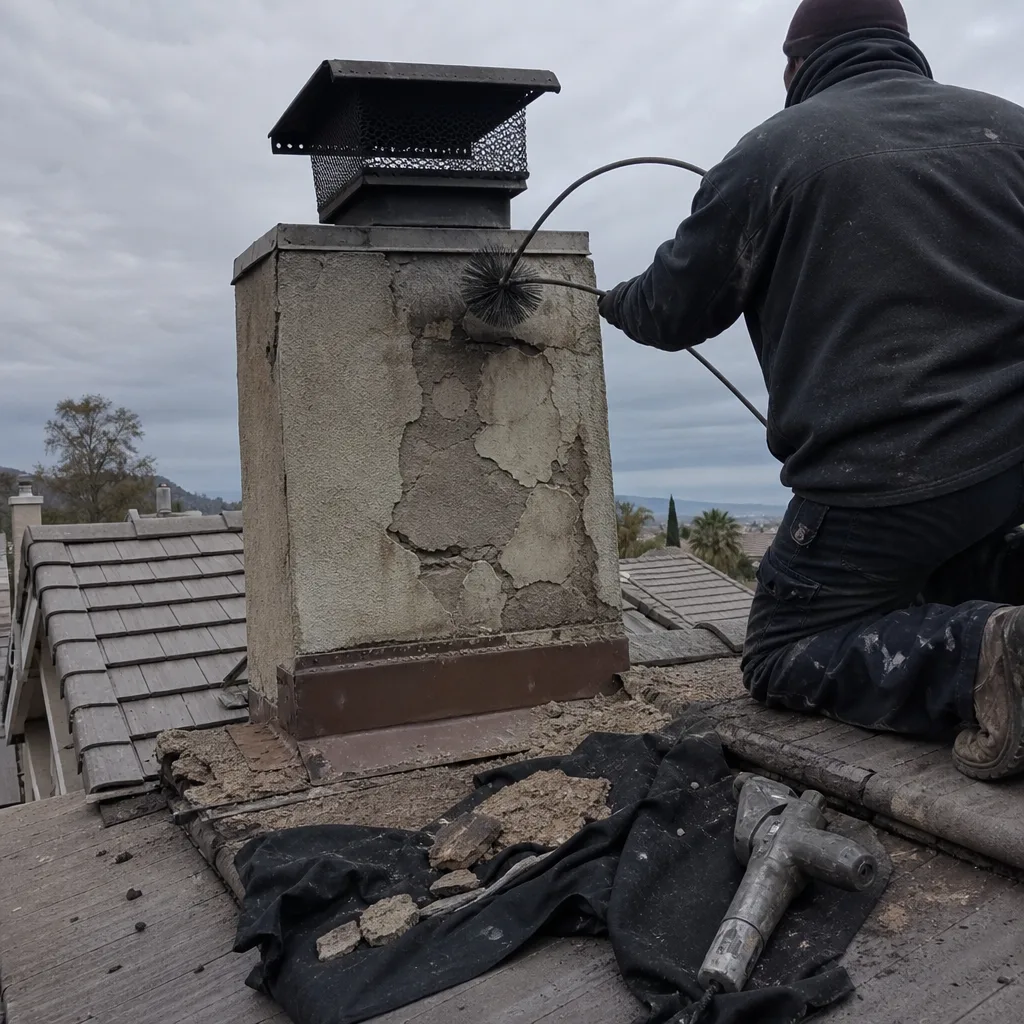 Before
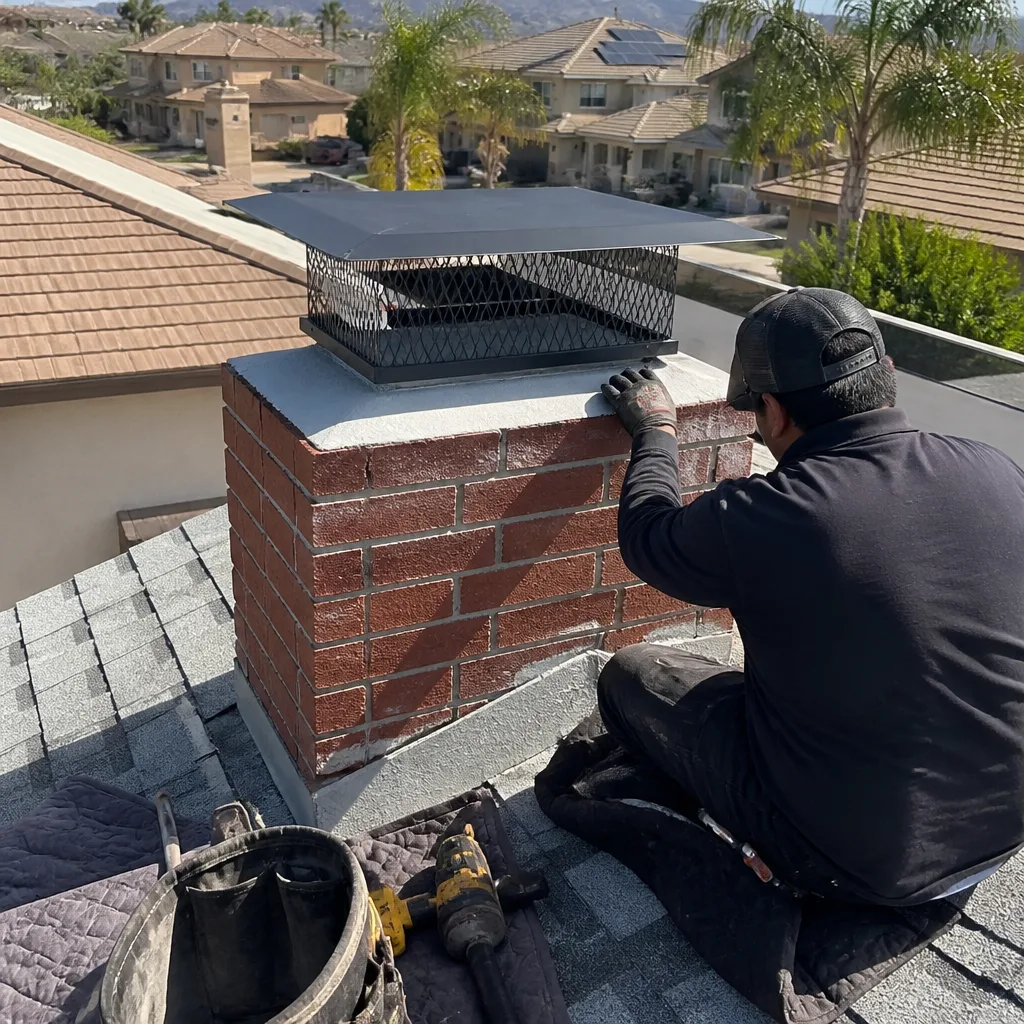 After
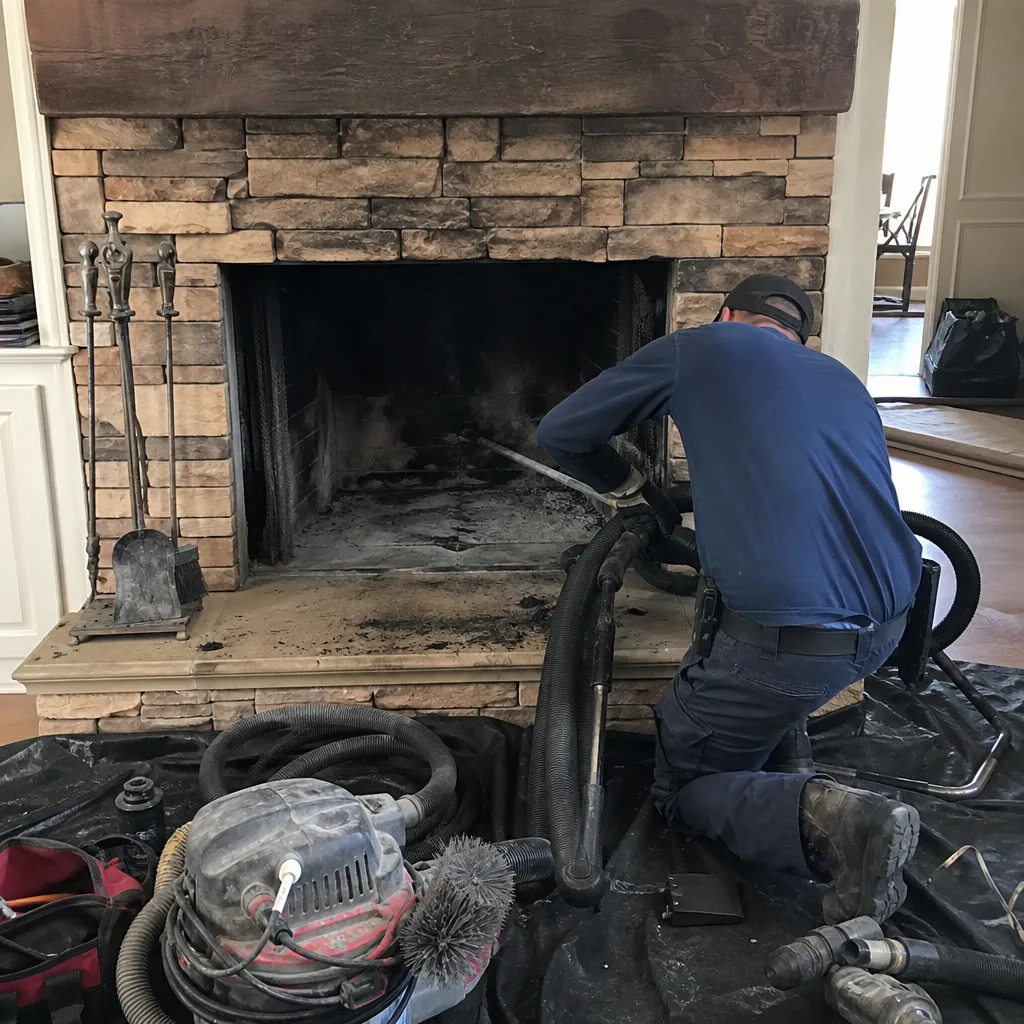 Before
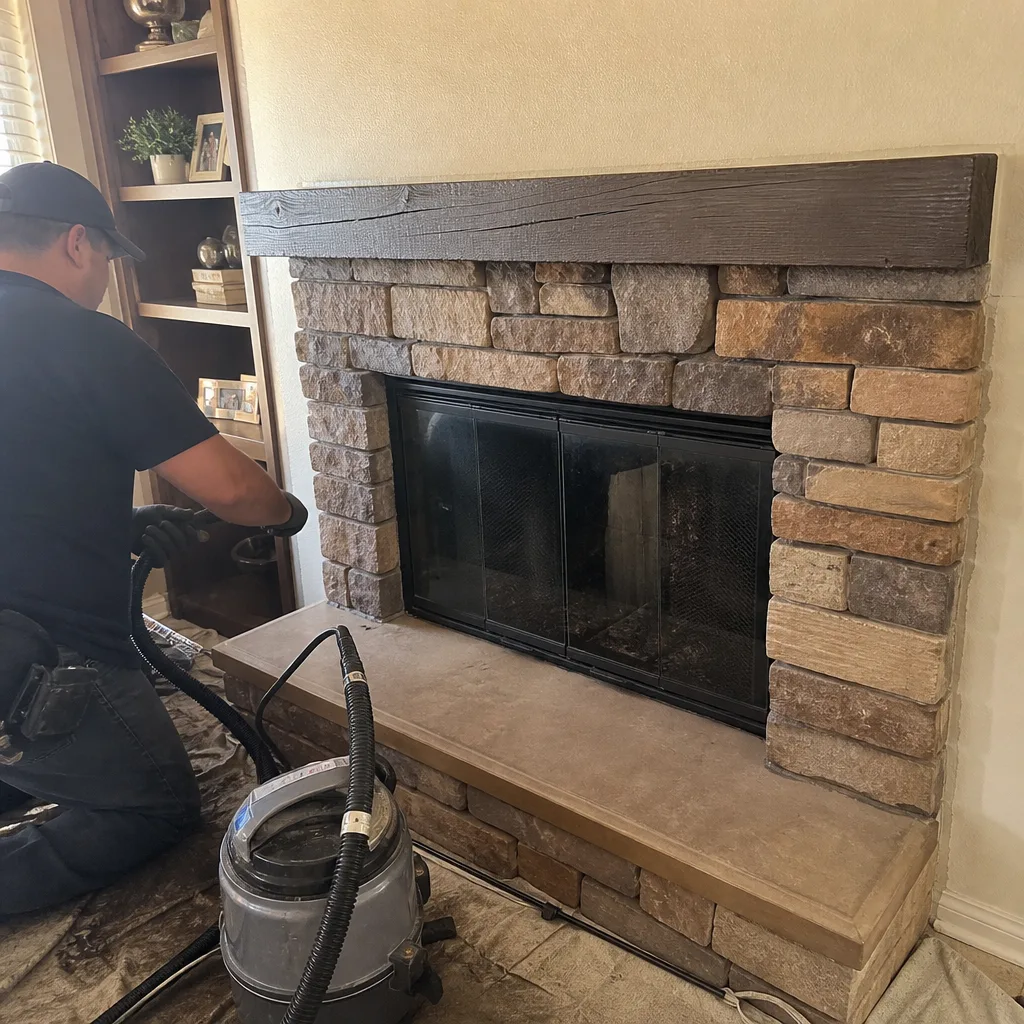 After
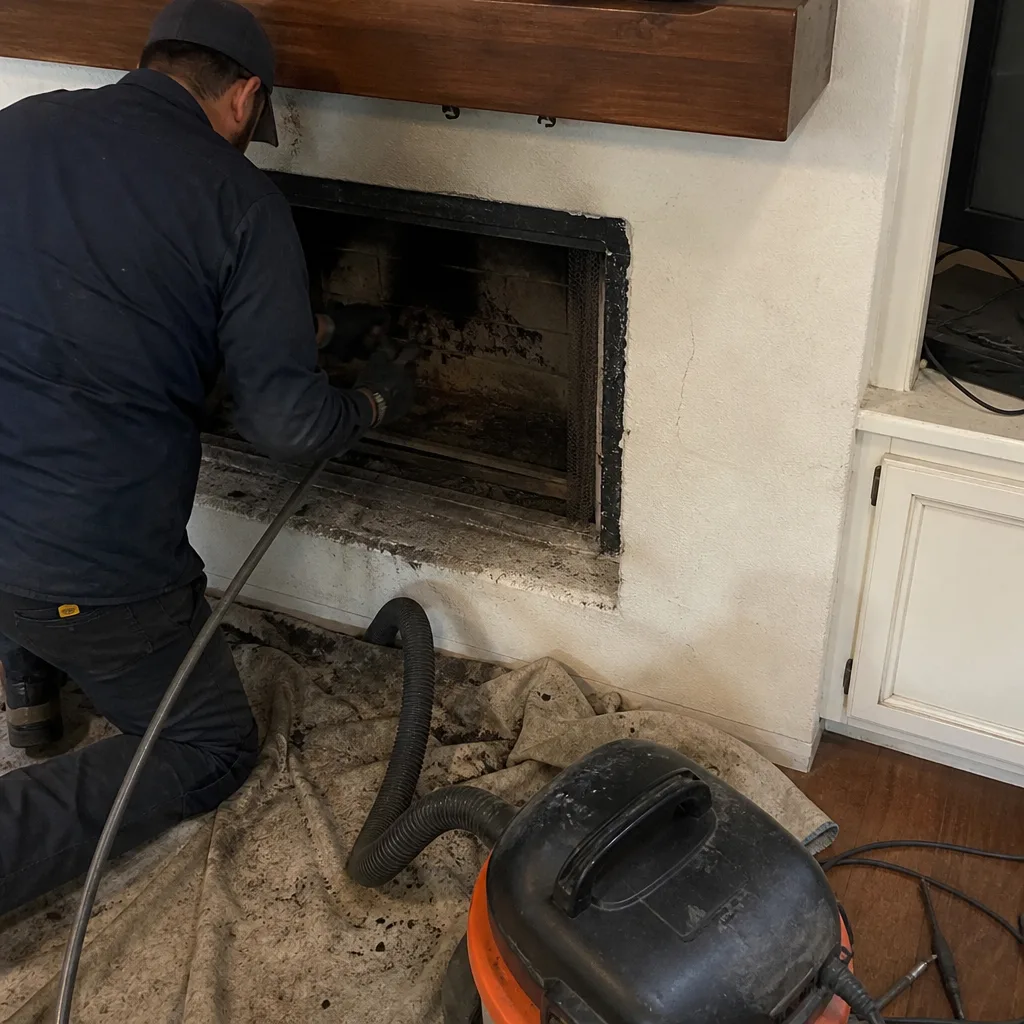 Before
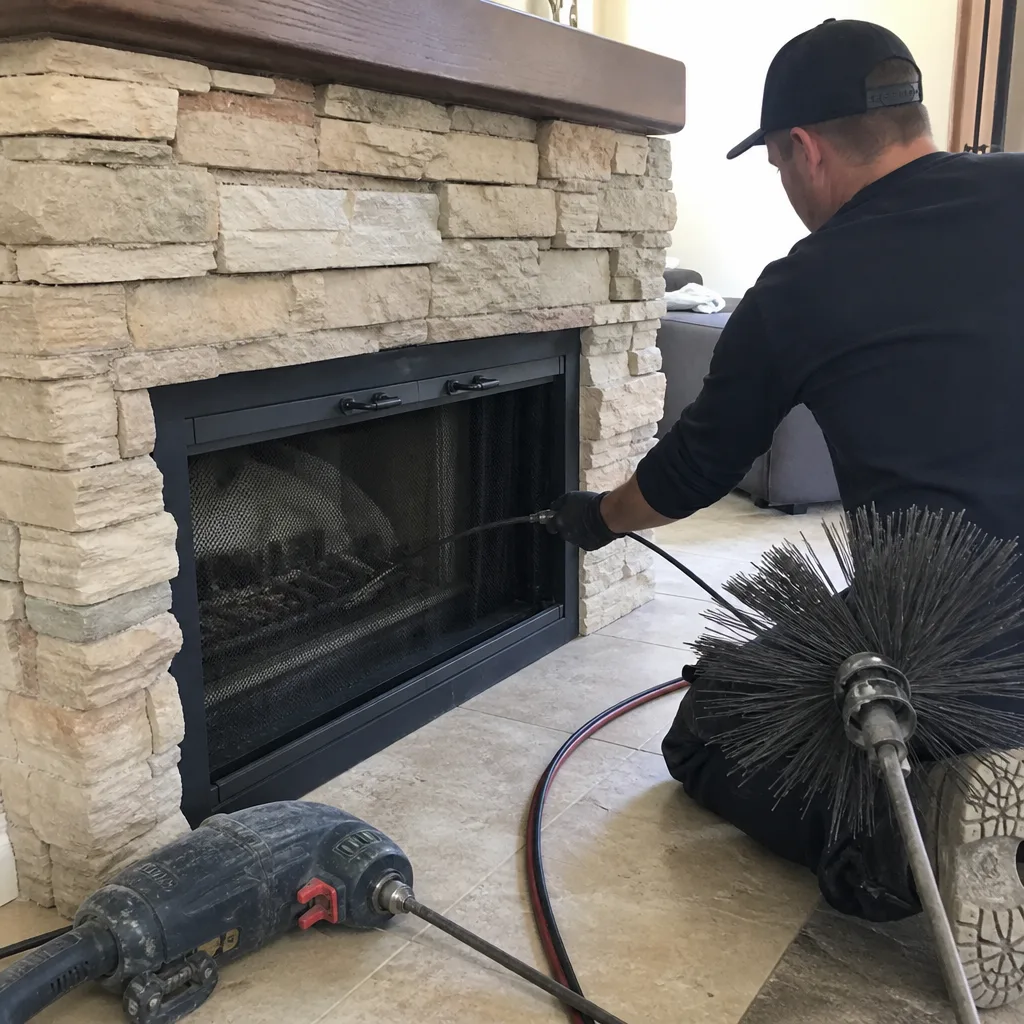 After