Last updated October 30, 2026
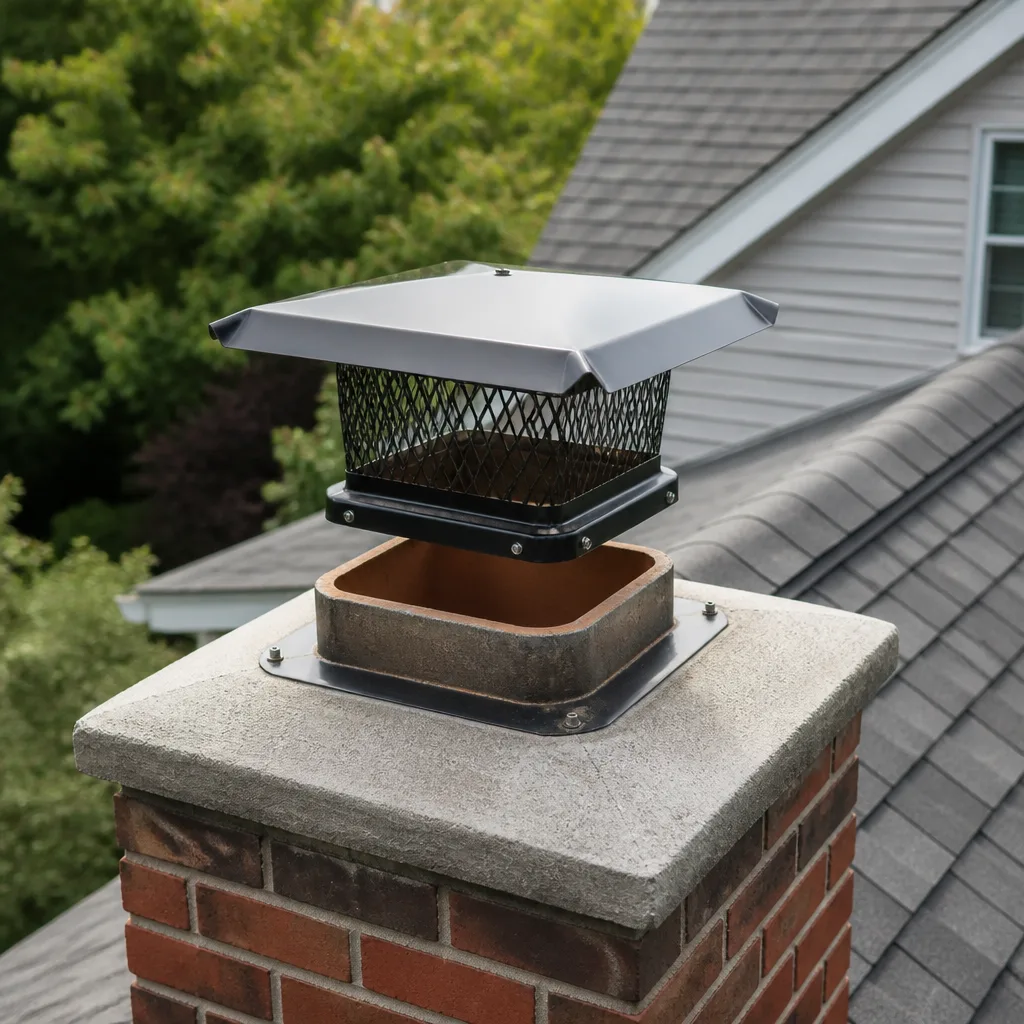 Sweep & inspection
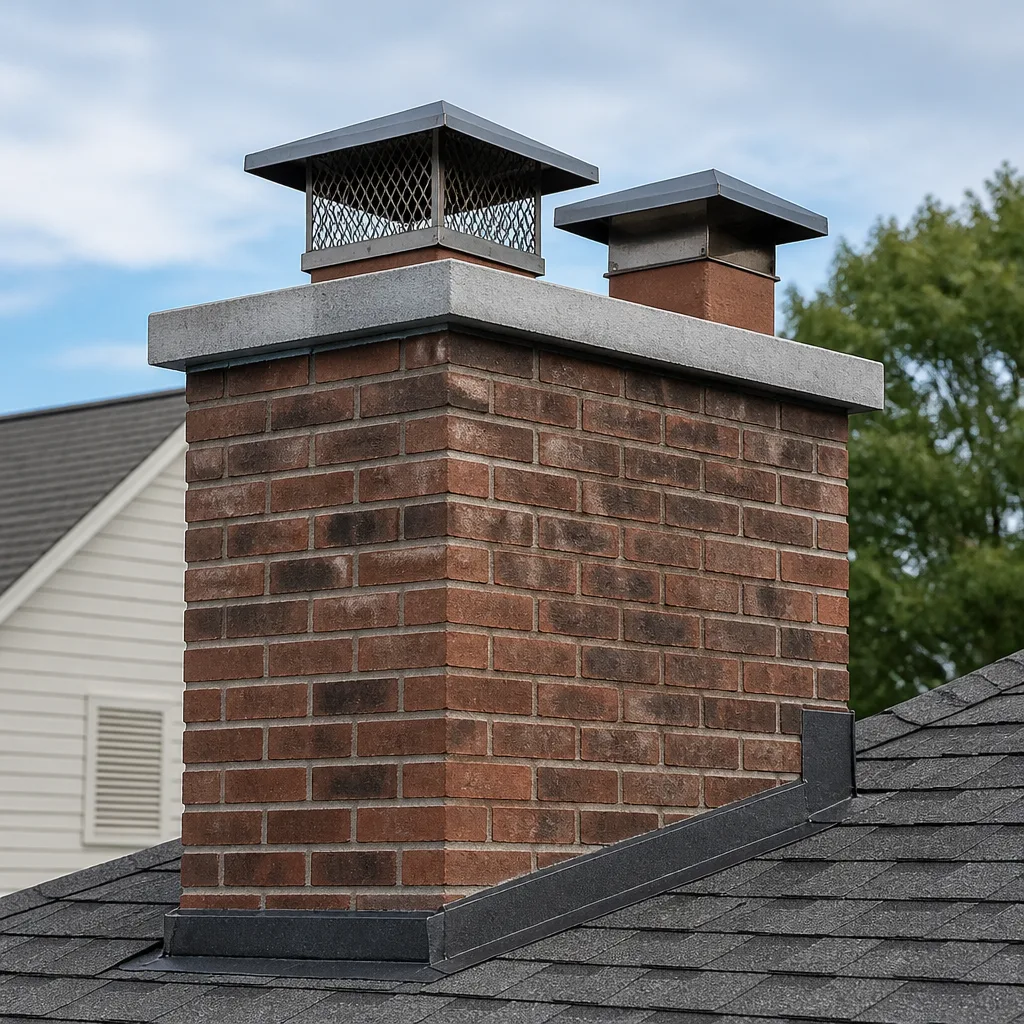 Caps & crowns
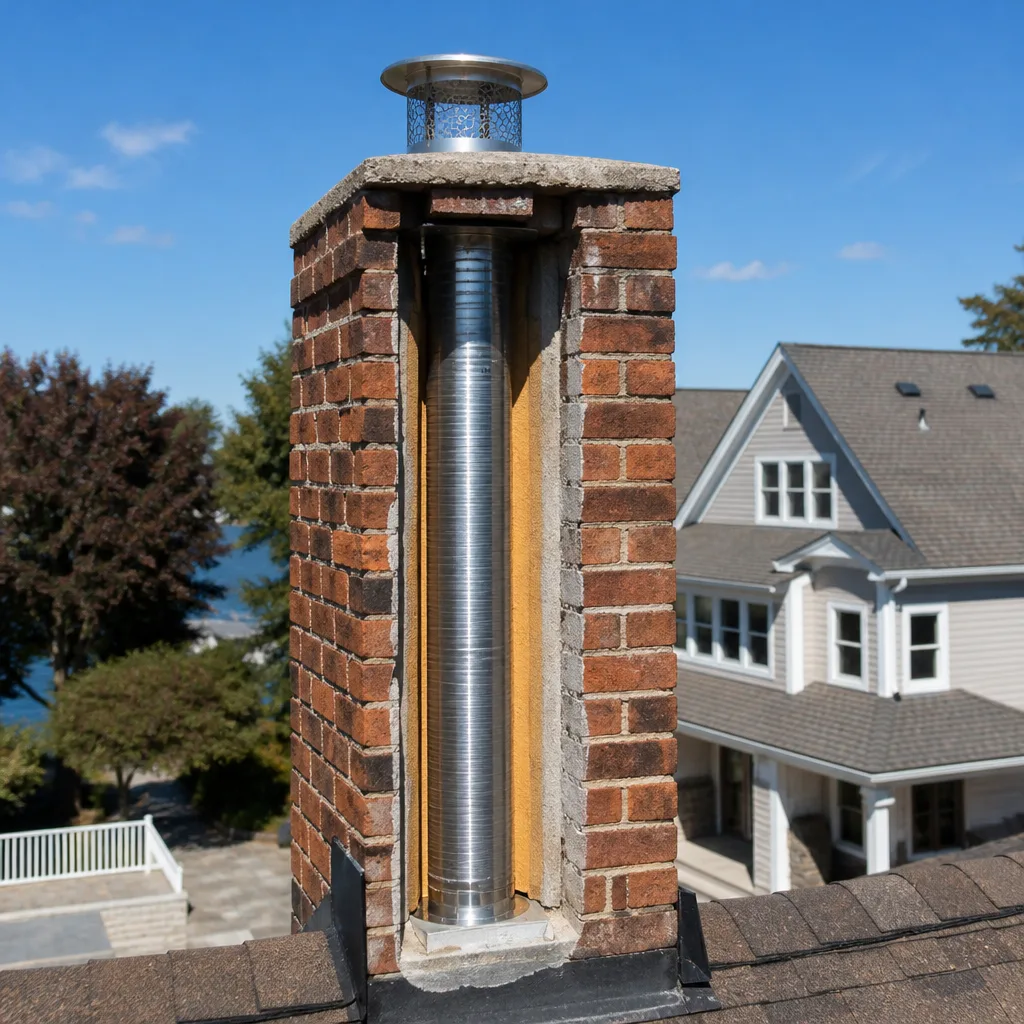 Flue relining
 Masonry repair
 Gas fireplace service
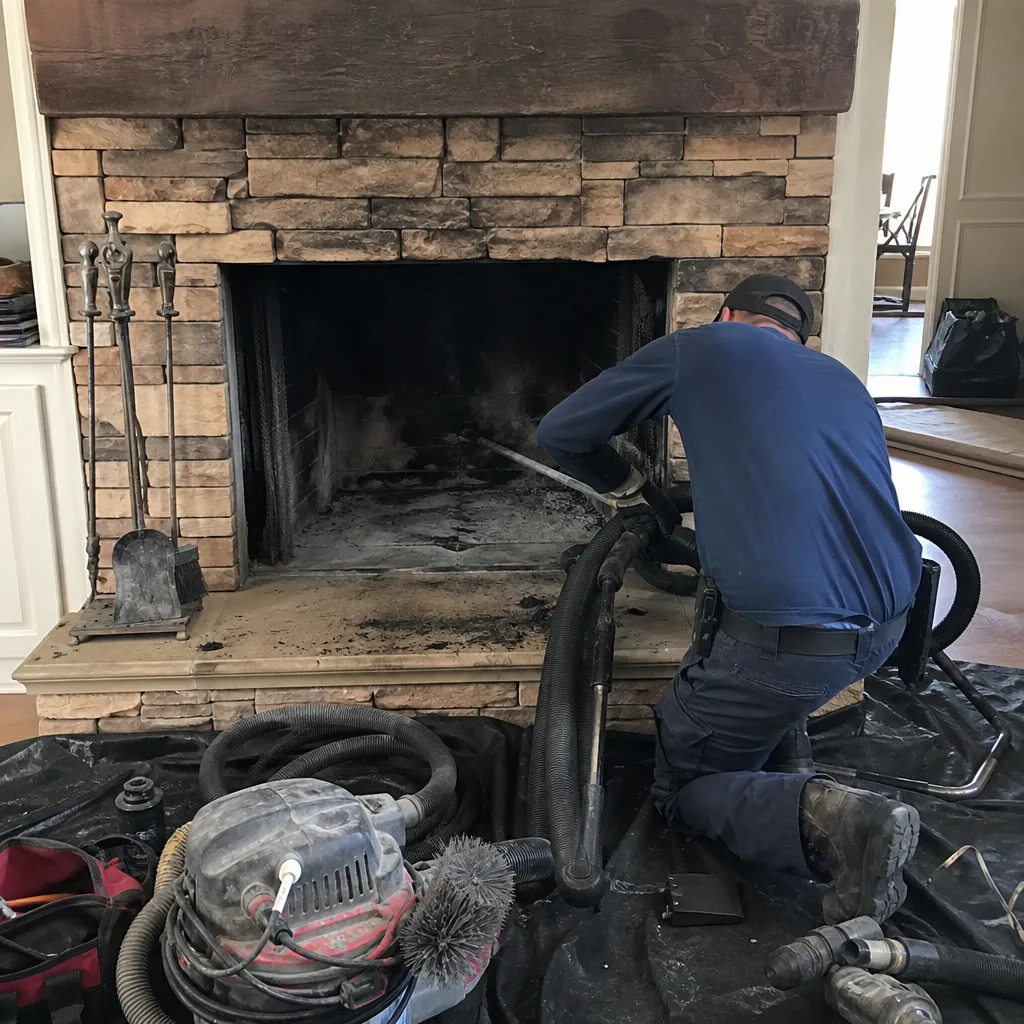
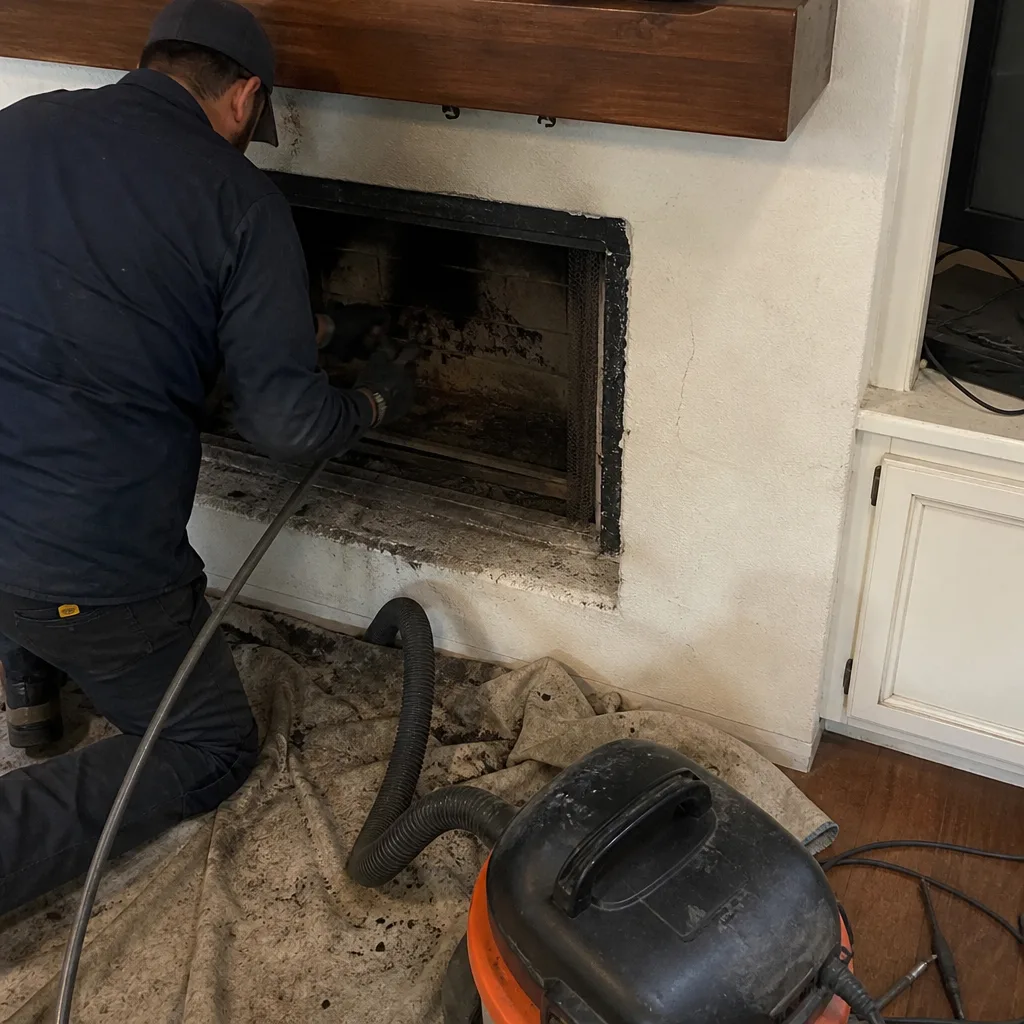
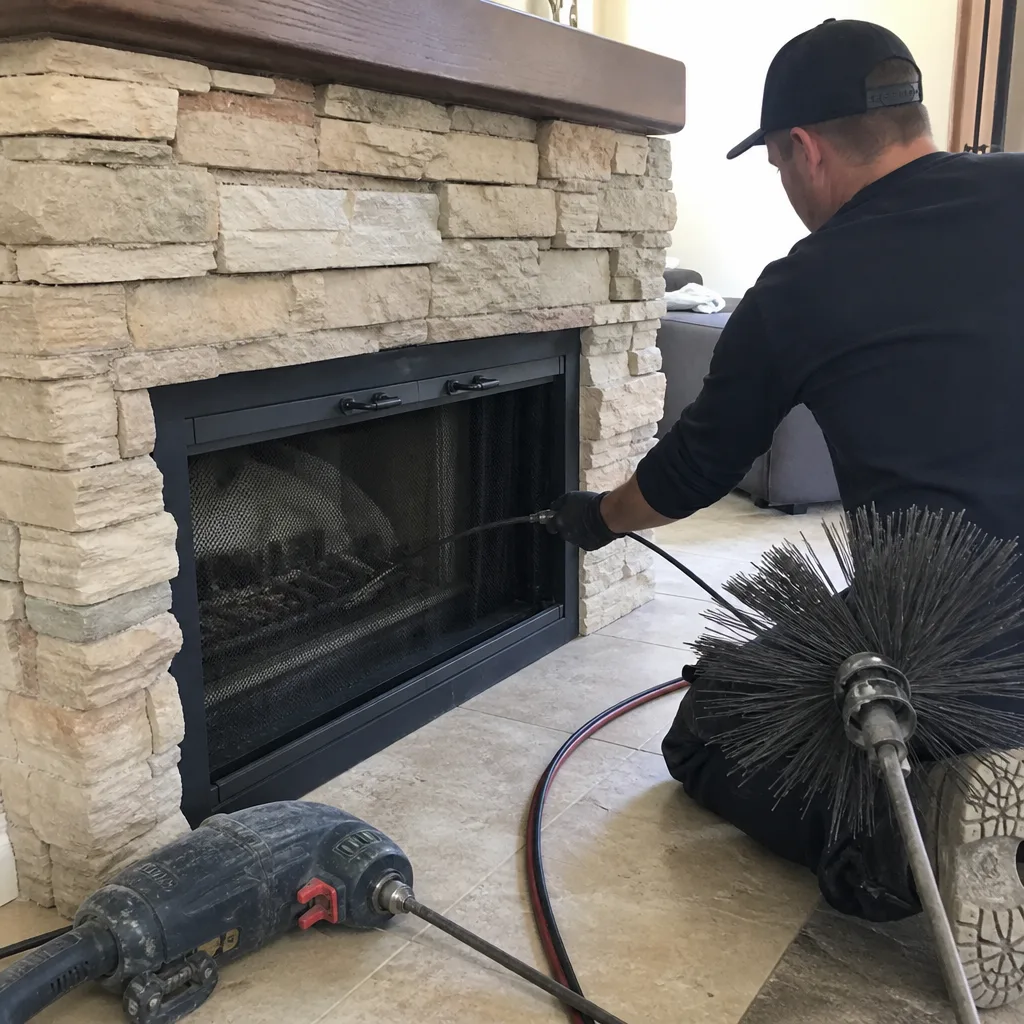
Level 1 sweep and inspection to the NFPA 211 annual standard - flue, crown, cap, and flashing checked and photographed
Chimney sweep logs do not sweep chimneys. They loosen some creosote - which then falls where a brush and vacuum still have to collect it.
Chimney Cleaning Emergency Preparedness Guide for Corona Homes
A chimney fire in Corona is not a rare event. It happens most often on the first cold night of the year, when a homeowner who has deferred sweeping lights a fire and the creosote that built up over the previous season finally reaches ignition temperature. Most people’s first instinct when they hear that low rumble and see flames shooting from the flue is to close the damper. That instinct is wrong, and it is the single most dangerous thing you can do in that moment. This guide explains what actually happens during a chimney emergency, the correct sequence of actions, and what Corona homeowners need to have on hand before the first fire of the season. For Chimney Cleaning Warning Signs: A Corona Homeowner’s Reference Guide, see our companion post.
Quick Answer
Chimney emergency preparedness for Corona homes means three things: knowing the correct response to an active chimney fire (leave the damper open, evacuate, call 911), having the right detection and suppression tools on hand before fire season starts, and scheduling a professional chimney cleaning and inspection before you light the first fire. A blocked flue or heavy creosote accumulation is the root cause of most chimney emergencies, and both are prevented by annual sweeping. If you have not had your chimney swept this year, call Chimney Sweep in Corona at (855) 382-6159 before you burn again.
Styles & brands we work with
Table of Contents
- Understanding Chimney Fires: What Actually Burns
- Active Chimney Fire: The Correct Response Sequence
- How to Identify a Chimney Fire vs. Smoke Event vs. Carbon Monoxide Situation
- Post-Fire Inspections: What California Requires Before You Burn Again
- Emergency Supplies Every Corona Home Should Have Before Fire Season
- Filing an Insurance Claim for Chimney Fire Damage in California
- Corona-Specific Chimney Risks: Climate, Construction, and Code
- Prevention: The Only Reliable Emergency Plan
Understanding Chimney Fires: What Actually Burns
Chimney fires are not the fire in your firebox. By the time a chimney fire starts, the fire in your firebox has been burning for hours, sending unburned wood gases up the flue. Those gases cool as they rise and condense on the flue walls as creosote, a tar-like substance that is flammable at around 450 degrees Fahrenheit. When enough creosote accumulates and the flue temperature climbs high enough, the creosote itself catches fire. That is the chimney fire.
There are two types. A slow-burning chimney fire burns at relatively low temperatures but can smolder for hours, quietly damaging the flue liner and transferring heat to the surrounding framing. A free-burning chimney fire is the loud one. Homeowners describe hearing a roar like a freight train, rumbling, and popping. Flames can shoot several feet above the chimney cap. Flue temperatures in a free-burning fire can exceed 2,000 degrees Fahrenheit, which is hot enough to crack clay tile liners, warp stainless, and ignite framing in the attic chase.
In Corona, we see a specific pattern. The city sits in a wind corridor between the Santa Ana Mountains and the Chino Hills, and those seasonal Santa Ana winds create strong, erratic drafts. A chimney that functions fine on a calm evening can backdraft when a Santa Ana gust hits it from the wrong angle, pushing smoke and embers back down the flue. That variability means Corona homeowners need to be more attentive to draft behavior than someone in a more sheltered valley.
Creosote accumulates fastest when fires burn cool and smoldery, which is exactly what happens when people burn unseasoned wood or close the damper partway to make the fire last longer. Green wood produces more smoke. More smoke means more creosote. A single season of wet wood can produce enough glazed creosote to support a chimney fire. The material matters too: creosote forms differently on clay tile liners than on stainless liners like the DuraFlex flexible systems we install in retrofit applications. Stainless liners do not eliminate creosote, but they handle thermal shock better than clay, which matters when a fire does happen.
Active Chimney Fire: The Correct Response Sequence
The order of actions during a chimney fire determines how much damage your home sustains. Most people do the sequence backwards. They close the damper first, then try to figure out what’s happening. Here’s the correct order, and the reasoning behind each step.
- Do not close the damper. The damper controls airflow to the firebox. Closing it does not starve a fire that is already burning in the flue, because that fire is getting oxygen from the top of the chimney, not through the firebox. What closing the damper does is trap superheated gases and sparks in the firebox and smoke chamber. Those gases then seek the path of least resistance, which can be gaps around the damper frame, cracks in the firebox masonry, or a combustion air intake. Closing the damper during an active chimney fire can push fire into the room.
- Evacuate everyone from the home immediately. Do not gather belongings. Do not try to get one more look at the fire. A free-burning chimney fire can spread to attic framing in under ten minutes once the flue liner fails. Get out.
- Call 911 from outside. Tell the dispatcher you have an active chimney fire. In Corona, the city fire department responds from multiple stations depending on your location, with Station 3 serving the Sierra del Oro area and Station 2 serving the central district near the 91. Response times here are fast, but firefighters still need a head start. Do not wait to see if the fire burns itself out.
- If you can safely reach a garden hose, spray the roof around the chimney. This is a secondary priority and only if you can do it without re-entering the home or standing near the chimney stack. The goal is to wet the roof deck, not to extinguish the fire. Water down the roof surface around the chimney chase to slow any ember-driven ignition. But understand: this is optional. Evacuation is mandatory.
- Do not use water in the firebox or flue. Throwing water on a hot clay liner will shatter it thermally. Throwing water on a chimney fire from the top will create a steam explosion risk inside the flue. If you have a chimney fire suppressant stick, you can deploy it after calling 911 if the fire is still in its early stages and you can reach the firebox safely. But never delay evacuation to do this.
- Stay out of the house until the fire department clears it. They will use thermal imaging to check for hot spots in the framing around the chimney chase. Creosote fires can smolder inside mortar joints and re-ignite hours later. The all-clear is not a formality.
How to Identify a Chimney Fire vs. Smoke Event vs. Carbon Monoxide Situation
These three emergencies present differently and require different responses. Confusing them causes people to either over-respond and waste a fire department response, or under-respond and stay in a home that is filling with carbon monoxide.
A heavy smoke event means smoke is spilling into the room from the fireplace opening. The house fills with visible, acrid smoke. The cause is usually a draft failure: a cold flue, a downdraft from wind, or a blockage somewhere in the system. The response is straightforward: open a window in the room to break the negative pressure, close the fireplace doors if present, and let the fire die down. Then call for a chimney inspection before the next burn. This is an air quality problem, but it is also a warning sign that the flue is not drafting correctly. For a complete Chimney Sweep Maintenance Checklist for Corona Homeowners, see our detailed guide.
A chimney fire is louder and more violent. The telltale signs are a deep roaring sound in the flue, a rumble like a distant train, visible sparks or flames from the chimney top, and heat emanating from the masonry surrounding the firebox. A hot chimney will radiate heat through the wall or stone fascia. If you touch the wall above the fireplace and it is too hot to hold your hand on, that is a chimney fire until proven otherwise. Get out and call 911.
A carbon monoxide situation is the silent one. There is no smoke, no roaring, no visible flame problem. The fire appears to be burning normally. What is happening is that combustion gases are not fully venting, and carbon monoxide is accumulating inside the home. Symptoms in humans include headache, dizziness, nausea, and drowsiness that improves when you leave the house. The response is to evacuate immediately, call 911, and do not re-enter until the fire department has metered the air. CO detectors are the only early warning here, and placement matters: a CO detector should be within 15 feet of every sleeping area, not placed directly above the fireplace where heat and normal combustion by-products will cause false alarms. For a home that burns wood regularly, a low-level CO monitor with a digital display is more useful than a standard alarm, because it shows rising trends before they reach the alarm threshold.
Post-Fire Inspections: What California Requires Before You Burn Again
After any chimney fire, the National Fire Protection Association standard NFPA 211 requires a Level 2 inspection before the chimney returns to service. This is not a recommendation. It is the national standard, and most California jurisdictions, including Riverside County where Corona sits, enforce it through building codes and insurance requirements.
A Level 2 inspection goes deeper than the standard visual check performed during an annual sweep. It includes a video scan of the entire flue interior, inspection of the smoke chamber, damper assembly, firebox, and accessible portions of the exterior chimney structure, including the attic and crawlspace areas where the flue passes through framing. The goal is to identify hidden damage that a visual inspection from the firebox or the roof cannot see.
We cannot stress this enough: after a chimney fire, the absence of visible damage from the outside is meaningless. A hairline crack in a clay tile liner, a shifted tile joint, a separated section of stainless liner, a warped damper: these are all failures invisible to the naked eye but potentially catastrophic on the next burn. A cracked liner allows superheated gases and sparks to reach the chimney chase framing. That is how chimney fires become house fires, sometimes weeks or months after the original event.
In our experience serving Corona, the typical post-fire damage pattern depends on the liner material. Clay tile liners often crack vertically in the upper third of the flue. Prefabricated metal chimneys may show warping or fastener failure at the joints. Stainless flexible liners like the DuraFlex systems we install can survive a slow-burning fire functionally but show pitting, scaling, or weld separation under video inspection. In any case, the correct next step is always the same: a Level 2 inspection, documented with video and still images, before any thought of burning again.
Emergency Supplies Every Corona Home Should Have Before Fire Season
Fire season in Corona is not theoretical. It runs from roughly October through February, when temperatures drop, Santa Ana winds pick up, and fireplaces see heavy use after months of sitting idle. Having the right tools on hand before the first cold snap means the difference between a controlled response and a panicked one.
- Chimney fire suppressant sticks (also called Chimfex). These are flare-like devices you light and drop into the firebox. They consume the oxygen in the flue rapidly, which can slow or extinguish a chimney fire in its early stages. They are a supplement to calling 911, not a replacement. Keep one in a drawer within ten feet of the fireplace, not in the garage.
- Carbon monoxide detector with digital display. Position it per manufacturer guidance, typically outside each sleeping area. A digital readout detector shows low-level CO accumulations before they become acute, which is valuable in a home with a wood-burning appliance.
- Fire extinguisher rated for Class A. A standard ABC dry-chemical extinguisher works. It is for the room, not the chimney. You cannot extinguish a chimney fire from inside, but you can suppress flames that spread to the mantle or furniture while you evacuate.
- Draft-stop emergency plugs. These inflatable or foam plugs fit into the flue opening to block cold air, but their emergency use is for a different scenario: a strong downdraft pushing smoke into the room. A draft-stop plug can seal the firebox opening while you ventilate. They are also useful for blocking the flue in an un-used fireplace to prevent stack effect air loss.
- Fireplace screen with tight mesh. A spark screen that actually covers the opening, not one that sits halfway up as a decorative afterthought. Santa Ana winds in Corona can blow embers out of the firebox in a gust.
- Cell phone charged and accessible. The 911 call should happen from outside, but you want the phone in your pocket when you go.
None of these items solve the underlying problem. They are the emergency kit, not the prevention program. The prevention program is an annual sweep and a professional inspection before the first fire of the season. But when something goes wrong despite preparation, having these tools changes the outcome.
Filing an Insurance Claim for Chimney Fire Damage in California
Chimney fire damage claims in California follow the same homeowners insurance framework as other fire claims, but with a specific documentation burden. The insurance company is going to ask a series of questions: when was the chimney last swept, who swept it, what did the inspection report say, and what exactly burned. How you answer those questions determines whether the claim is paid promptly or denied on a maintenance exclusion.
Here is the sequence we recommend to homeowners in Corona who are filing a chimney fire claim:
- Document everything before you clean anything. Take photos and video of the firebox, the exterior chimney, any smoke or soot deposits in the room, and any visible damage to the roof or chimney chase. Do not sweep away soot or have repairs started until the adjuster has seen the site.
- Request a Level 2 inspection with video documentation. The inspection report is the core piece of evidence in a chimney fire claim. It establishes what was damaged, where, and the cause. A contractor’s written report with video stills carries far more weight than a homeowner’s description. The report should clearly state that a chimney fire occurred and describe the damage in specific terms: cracked tiles, separated joints, warped damper, heat damage to framing.
- Provide the maintenance history. If you have records showing annual sweeps, provide them. Claims are denied when insurers argue the fire resulted from neglected maintenance. A paper trail of professional cleanings defeats that argument. If you do not have records, the claim is not automatically denied, but expect more scrutiny on the question of pre-existing damage versus fire damage.
- Ask the contractor for a written repair scope with material specifications. Generic “repair chimney” scopes get adjusted downward. A scope that specifies the flue liner material (clay tile replacement versus stainless liner) and the repair method carries more weight with adjusters.
- Get the claim filed quickly, but do not authorize repairs until the adjuster has reviewed. This is a timing balance. The sooner the claim is documented, the better. But starting demolition work before the adjuster’s visit can void the claim. In California, policyholders have specific timeframes for filing, and most insurers expect prompt notice.
One thing worth understanding: a chimney fire claim that involves liner damage often results in a recommendation to install a stainless steel liner system rather than replace clay tile. This is where products like DuraFlex and the HeatShield resurfacing system come into play. An adjuster is more likely to approve a specified, code-compliant liner system than a vague repair estimate. That specification comes from a chimney contractor, not from the homeowner. If you are navigating this process, having a contractor who can speak the insurance company’s language is as important as having one who can do the repair. Our Chimney Repair in Corona service includes the documentation support homeowners need to file a complete claim.
Corona-Specific Chimney Risks: Climate, Construction, and Code
Corona sits at the western edge of Riverside County, and its geography creates three specific chimney risk factors that a generic national guide will not tell you about.
Santa Ana winds. Corona is a known wind corridor. The Santa Ana winds accelerate through the pass between the Santa Ana Mountains and the Chino Hills, creating downdraft conditions that can push smoke back into living spaces. A chimney that drafts correctly on a calm night can fail on a windy one. In practice, this means Corona homeowners should be more aggressive about cap design and flue height than someone in a less exposed location. A well-fitted cap with a proper spark arrestor is not decorative; it is the first defense against wind-driven downdrafts and ember nesting.
Older housing stock. Many homes in the central Corona neighborhoods, from the historic Grand Boulevard corridor to the pre-1980s tracts east of Main Street, were built with masonry chimneys and clay tile liners. Clay tile was the standard for decades, and it has a finite life. Thermal cycling, moisture intrusion from the occasional heavy winter rain, and decades of creosote acid attack cause tiles to crack and shift. Once a tile shifts, the flue is no longer continuous, and combustion gases can escape into the chase.
Riverside County code enforcement. Riverside County adopts California building codes, which incorporate NFPA 211 by reference. When a chimney fire occurs, the homeowner is obligated to have the chimney inspected before use. A contractor found to have worked on a chimney without a building permit where one is required creates liability for the homeowner. In practice, sweeping and inspection do not require a permit, but structural repair, liner replacement, and re-lining often do. A reputable Corona chimney company will know the difference and pull permits when required.
We also see a seasonal pattern in Corona that tracks the same calendar every year. Calls spike in November when the first cold snap hits and people light the first fire of the season. A percentage of those calls are emergencies, and they are disproportionately from homes that have not been swept in two or more seasons. That is not a coincidence. It is creosote accumulation meeting ignition temperature.
Prevention: The Only Reliable Emergency Plan
Every emergency response in this guide is about damage control after a problem has already started. The far better option is to prevent the emergency in the first place, and in the chimney world, prevention is not complicated. It is an annual sweep and inspection by a qualified technician, combined with burning the right fuel correctly. Browse our more guides & resources for year-round chimney care.
An annual sweep removes the creosote that would otherwise accumulate to the point of ignitability. A visual inspection catches the liner cracks, deteriorated mortar joints, missing caps, and drafting problems before they become emergencies. In a properly maintained chimney, the creosote never reaches the thickness or temperature where a chimney fire is possible.
Fuel matters more than most Corona homeowners realize. Seasoned hardwood with a moisture content under 20% burns hot and clean. Wet or green wood smolders and produces creosote at an accelerated rate. The same principle applies to gas fireplace operation, although gas appliances vent differently and have their own inspection requirements.
We provide Chimney Sweep in Corona as a core service, and we also handle the repair work that sweeps uncover. That is the difference between us and a sweep-only crew: if the inspection finds a cracked clay tile or a deteriorated mortar crown, we can repair it in-house rather than referring you out and leaving you to coordinate between companies. We work with professional-grade materials from Copperfield and HeatShield, among others, and we specify them by name because the material that goes into your chimney matters as much as the skill of the hand installing it.
Common Mistakes to Avoid
- Closing the damper during a chimney fire. The instinct is to cut off air, but the fire is already burning above the damper. Closing it traps heat and gases and can force fire into the room.
- Thinking a DIY visual check is sufficient after a fire. The damage that matters is inside the flue, and you cannot see it without a video inspection. A post-fire Level 2 inspection is mandatory.
- Using water to extinguish a chimney fire. Water on hot masonry causes thermal shock cracking. Water in a burning flue creates a steam explosion risk.
- Placing a CO detector directly above the fireplace. It will false-alarm from normal combustion by-products and get ignored or unplugged. CO detectors belong near sleeping areas.
- Burning green wood to save money. Green wood produces more creosote per fire than seasoned wood, which means you pay more in sweeping frequency and risk than you save in fuel cost.
- Delaying a sweep because the fireplace “works fine.” A chimney does not give early warning signs. By the time you see smoke or smell creosote, the accumulation is already significant.
- Hiring a sweep-only company when you suspect damage. A sweep-only technician will document the problem and leave. Then you are on your own finding a repair contractor. A full-service provider like Corona Chimney Sweep home handles both sides of the job.
See the difference
 Before
 After
 Before
 After
 Before
 After
When to Call a Professional
You should call a chimney professional whenever the system has experienced a fire event, a significant blockage, a visible structural compromise, or simply an extended period of neglect. Specifically, call if you have had a chimney fire of any size before the next burn. Call if you see smoke spilling into the room during normal operation, if you smell creosote or smoke when the fireplace is not in use, if you see cracked or spalling brick on the exterior chimney, or if the last sweep was more than a year ago. A professional chimney sweep in Corona will inspect, clean, and identify problems the same day, and a full-service company can then repair whatever is found. Corona Chimney Sweep offers free estimates in Corona – call (855) 382-6159.
Frequently Asked Questions
A wood-burning chimney should be swept annually, and more often if you burn more than three cords of wood per season or burn unseasoned wood. The NFPA standard is to sweep when creosote accumulation reaches 1/8 inch, but in practice, annual sweeping for active fireplaces is the baseline. A gas fireplace flue can go longer between cleanings but still requires an annual inspection for blockages and venting integrity. Corona’s winter burning season is long enough that a fall sweep before the first cold snap is the most practical timing. Call (855) 382-6159 to schedule a sweep – estimates are free.
A standard chimney sweep and inspection in Corona typically runs between $150 and $300, depending on the flue size, the amount of creosote accumulation, and whether the chimney has been recently maintained. Heavily glazed creosote requires additional labor and may be quoted separately. Video inspection is often an add-on but is well worth the cost if you have never had one done. A Level 2 inspection, which is required after a chimney fire or a property transfer, costs more because it includes the video scan and attic/crawlspace access. Call (855) 382-6159 for an exact quote on your chimney.
If the video inspection shows cracked or shifted clay tiles, or damage to an existing metal liner, the answer is yes. A damaged liner is not a cosmetic problem; it is the barrier between superheated gases and your home’s framing. There is a middle option: the HeatShield resurfacing system can restore a deteriorated flue interior where conditions qualify, avoiding a full liner replacement. But the qualification depends on the extent and location of the damage, and only an inspection can determine that. Call (855) 382-6159 for an evaluation.
Creosote accumulates. How fast it accumulates depends on your burning habits, but skip one year and the flue carries more fuel than it did last season. Skip two or three years and the creosote can reach the thickness and density where a chimney fire becomes likely. What happens then is the entire scenario described in this guide: a fire burning inside your chimney, possible structural damage, an insurance claim, and a mandatory Level 2 inspection before you can burn again. The cost of an annual sweep is a fraction of the cost of the repair that follows a chimney fire.
Most homeowners policies cover fire damage including chimney fires, but coverage is subject to the maintenance exclusion. If the insurer determines the fire resulted from neglected maintenance, meaning no professional cleaning for multiple seasons, the claim may be reduced or denied. This is why documentation matters: records of annual sweeps support your claim and demonstrate reasonable care. A pre-fire inspection report is the best evidence you can have. After a fire, the key document is a Level 2 inspection report from a qualified chimney contractor.
Yes. Dryer Vent Cleaning in Corona is one of our three core services, treated with the same fire-safety priority as chimney work. A clogged dryer vent is a leading cause of residential structure fires, and the same technicians who inspect your chimney for combustion venting handle dryer vents. That matters because the two systems interact: a dryer vent terminated near a chimney cap or sharing wall space with a flue chase can be a hidden fire pathway. We are one provider for every venting hazard in the home.
The Bottom Line
A chimney emergency in Corona is preventable in almost every case, but only if the annual maintenance happens before the fire does. Know the correct response sequence: do not close the damper, evacuate, call 911 from outside. Know the difference between a smoke event, a chimney fire, and a carbon monoxide situation, because the responses are different. Have the right emergency supplies on hand before the first burn. And understand what California requires after a chimney fire: a Level 2 inspection before you light another fire. Prevention through annual sweeping and inspection remains the only reliable emergency plan. If your chimney has not been cleaned this year, call (855) 382-6159 now to schedule service before the season turns.
Written by the team at Corona Chimney Sweep, serving Corona since 2018.